Hello, mayors! Version 1.2 is now out on Steam. This time most of the changes are about trade: shops and services now have to pay their own way.
Shops and services must make money

Every shop, bar and service keeps its books: revenue from customers, the cost of goods, wages, rent and tax. The new Finances tab in the building panel shows the profit per hour and a chart of the last few days.
A business that loses money several days in a row goes bankrupt. When demand comes back, someone opens a new business there; if it doesn't, the city tears the building down and puts up something else.
Owners react: when they lose money, they hold a sale or cut costs, and businesses doing well expand. The Gazette reports on openings, sales and bankruptcies.
The city builds new shops where residents lack them, and in realistic numbers: one or two little shops in a village, a supermarket only once it's a small town, a shopping centre in a big city.
Residents shop regularly: everyday shopping at a shop near home, and a bigger shop by car at a large store every few days.
Two new map filters: Profitability (which businesses make money and which lose it) and Trade gap (where shops are missing and where there are too many).
Two new council policies: Rent subsidies for small shops and Small retail protection.
Wholesale stores

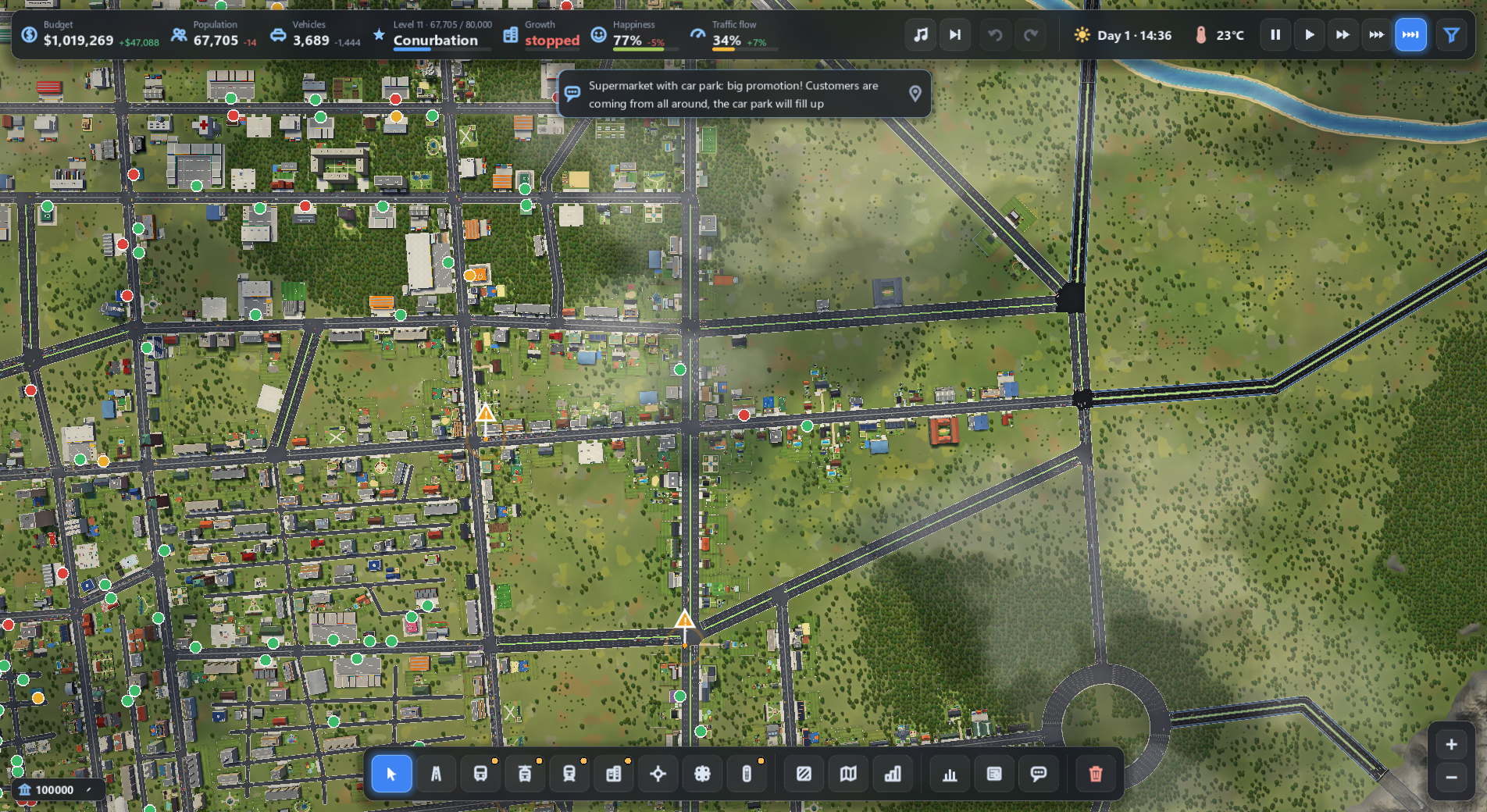
Three cash & carry wholesale stores: small, medium and large. Lorries bring them goods from outside the city more cheaply than deliveries to every shop one by one.
The owners of local shops within a wholesale store's reach drive there in the morning in their own vans to pick up goods. Mornings get busy outside the hall.
You build wholesale stores yourself, or the city builds them where many shops have none nearby. The wholesale store's panel shows the shops it supplies and the deliveries on their way.
Kinds of goods
Goods now come in four kinds: food, materials, fuel and consumer goods.
Warehouses keep each kind separately, and a shop orders the one it is shortest of.
Parking spaces along streets
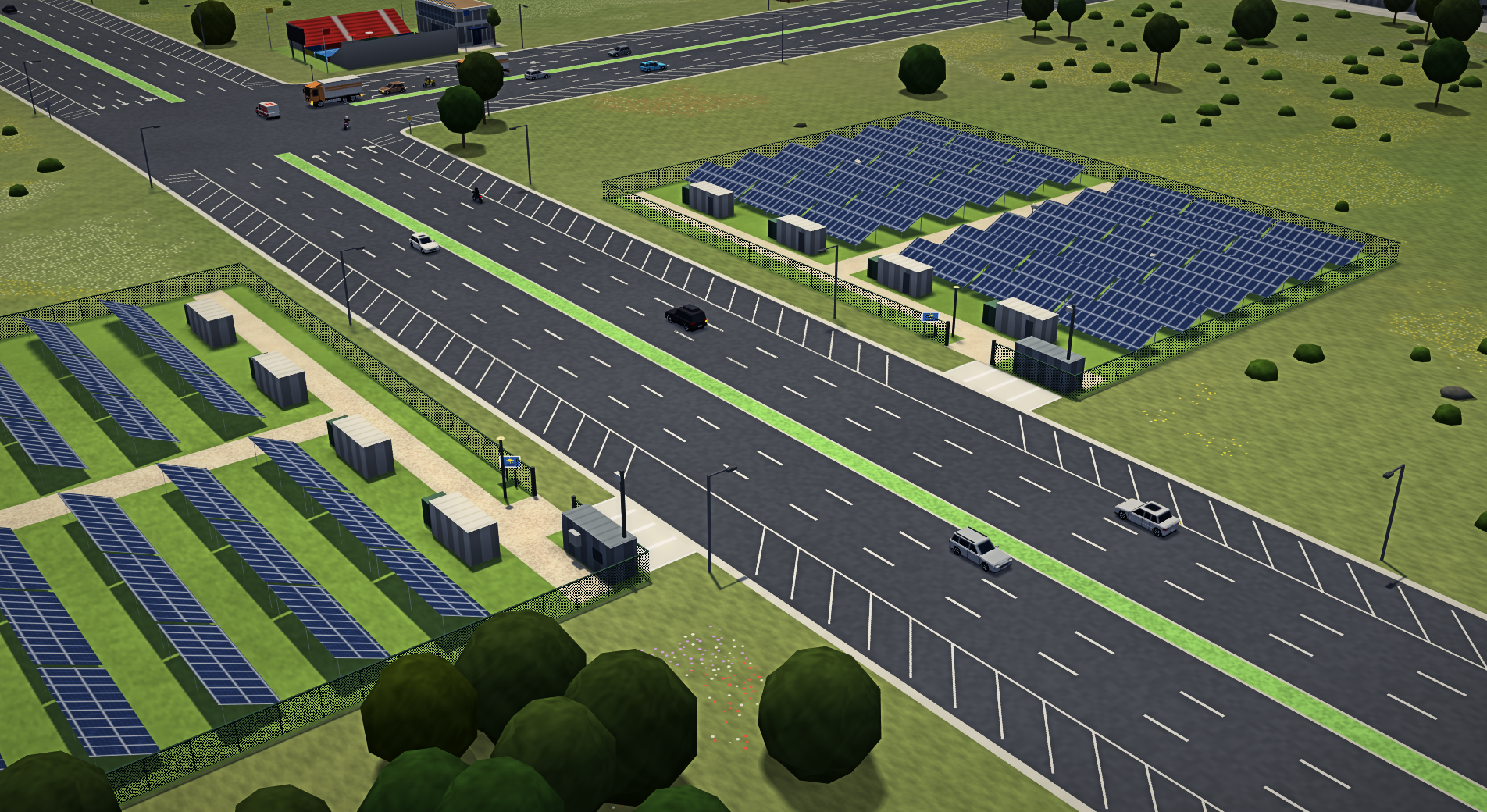
Cars on parking lanes can stand in three ways: along the kerb, perpendicular or angled (Shift + P). Perpendicular and angled parking fit more cars.
Buildings can now stand along a parking lane: their driveways cross the lane, and the parking spaces leave them clear.
On avenues, cars drive into and out of buildings only on their own side of the road, and turn round at junctions.
Animals

Cows, pigs, sheep, horses and hens live in their pens on the farms: they walk around, graze and rest.
Wild animals do much more: deer feed their young, a stag roars, wild boars root in the ground, a fox hunts mice, hares box. A passing train or a siren will scare them off.
You can hear the animals: 24 new sounds of the meadow, deer, wild boars, foxes and hares.

Landscape
Meadows have a variety of flowers, shrubs and stones.
Roads and transport
Spacing between roads: while drawing, you can see the distance to the roads nearby.
Bus lines are easier to edit: clicking a stop of the line removes it, clicking a new one adds it. A click on a road puts up a bus stop sign that avoids the entrances to car parks.
Buses don't turn round at stops.
Interface and settings
A building search in the build menu.
The new Building types filter colours the city by what its buildings are used for.
The car panel shows who is sitting inside.
Speed units to choose from: km/h or mph, whatever the traffic rules.
The top-down view lets you zoom in further.
New switches in the settings: air traffic, birds, wild animals and UFO in the night sky (the UFO is now off by default).
The game starts in fullscreen by default.
Council policies have new, clearer descriptions: what you gain and what it costs.
Sounds and performance
New sound effects: fireworks, accidents, screeching tyres, fires, demolitions and cheering.
Fewer stutters in big cities.
Saves from version 1.1 should load without any problems. Thank you for playing and for all your reports!
