Welcome to another Tinto Talks, the Happy Wednesday where we talk about Europa Universalis V, which some of you may remember was once a very secret game with the codename Project Caesar..
Today we will do something a bit different. 1.4 has been out for a few weeks, we just released the 1.4.9 version, and instead of talking about what is coming next, we will look back at what we did in 1.4, why we did it, and how it went.
I will go through this feature by feature, and for each one tell you what the problem was that we wanted to solve, what we hoped you would feel, and what actually happened when you got your hands on it. Some of it went very well. Some of it did not. Lets start with the part that went best, because the part right after it is the one everyone wants to talk about..
Performance
Every patch since release had made a long campaign slower, and by 1.3 the late game was where quite a lot of you stopped playing due to slow performance..
Why? Well, very little of it was one slow thing. Mostly it is algorithms that were perfectly fine in 1337 and did not scale at all in 1600, where we did work every day for every location when only a handful had changed, or where the interface recalculated something the game then recalculated again.
Then there is the fun part, which is making sure we parallelize things efficiently. If you have 800 countries and a PC with 8 cores, sure, 100 on each? Yeah.. but France has 200 locations and can probably start five builds every month, while Ulm has one location and starts something every four years. So you need heuristics that distribute them so that seven cores are not waiting on one for a long time.
We said in the beta Tinto Talks that we were aiming for ticks 40 to 50% faster than 1.3, and that is what the roughly four hundred performance commits between April and September were for. Counting the sick, it went from 20 milliseconds a day to two and a half. The daily recalculation of what every pop wants is now parallel and eighteen times faster. The trade AI used to recompute what pops need on every single call, and now it is cached, which made it about two hundred times cheaper. The diplomatic status between every pair of countries was stored far too generously and could eat up to two gigabytes in a long game. Audio banks are a fifth smaller. Trust is calculated instead of stored, which is also why your saves are about a third smaller than in 1.3.
Frame hitches are a chapter of their own, as a frame that stalls is worse than a tick that is slow. Market reassignment, trade route graphics, the army tab in a large war, all of them had their moments. In the run we measured, the worst frame went from 169 to 99 milliseconds, and frames over 100 milliseconds went from one in four hundred to none.
And the daily tick? It is on this list too, but as a rather small item, as on its own it made the game about 10% faster. More on that one below.
So how did it go? This was the most liked thing in the whole patch. The great majority of you who answered the beta survey said the difference was noticeable, and "far more playable" was the most common phrase in the positive reviews. One of our QA played a full campaign in under 20 hours. On my own machine, going to January 1339 in observer mode took 2 minutes 45 seconds in 1.3, and 47 seconds in 1.4. Of course, mileage varies, and the biggest gains are on high-end machines.


Two things did not go as well. Frame drops after saving and reloading were reported in the beta, and a lot of you give the credit for all this to the removal of hourly ticks, which gives that change far more weight than it carries. Had we kept hourly ticks, you would still have had most of this, as after the optimisations it was only giving an 10% impact.
We did not change much here after the Beta, as the work was done before it. 1.4.1 stopped regenerating the flat map at startup when the shipped one matches, which took about a gigabyte off the memory peak while loading, and a few heavy tooltips and alerts got their frame rate back.
The Daily Tick
Until 1.4, the game simulated twelve steps every day, and nearly everything that matters in a war- how far an army moves, how long a battle lasts, how often an assault ticks- was measured in those steps. You could never see them. We wanted the day to be the unit you think in, so an army moves so far per day, a battle takes so many days, and the calendar moves one whole day at a time at every speed setting, so the pace of the game is something you can actually read. That was the reason. Not performance. It did make the game about 10% faster, as mentioned above, but a patch made for performance would have looked very different. What happened then? Well, this became the most divisive thing we have done since release. In the beta survey, it got more 10s than any other question, and also more 1s than any other question. Some of you felt the game finally ran at the pace it should. Others felt we had thrown away simulation detail, and that battles had become slow and unresponsive, which I will get to in a moment, because that part is a real problem and not a matter of taste. We fixed three things in the combat conversion during the Beta, see below, and then we made the bigger decision, which is the Time Steps game rule in the 1.4.8 beta, where you can play with the finer steps again in single player. Daily stays the default, and multiplayer stays on daily, as everyone in a session has to run the same clock. We said in Tinto Talks #130 that we underestimated the Beta feedback on this, and I stand by that. When a change splits the players this cleanly, the right answer is a choice, not a verdict.

Battles
When we moved to the daily tick, we had a target for battles, and I should have written it down for you at the time. The target was the feel of EU4 battles at about 80% of their length, which is roughly eleven days for two equal armies against the two weeks you remember from EU4. Long enough to react to, short enough that a war is not one battle.
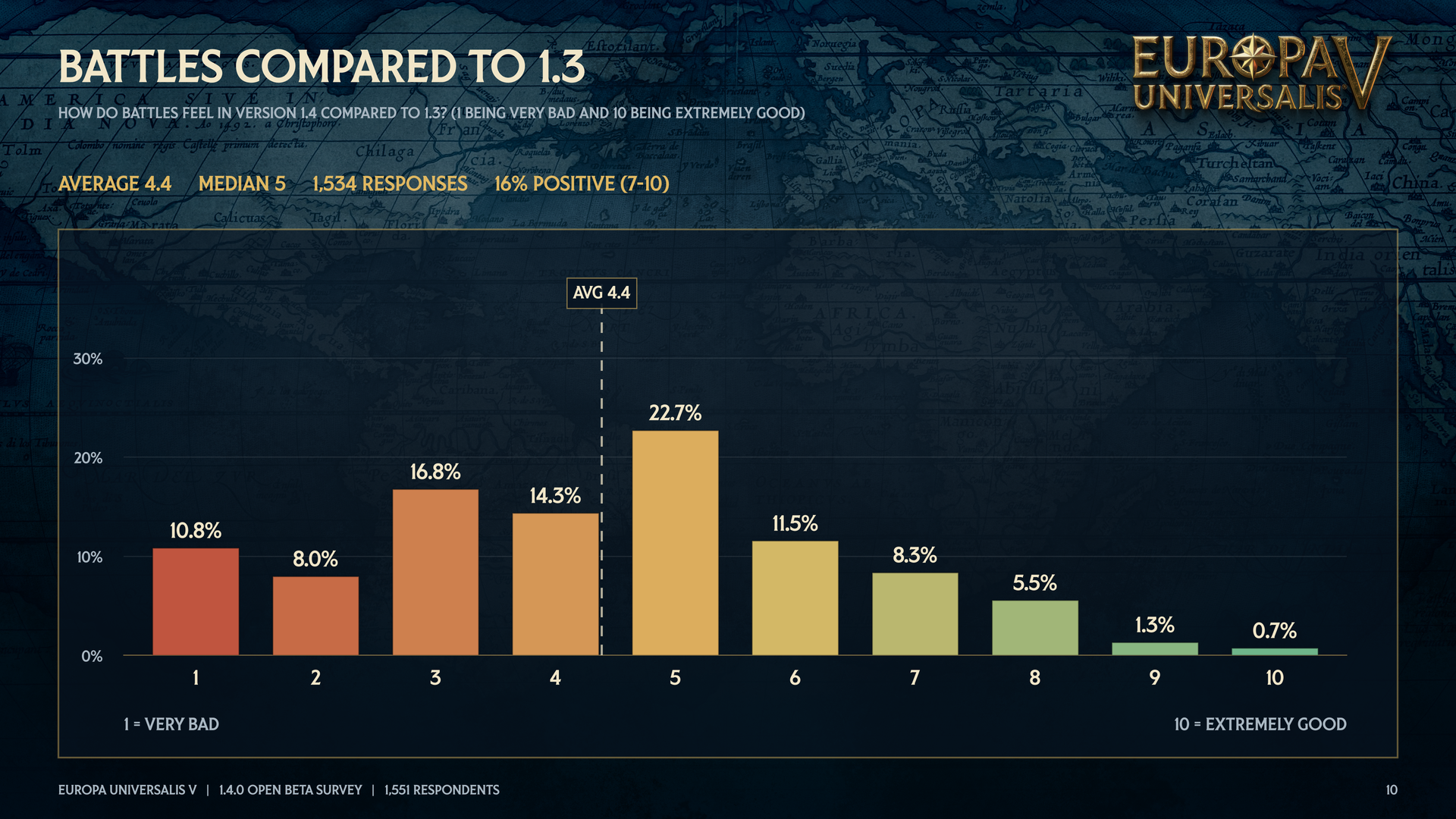
Battles were the weakest item in the beta survey by a wide margin, and the two battle feedback threads were the busiest threads in the entire beta subforum. Reading them again, the complaints were correct. The 1.4.0 beta shipped with battles at about half the intended length, because our first duration adjustment was measured without the strength decay that makes battles end sooner. Reserves barely stepped into the front line, so large armies lost with half their men unused. And the same conversion slowed army movement to a bit over half its 1.3 pace, so reinforcements that used to arrive in a week now arrived after the battle was over.
Many of you wrote that battles were too long and too short at the same time. That is exactly right.. A battle spanned weeks on the calendar but resolved in a handful of rounds, so you could neither watch it nor react to it.
1.4.1 fixed the reserve chance, doubled battle length up to the intended target, and gave initiative its effect on engagement back, which two defines had lost in the conversion.
Since release, AI armies no longer stop short when a battle ends before they arrive. The 1.4.8 beta spreads reserves across the front sections and caps them at 125% of frontage, and the Hourly Ticks rule brings back the finer movement and combat values for those who want them.
What we have not changed is the slower movement itself under the daily tick, and that is where most of the remaining reinforcement complaints come from. We are not done here.
Political Influence
Before 1.4, the only levers we had on how fast you progress were gold and time. We wanted a third one, a currency that accumulates slowly and that you spend on compelling estates, on emergency actions, and on launching expeditions, scarce early and plentiful late. Yeah, that is a familiar rhythm from EU4, and it is deliberate. The problem we wanted to solve was the long stretches in the middle of a campaign where nothing asked you for a decision.

This one split you down the middle. A majority of the survey said it raised their enjoyment, and the estate thread was one of the liveliest of the beta. The other side called it mana coming back through the side door, found the early game a waiting simulator, and found the costs too high. Both readings are fair, and the second one was partly a tuning mistake on our side.
1.4.1 rescaled event and decision costs so the ratio is under two to one, made appointing a cabinet member free (replacing one still costs), and added a parliament action to redraw estate agendas.
Expeditions
Some of this used to live in hidden event chains. You could not see them, you could not plan around them, and when one of them broke, it broke properly, as the Chinese Treasure Fleet chain in 1.0 corrupted quite a lot of saves. We wanted voyages to be a visible system, with a cost, a risk, events along the way, and a reward at the end, that our content designers can build on without hiding anything from you.


This is the least liked of the new systems. Most of you use them rarely, and the loudest thread at release called them a waste of development time next to the colonization and discovery work you wanted. I understand that reaction. The system is a foundation, and a foundation is not much fun to play with until something is built on top of it. The beta thread was mostly questions about the institution requirements of the Grand Tour, which work as intended, but were explained badly.
We fixed the bugs, so pilgrimages to a holy site in your own capital no longer fail silently, and the Pacific Crossing no longer fails every single time, and so on. The system itself has not been redesigned. It needs more reasons to exist, and clearer ones.
Ideally I should have designed it to not use events, as it's not that fun to do expeditions when you try to do something else. Let's see if we can rework it “soon”.
Trade
You had no lever on individual goods. You could not protect a home industry, or secure an import you depended on; trade had no diplomatic consequences, and mercantilism was a word rather than a choice. So now you have tariffs and import subsidies per good, and they come with a price in relation to whoever you put the tariff on.
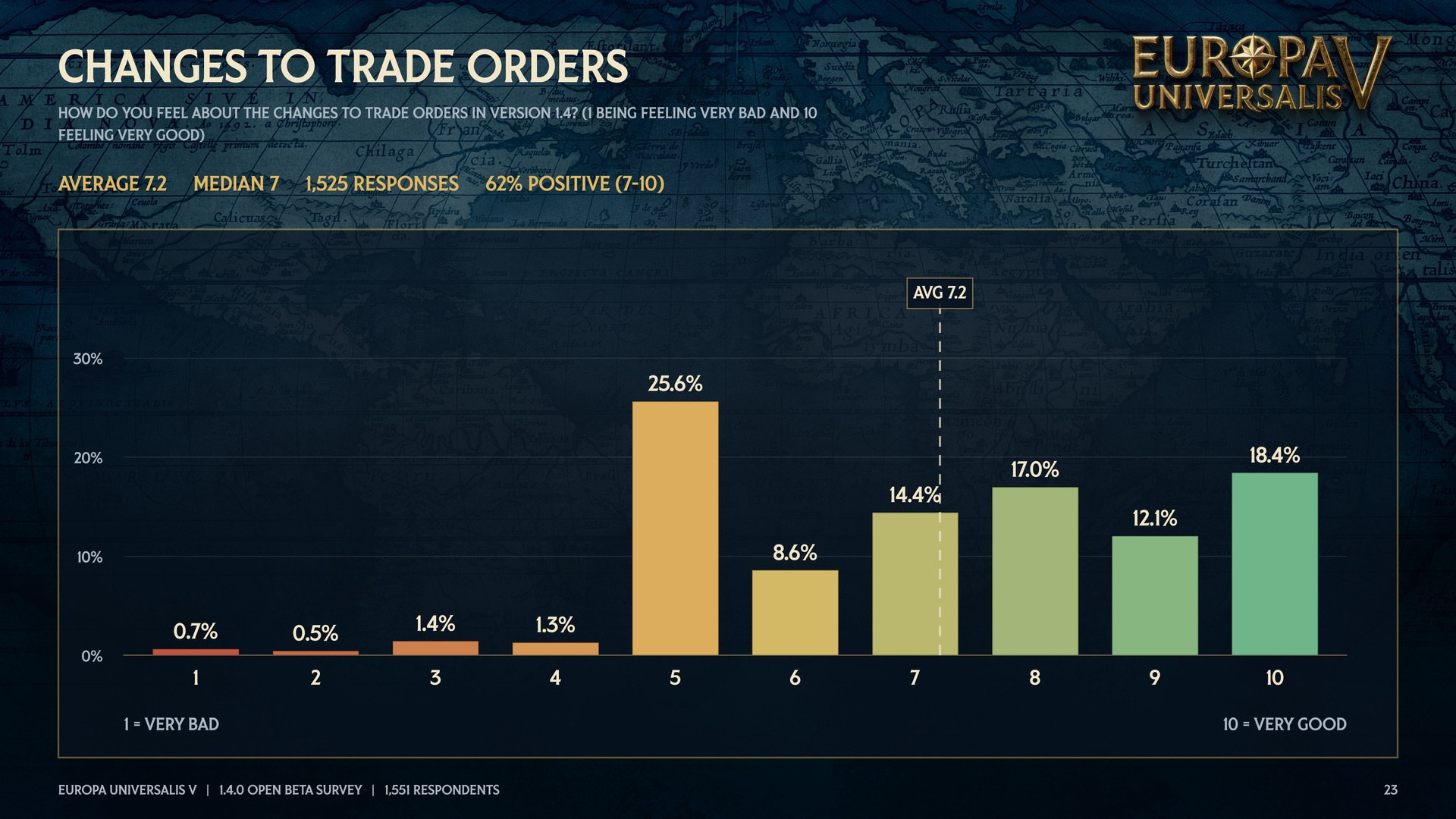
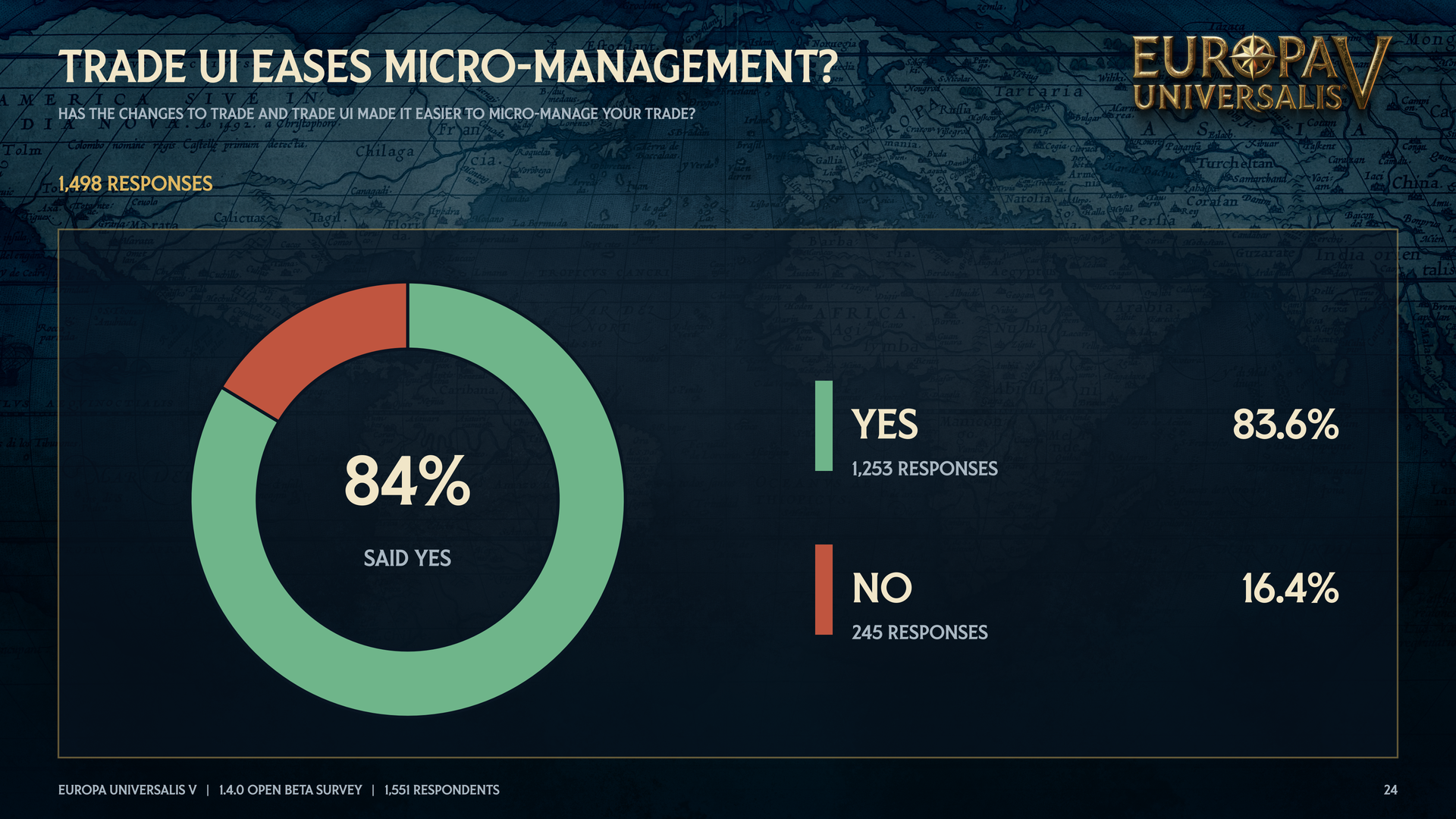
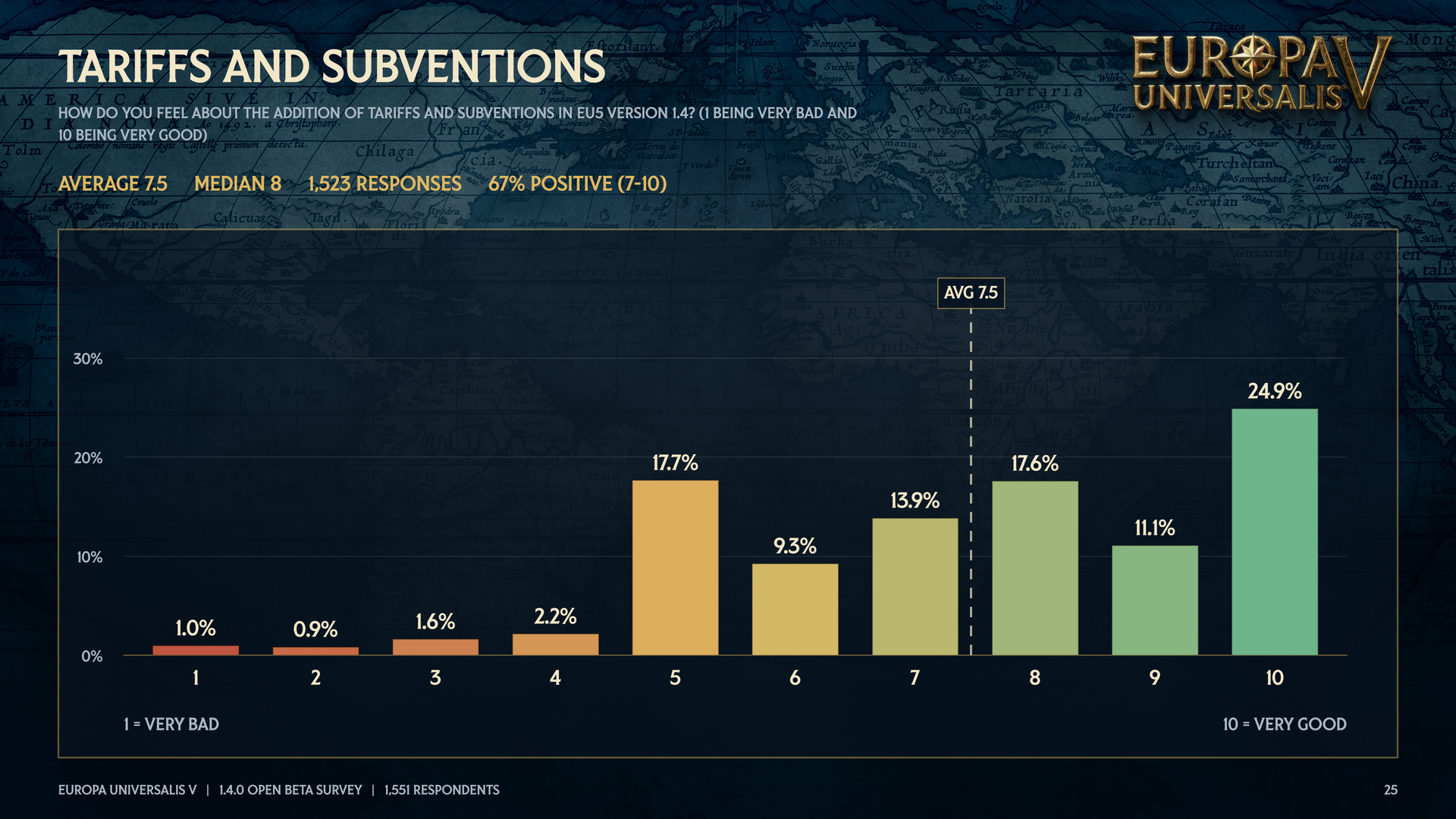
Tariffs and Subventions, together with Trade Orders, were the best-received new features in the patch, and most of you told us the trade changes made the micromanagement easier. There was a fair bit of confusion about what Tariffs actually touched, in particular that Burgher trades did not pay them, which was a bug and not a design. They pay since the beta patches. Colonial nations also no longer tariff their own overlord, and 1.4.7 added the Tariff Dispute CB, as a neighbor taxing your merchants had no answer beyond a worse opinion of them, and a trade conflict should be allowed to escalate into a proper war. Promote Industry is the other half of this. Nothing could guarantee demand for strategically important goods like arms or naval supplies, so a state that needed them could not make sure anyone produced them. Now you pick one of eight industry types for an area, and it creates standing demand for it, which pairs rather nicely with a tariff on the same good. How did it go? We have heard almost nothing about it, good or bad. If you use it, tell me how. Then there was trade range, which was not a design but a side effect. A change to how route distance is calculated made routes cost about a tenth of their 1.3 value, so Europe traded with China in Age 2. Fixed in steps across 1.4.1 and 1.4.7, so routes pay full distance again, and the range check uses the same cost as transport does. And the shuttle trade exploit, where balanced round trips between two markets compounded prices, tax base, and selling efficiency income every month, is closed. Selling Efficiency raises your profit margin now rather than the whole sale price, and stockpiles no longer drag prices to the floor when demand is healthy. The road builder also got some love. Originally, it was doing what we asked, which was part of the problem: It built every road on its path, even where a river or sea route already gave better Proximity. It now skips those sections unless you check “Ignore Rivers”. Railways still beat rivers, so the builder never skips them. Roads are previewed on the map before you build them, and water now counts as a connection, which helps with places that aren’t linked by land. It pairs well with the new Uncontrolled Wealth mapmode, which shows where wealth is escaping your control, so you can see where a road or a governor is needed.
Population & Food
Growth should come from an actual food surplus, not from stockpiles. Spare land alone should not make a population grow faster; growth should slow as a location fills up, and an overcrowded location should lose people to somewhere emptier. The 1.3 numbers let a settlement with tens of thousands of surplus pops shed a handful of them a month, and demand had no way of falling when the estates buying things were broken.
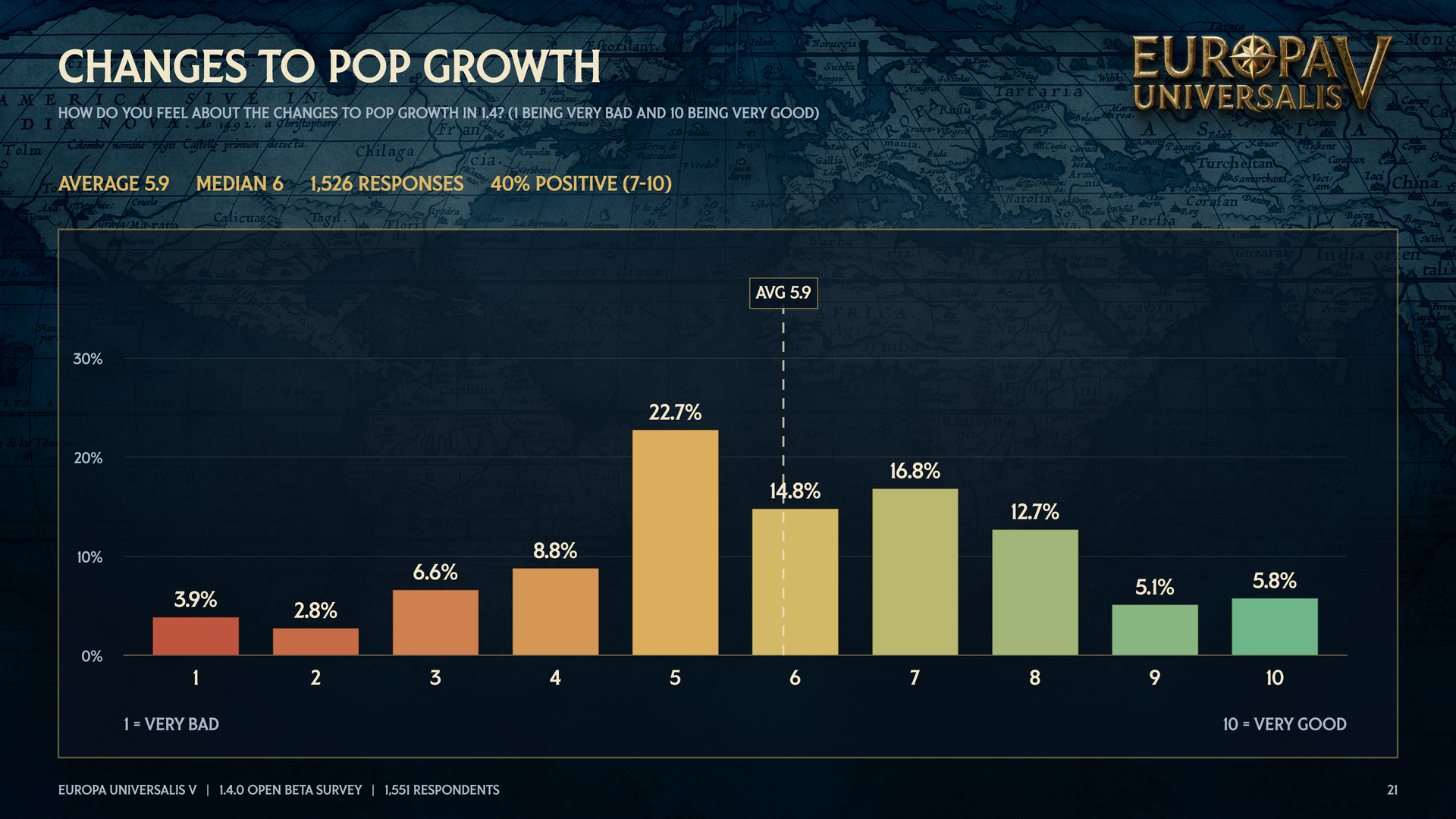
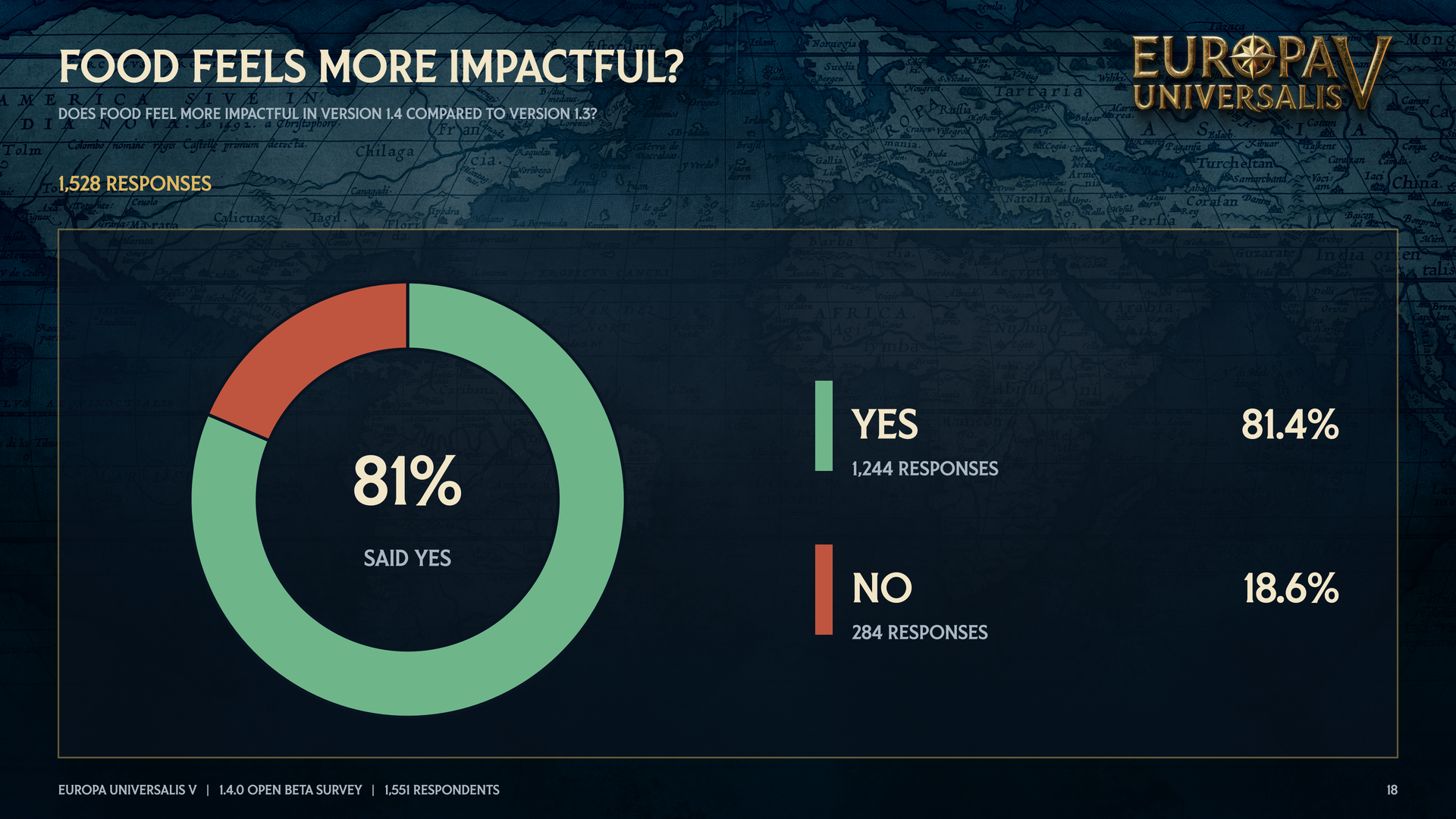

This landed cautiously positive, with most of you saying food matters more now, and the thread stayed constructive. Malaria did not, as it spread across Europe and reached Scandinavia, which was never the intent. Yeah.. we noticed, and fixed it. Pop demand for goods now scales with your researched advances, as advances had been raising supply with no matching demand. We cut an unconditional base production that turned out to be a seventh of all production in the world and most of the clay, stone and sand. Now also Wool and Horses produce food, so pastoral locations feed themselves.
War & Diplomacy
Calling a stronger ally handed them your war and your peace, so the sensible move was to never ally with anyone bigger than you, and a great power dragged into a war had no way to take charge of it either. Now the attacked country keeps command unless it agrees otherwise, and you can offer or demand war leadership, which also gives favors something to be spent on. As far as we can tell, this works, as the few threads on it call it a good addition. The old complaint that AI war leaders never reward their allies in peace deals predates 1.4, and is still valid.

Warscore cost then. It tracked the tax base, so one rich province cost you a whole war while vast poor regions went for nothing, which fed border gore and strange peace deals, and an unoccupied fort inflated the price even while you were besieging it. Cost now caps the tax base part and counts forts, ports, population and control, with discounts for small nations and for defenders who clearly won. The complaints about runaway warscore cost started before the beta and did not stop after it. The rework changed what is expensive, not how expensive wars feel, and I do not think we have landed this one yet. Casus belli expired before the war they justified could be fought, especially overseas and with slower movement, so the default duration is now ten years, and conquest, annexation, subjugation, and claim throne are fifteen. We also wanted AI expansion to be purposeful, aimed at heretics and heathens and scored by what land is actually worth, and we wanted rich AI countries to spend their surplus on both armies and buildings instead of hoarding it. What happened is that border gore and ahistorical blobbing, which had calmed down in 1.3, came back in the beta, and several of you asked us to revert it. We did not, as the old behavior was passive rather than good. 1.4.2 brought a batch of AI fixes instead: armies stage at the border before a declaration, the AI enforces peace when it is losing but holds the war goal, and it sieges the war goal in revolts. The AI also joins crusades and jihads less eagerly, uses Show Superiority for wars without a cause, and in the 1.4.8 beta it no longer gives away exclaves for free. AI attitude used to be a black box, so diplomacy felt arbitrary. Every disposition is now explained line by line in its tooltip, you can declare your own intent with a Friendly or Domineering stance, and third parties react to what you do to their friends. Nobody has mentioned any of this, which for a tooltip is probably the best outcome you can get. Favors got a rework in the middle of the beta, after a report showed a pair of countries holding 52 favors against a stated limit of 25, an ally silently sitting at 100, and flat decay with no equilibrium. Curry Favors now credits only the acting country, costs a little diplomat capacity, decays proportionally, and is blocked at negative opinion or with rivals. It has had less playtesting than I would like.
Armies
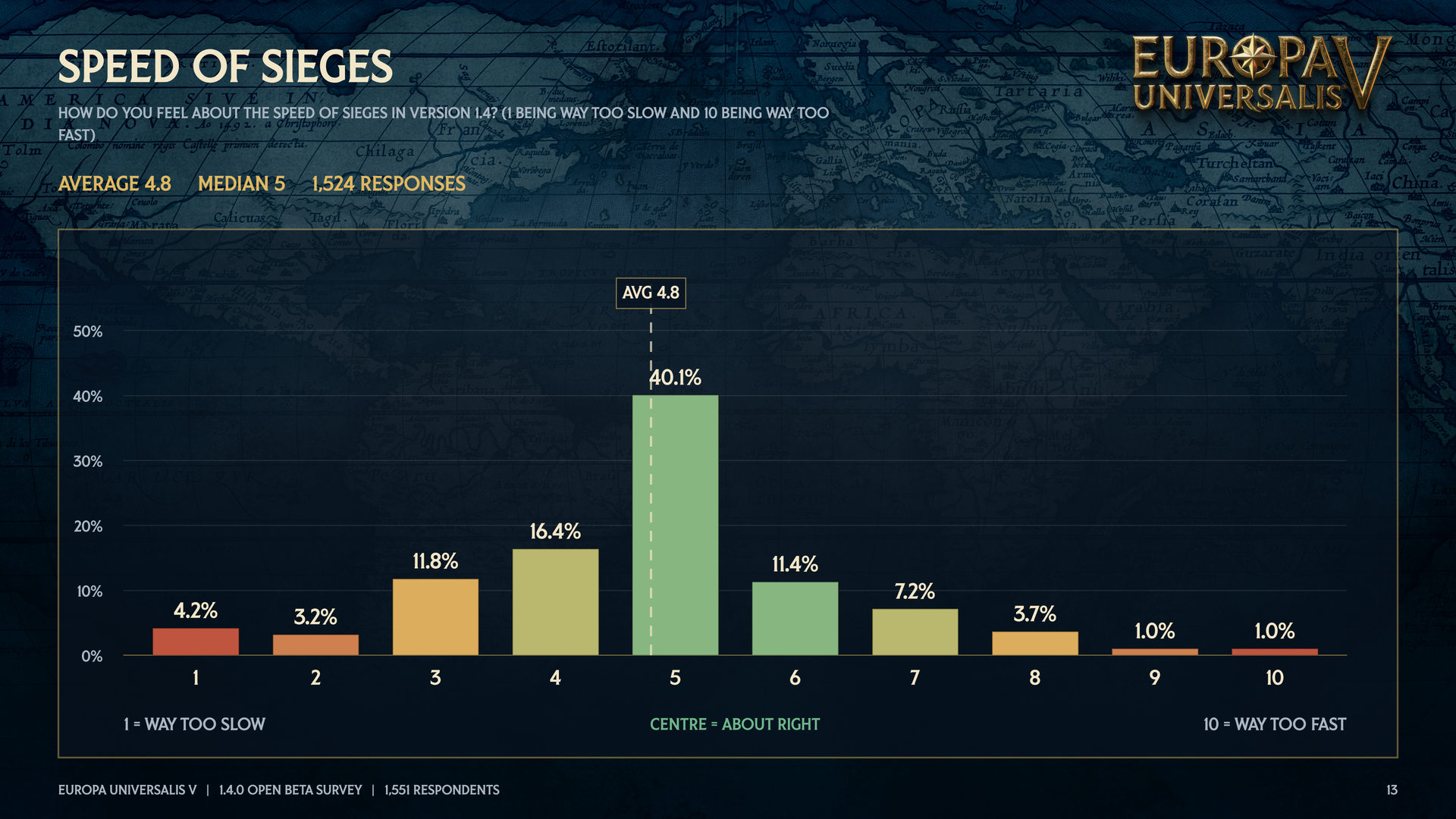
Mercenaries beat regulars at everything. They were cheaper per point of fighting value, infinitely renewable, and recruiting them in enemy territory drained the enemy's pops, so the optimal army was all mercenary and manpower did not matter. Hire cost roughly doubled, upkeep went up by about a third, they eat more in the field, and the pop drain trick is closed. Mercenaries are meant to be the expensive emergency option, and regulars the backbone, like in.. well, history. We found no complaints about this at all, which, given the size of the change, surprised me. Cavalry had combat power 4 against infantry's 1 at 40% of the regiment size, which works out to 60% more combat per battle line slot through Age 3, so massing it snowballed into constant stack wipes. Power went to 3.25, flanking came down, and food consumption doubled. A combined arms line should beat a pure cavalry one, and infantry should cleanly overtake cavalry from the Reformation on. This went fine in general, and badly in one place, which has its own section below. The retinue-based military of the period was missing, early armies were limited by gold alone, and an estate revolt spawned its army from nowhere. So estates now keep regiments of their own, which you can press into service as a cheaper army with a political price, and which are the army a revolting estate already has. The feedback here was bug reports, regiments disbanding, never upgrading, Cossack hosts far too small, but nobody has argued with the idea. Rebels were a speed bump. Their armies were small, broke, and farmable, so unrest never threatened anyone. Rebels now rise with full control levies, the tax base of the land they hold, and a war chest from their estate, and foreign pops no longer rebel on their own. A revolt should be a war you can lose. What you told us is that they are too frequent rather than too strong, still too many rebellions after accepting a culture, and a loop of Orthodox revolts that made the Ottomans tedious, and part of that was the Dhimmi problem further down. Rebel independence wars now last about three years and sieges contest the war goal, as the goal had been ticking twice as fast as in any other war. Private regiments are only recalled on an actual revolt, and accepting an alliance during an independence war no longer makes you a subject again.
Subjects, Estates & Starts
Weak subjects were loyal for being weak. Loyalty now weighs the army, economy, and population on both sides, and being smaller than your overlord no longer grants it, as subjects should be able to break away, and loyalty should be earned through how you govern, decentralization included. The original case was the Yuan, which could never fall apart. What happened was that France's ducal vassals became permanently disloyal in the beta, as France is very decentralized by design and the new formula exposed maluses the old one had hidden. We cut the Decentralization loyalty bonus in half in 1.4.2, and put it back in 1.4.3, fixing the French vassals directly instead. The Dhimmi estate got hit by the generic rules that penalize an estate for differing from the state religion and culture, which is slightly awkward for the one estate that is defined by being a minority, and that drove religious revolts across the Muslim world in the beta. Their privileges also gave far more estate power than anyone else's. Fixed across 1.4.2 and 1.4.3, no redesign. We never set out to make the Ottomans harder. The added difficulty was collateral from the new Crusade and Jihad organizations, the Dhimmi problem, and the Anatolian balance work for Across the Pillars. 1.4.3 changed the starting laws and privileges of the Anatolian beyliks, and the AI joins crusades and Jihads less readily. The aim was the 1.3 level of difficulty, not a new one. Parliament events were way too common, so session events are down to a third, agenda penalties and support requirements are softer, and a failed debate costs government power. Fewer sessions, each of which matters. And a bad cabinet trait used to be a signal to swap the character out, so bad traits now come with an upside and strong ones with a downside, with weighted rolls and yearly decay, so it is a tradeoff rather than a swap.
Dynasties & Debt
A royal marriage needed two living adults at the same time, and the game interrupted you the moment a child came of age. Betrothals from the age of two let you arrange the marriage in advance, when you have the time for it, and it converts on its own at adulthood. Inheritance contracts let you buy the right to inherit a heirless monarchy for gold, and collect decades later. Both exist so that a personal union is something you plan rather than something you roll. The feedback was bug reports only, arranging a betrothal made cabinet members quit, some never converted to a marriage. The Iberian Union was the showcase for this kind of play and, as mentioned above, shipped broken and was fixed in 1.4.6. Loans were the only debt, and their interest spiraled into bankruptcy, so a mature state could not finance a war the way a 17th century one did. Bonds are a cheaper, longer instrument behind the Central Bank advance, tied to your creditworthiness, and Default on Creditor lets you repudiate one lender's loans and accept a casus belli against you and worse credit in return. Philip II did it four times, so it felt rather necessary. One guide on the forum calls bonds powerful and documents losing a civil war on purpose to wipe your loans, which is a creative reading of the rules. Otherwise quiet. Once per game choices used to arrive as popups that interrupted you, and there was no list you could open when you were ready. Decisions are that list, with requirements and outcome visible before you commit, and they give our content designers a format that is not an event. Nine generic Renaissance decisions shipped in 1.4, and more content will come in this form where it fits. The reaction to the dev diary was large. In the beta the thread was small and critical of individual decisions, in particular a cathedral decision whose price confused people, and at release one thread argued that decisions do not solve randomness. They are not meant to. They are meant to be visible. Only monarchies had a failure state for letting their core government power collapse, so republics got Oligarchic Capture, theocracies got Crisis of Faith, and Russia got Twilight of the Tsardom. Letting your government's power collapse should hurt in comparable ways, whatever form it takes. The only non-accepted state for a culture was passive neglect, so we renamed it Ignored and added a real Discriminated level, which is deliberate, costly oppression with emigration as the consequence, and parliament agendas to move cultures either way. This also gives the migration system a source of people who want to leave. Not a single thread on it. If you have used it, tell me. Late game treasuries had nothing worth spending on and the map never changed shape, so Suez and Panama can now be dug behind the Pound Lock advance for 200,000 gold, with an access policy for everyone else. Bug reports only so far, proximity leaking through an unbuilt Suez and a crash on completion, both fixed. And Egypt was too strong without the historical drag of more than fifty plague outbreaks across the period, so the plague now recurs on a historical cadence with its own resistance track, and stays within its endemic region. Too severe, said the forum, with Constantinople losing half its people in one outbreak. We are watching the numbers.
Achievements & the Timeline
Ironman's no save, no mod rules locked most of you out of achievements, including anyone using a UI or bugfix mod. Achievements now unlock in any single player game, modded or not. Play the way you like and still earn them. This was the most praised line in the patch notes, and a few of you think it cheapens them, which I respect, but I think the other view is right. Endured Atlas turned out to be far too easy, and its requirement has gone up in the 1.4.8 beta. A finished campaign used to leave nothing to look back on, and there was no in game way to make the timelapses this community has made for EU4 for a decade. The timeline replays your campaign day by day at up to 100x, paints historical borders on the map, tracks who led in population, economy and tax base, and marks the great events along the way. It is on the end screen, and in its own panel at any point in the game. What happened? Honestly, nothing. A handful of bug reports, one player who could not find the button for three in game years because a game rule hides it, and otherwise silence. We put real work into this and I have no idea whether you like it. If you have replayed a campaign with it, or made a timelapse from it, I would genuinely like to see it in the comments.
The Smaller Things
Twelve month graphs for estate tax and maintenance.
Ctrl-right-click to load an army onto its transports.
Alt-click to build on top of an existing building.
Filters on the mercenary captain list.
Colonial Charters that you set a goal for once, form a colonial nation, grow a subject or stay territory, so the game stops asking you.
Direct Domestic Migration to move pops where you want them, which many of you find far too slow at 250 people a month, and we hear you.
Imperial Circles got a formation window, merging and locking, and the ability to bribe a circle leader.
Production method QoL, as it was not actually possible to see or change the production method of a location in the building panel, which was not a design decision so much as an oversight.
Those were the smaller things, which I personally found most impactful.
What We Learned
Some of you may say “Paradox never learns, they released buggy games before I was born.” But I guess, we could say four things here.. First, communicate the goals when changing a core system. We had a target for battle length, and it lived in conversations and not in anything you or we could check against. Had we published it with the beta, the debate would have been about the target, which is a design discussion, instead of about whether we had one. Second, smaller balance steps, more often. Third, the open beta reaches the people who read this. It was very well received, and it found a great deal. But the players who rated 1.4 at release were largely not in it, and the DLC content was not in it at all. We will be thinking about how to close that gap. Fourth, where the players split, offer a choice. The Time Steps rule is the first time we have done that for something this central. It will not be the last time the question comes up. Thank you for the thousands of survey answers, and for arguing with us about battles for six weeks. Next week we are back to normal, and talk about what we are working on now.