Heading into the holidays, I'm very excited with how far the game has come since launch back in February. 60k lines has turned in 400k lines of code. Insane. Each week seems to bring something I've been dying to build and this week is no different.
Things are coming together and more goodies are on the way.
FEATURES
Rivals Update: The Guild District
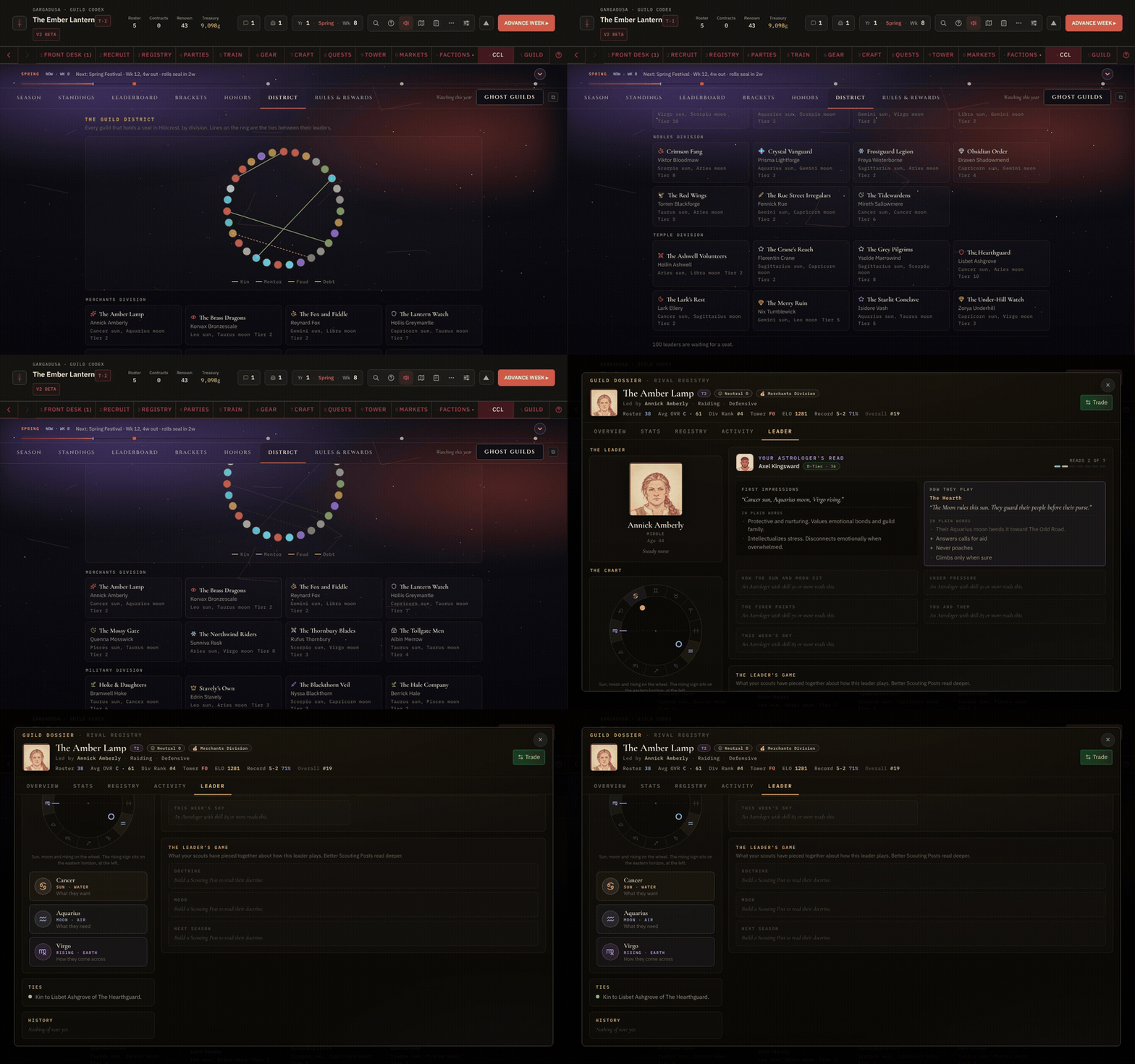
Every new game deals its 31 rival guilds from a bench of 131 leaders, so you won't face the same District twice. Each leader has a unique ink portrait and defined personality of their own.
Every leader has fixed sun and moon signs that dictate their behavior. The sun sets their strategy in a steady year: how hard they quest and raid, how they trade, whether they poach and how they treat you. The moon sets how they react under strain.
Rivals now feel pressure. Deaths, failed raids, lost places, empty coffers and losses to you build strain. A rival under enough of it turns Stung or Breaking and plays its moon's response.
Guilds can now fall for good. A guild that stays Collapsed and Breaking through a full Last Season actually folds: its best heroes reach your Recruit board, its banner goes on the new Fallen Banners page and a few weeks later a new guild takes the empty seat. Folds are rare and never come before Year 3. Your nemesis can fold too; that counts as your win.
Leaders have lives. They are tied to one another as kin, mentors or rivals, so feuding guilds clash and friendly ones trade or send aid. They age, retire and hand their guild to a successor.
Rival leaders now write to you at the moments that matter: when you poach one of their heroes, when one of you beats the other, when they climb past you or when they enter their Last Season. At most one rival letter arrives a month and your nemesis writes first.
A rival's profile gains a Leader tab with their signs, ties and history. First impressions, How they play and their doctrine show from Year 1. Your Scouting Post reveals their mood at tier 2 and next season's plan at tier 3 and each locked row says which tier it needs. A new District tab in the CCL shows all 31 seats and the ties between them.
Existing saves keep their 31 guilds and join the new rules on load, with each leader's signs set to their authored ones. Leagues founded from this update on run Rivals 2 on the league server. Leagues founded before it keep playing as they did.
100 of the leaders now have a short biography under their name on the Leader tab and their District card.
The Live Feed tells you when a rival leader would like a word: once your trust crosses the gate for their next talk, including after a gift or a trade that week.
New games avoid dealing rivals with near-identical names into the same District, so leaders are easier to tell apart. Kin and mentors are dealt in together more often, so you'll see more of their ties.
Rival leader letters at the Front Desk show the leader's portrait and District cards show each guild's crest mark.
Playstyles

This one has been a long time coming. In short, it's been a big priority for me to ensure this game is insanely flexible when it comes to difficulty settings and sandbox customization options. There is so much to this game and it's important to me that everyone has the ability to shape their own experience as they see fit to maximize their enjoyment. So! Built-in difficulty levels kind of flies in the face of my choose-your-own-experience philosophy and often has led to players conforming to an expected style of "normal" play, which is not my goal. To address this, I've finally made a change: instead of difficulty tiers, you will now find six playstyles that replace the old difficulty ladder and serve as starting points to shape your personal experience.
The Frontier is the balanced run. The Storybook keeps losses rare and costs light for a learning or story run. The Long Reign trains slowly but lets careers run long, for a dynasty. The Merchant's Guild brings heavy wages and wide trade spreads but few deaths. The War Company pays easy gold for deadly quests and fierce rivals. Blank Slate sets every setting at its base value for you to tune yourself.
Each playstyle card sums up its Coin, Danger, Growth and Rivals in a word each. Nothing is picked for you: choose one on the New Game screen to begin. In a running game the playstyles live in Settings with yours marked Current and you can switch whenever you like.
Every old Custom slider lives on in the new Fine-tune board. Change anything and your card reads "(tuned)" with a count of changes per tab. One click resets you to the playstyle. My Presets grows to five slots and a preset saved on the New Game screen can be loaded mid-run. A Signature presets row beside it holds Workhorse's Tier, the developer's own harsh setup.
Existing saves keep their settings. Your old difficulty simply shows as the nearest playstyle or as your own settings and every screen that names a run's difficulty now uses the playstyle names: victory stats, New Game+ terms, the league list, Challenge Run rules and the Difficulty History.
After the first season of a year the Guild Clerk may write if the season went far too easily or far too hard and offer the playstyles. Tell him to keep things as they are or not to ask again. He stays quiet if your playstyle already explains the season.
Two new sliders in the Fine-tune board's World group set how often Surface Breaches and Goblin Sieges come, from never to triple. At normal nothing changes.
On the league founding screen the Fine-tune board shows the settings a league fixes greyed out with the reason.
Your Crest & Guildmaster

Choose a guild crest from 11 painted shields (stag, lion, wolf, raven, oak, anchor, keys, peaks, bear, flame and anvil) or upload your own image. Pick it on the New Game screen or in Settings ▸ Guild Appearance. Your crest shows on the guild header, your letterhead, the War Table's home banner, the standings, the rankings, the Crown Cup results and the trade screen.

Set your guildmaster portrait in the same places. For the guildmaster, pick a face from the portrait pool or upload your own picture and give them a name. Letters addressed to you then show your face and "Name, Guildmaster". Your pictures stay on your device and are never shared.
New Game+ Return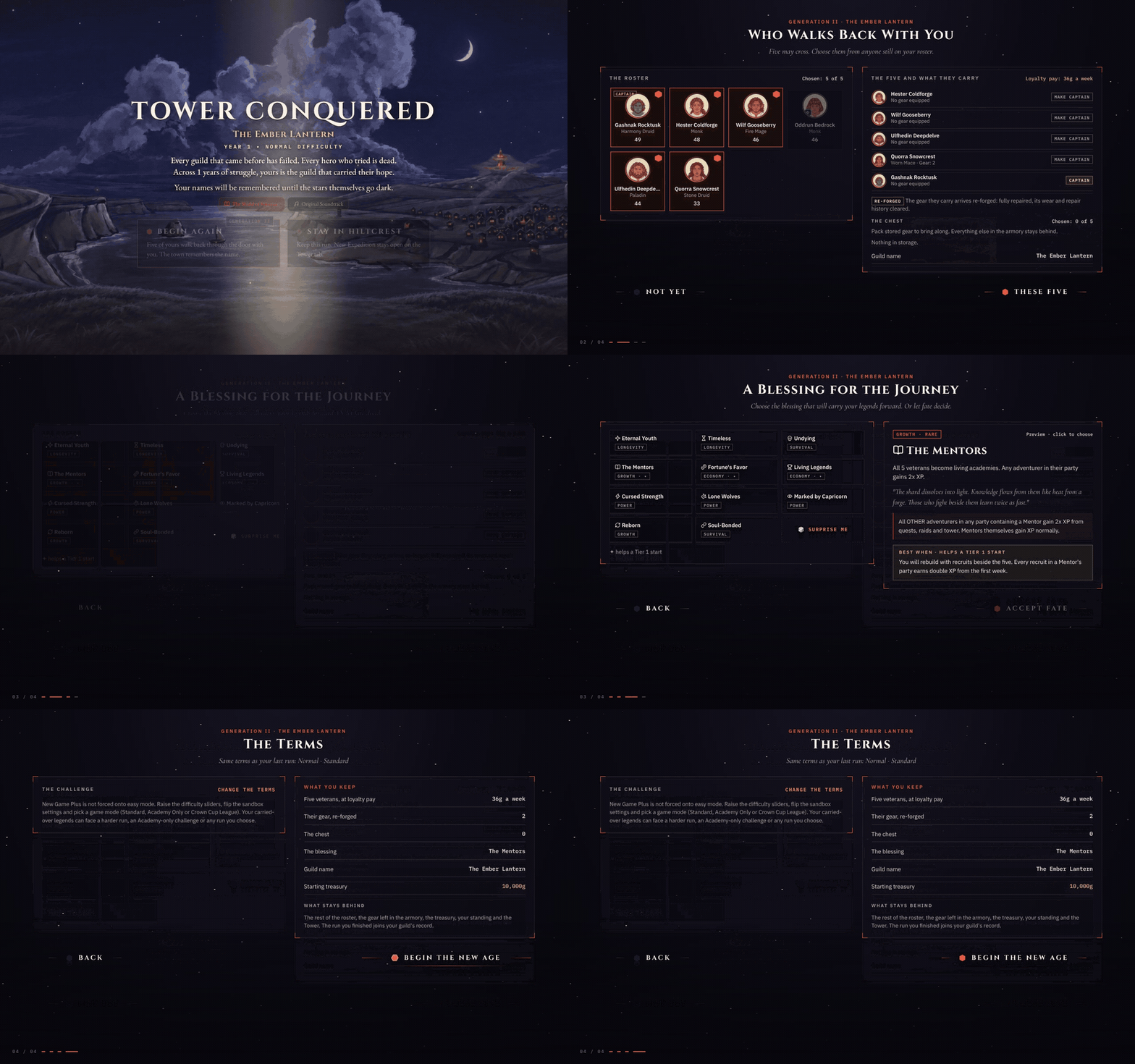
Beating the Tower now offers Begin Again beside Stay in Hiltcrest. It opens a New Game+ ceremony in four parts: The Call, Who Walks Back, The Blessing and The Terms.
Pick any five heroes to carry over, not just one party. Name their captain and they take their seats in Party 1 by role. Bring a chest of up to five stored items. Every piece your veterans carry arrives re-forged at full durability. The terms default to your last run's and a "What you keep" ledger replaces the old warning.
The setup offers your old guild's full set of buildings as worn starting halls.
A New Game+ intro tells your own return: a Generation card, your five standing in the hall and a letter from the Great Sage that remembers the run behind you, from the years you held to who didn't come back. The Guild Hall keeps a lineage strip with one line per finished run.
New Game+ runs get their own Return Tasks in place of the Founding Tasks they used to skip. Finishing them opens the Growth Tasks and Desk Lessons a fresh game gets. Each blessing now shows a category, a fit mark and a "Best when" hint.
Old Debts: while your returning veterans are far ahead of your Crown license, the board posts veteran-only quests at their level so they can earn rebuild money instead of running starter contracts. A party needs three returning veterans and the quests taper off as your license catches up. Old Debts keep their high-tier difficulty and get their own line under the special-contracts banner.
War Table Map Layers
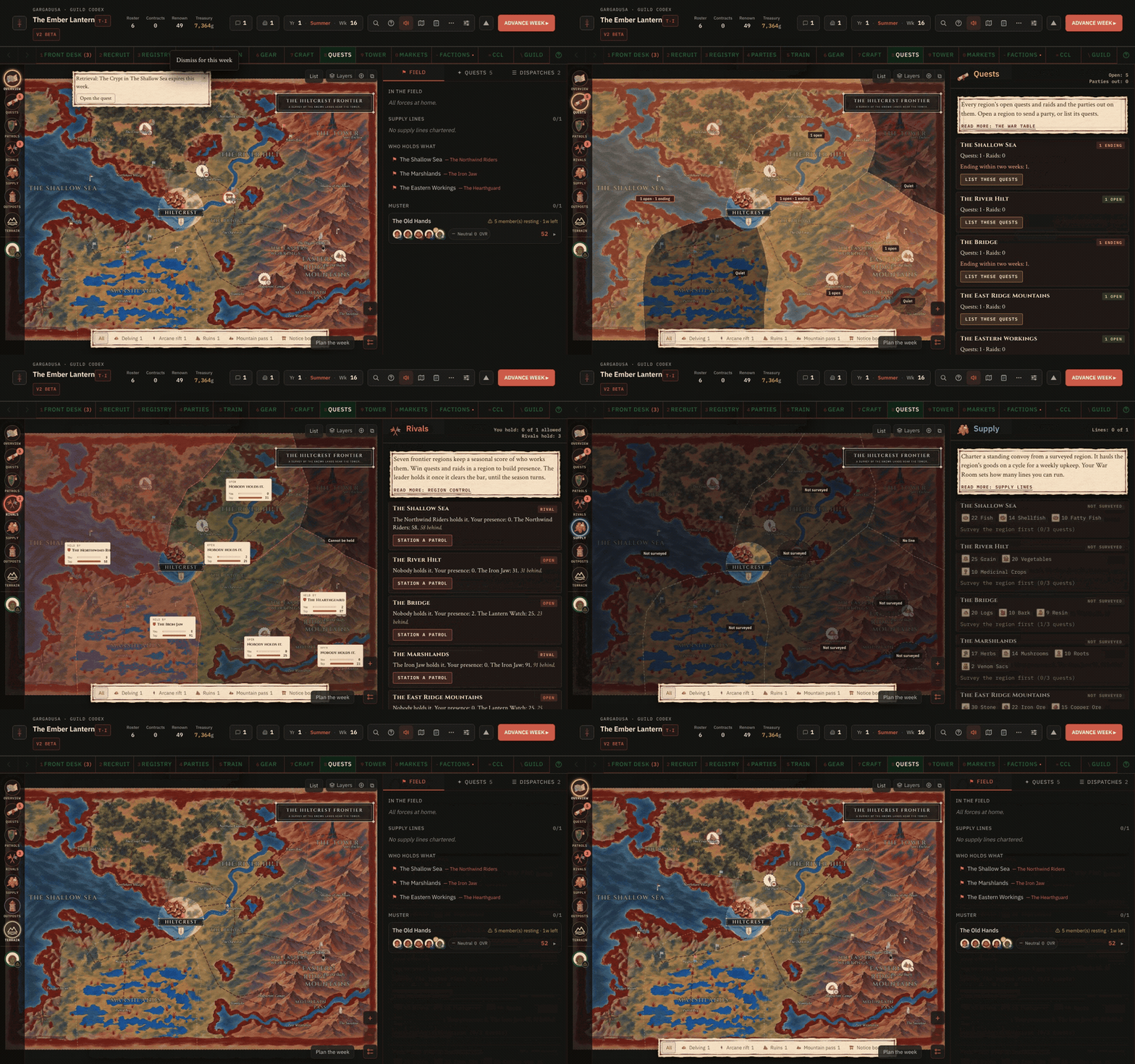
A layer bar now rules the War Table. Each layer asks one question of the whole frontier: the map shades every region by it and the side rail lists every region with the actions from its panel.
Patrols shows captains and empty posts with Station and Recall. Gatherers shows goods and lets you send or call home a gatherer. Rivals shows who holds each region, how your presence compares with the rival to beat and how that changed over the last week.
Supply shows running supply lines with the next delivery and each region's yield. Outposts shows tiers and build weeks with raise and upgrade, lists what each build needs against what you have and says where a short material comes from. Quests shows each region's open quests and raids, flags work ending within two weeks, marks newly posted work and offers a "List these quests" shortcut.
Terrain shows just the painted land with every mark cleared away. Overview, Quests and Terrain work from the first week; the rest open with the War Room.
Shift plus a number picks a layer. On the iPad Desk the layer bar replaces the old lens switch. The Sage's War Table page explains it all.
NOTE: the War Table has been a constant work-in-progress. Nailing the vibe and flow has been very elusive, so I'd love feedback on this direction if you have thoughts!
Old Hands: The Scout's Reports

Callum's Old Hands start now opens with four veterans and an empty ranged seat in Party 1: their archer went up the Tower with Callum. Your scout has written up three archers to fill it, a young one with room to grow, a seasoned one and a cheap one who's ready now. They're pinned at the top of Recruit with the scout's read on each until you sign one.
This is a nice little teachable moment to get new players into the scouting process right out of the gates.
Callum's letter and The Ones Who Stayed point you to the reports and the first founding task is now Fill the Empty Seat. Runs already underway keep their old start.
Academy: More Youth Prospects Each Season
The Academy now grows with you. Each season's intake gains a youth at Academy Tier 2 and another at Tier 3, one more while your Reputation is above 120% and one for each signed graduate who reaches 50 quests or leaves the guild as a legend (up to two a season, the rest carry over). The Academy Prospects board shows next season's count and where it comes from.
Guild Trading
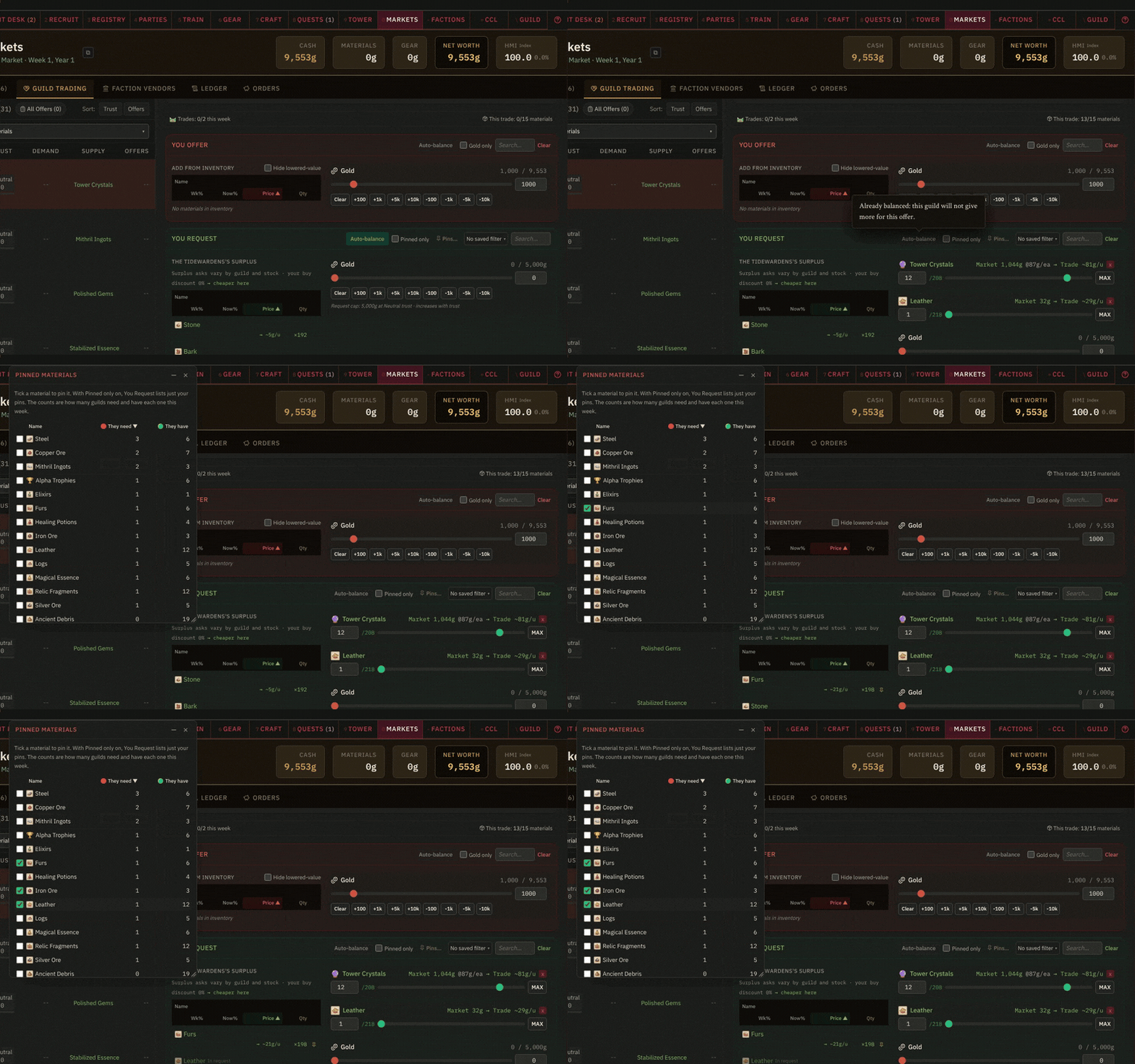
You Request gets a Pinned only switch and a Pins window that lists every home good with how many partner guilds need and hold it. Named Request Filters (show only or hide) live on the Orders tab under Trade Filters.
The Material dropdown on the Partner Guilds list gains Pinned materials, showing every guild that needs or holds one of your pinned goods.
Auto-balance on the You Request side now brings the request up to what the rival will accept, including when you counter a rival's offer. It scales the lines you asked for, fills an empty request from your filtered surplus or asks for gold when Gold only is on. It stays inside your caravan size and storage and tells you when it can't help. A fresh guild offering gold no longer ends up asking for a pile of cheap grain.
Year-End Prize Gold
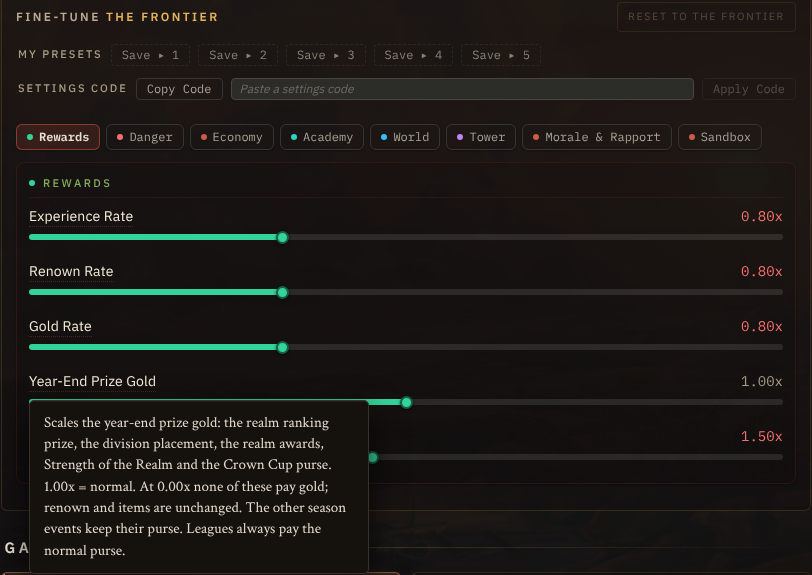
A new Year-End Prize Gold slider in the Fine-tune board's Rewards group scales every year-end payout: the realm ranking prize, the Crown Cup purse, division placement and the realm awards. It runs from none to double and starts at normal in every preset. The Division Rewards tables, the Crown League rules, the Brackets and Season screens and the Year in Review show what you'll really be paid.
Appearance
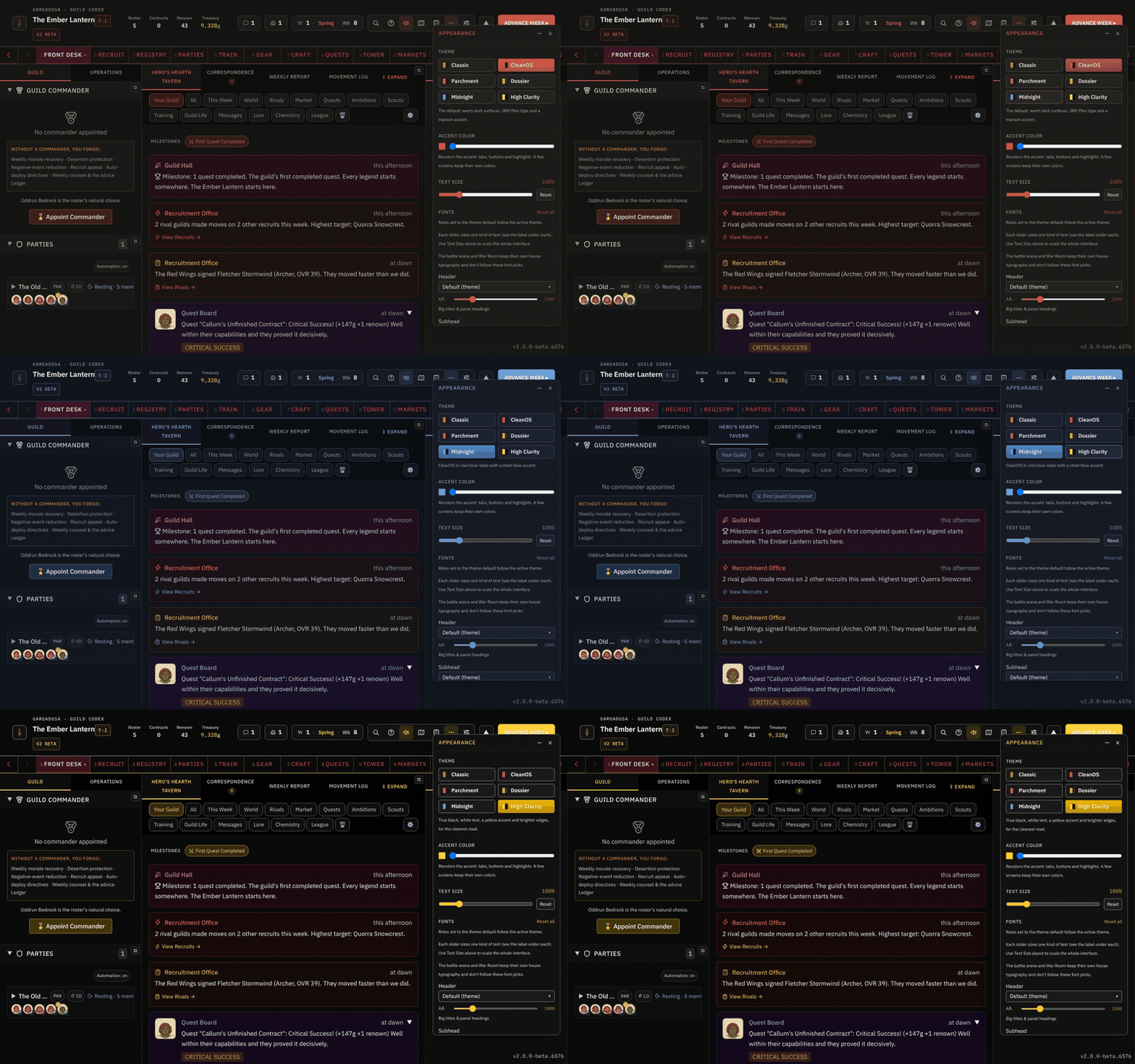
Two new themes in the Appearance window: Midnight (cool blue-slate with cream text) and High Clarity (true black with white text, a yellow accent and a colorblind-friendly green). Both reach Markets, the Crown Cup League and the Factions Wire.
Font picks now reach all the text in the Dossier theme. The accent slider fully recolors CleanOS and says where it doesn't apply. The window stays in step when you change the theme or Text Size from Settings.
Escape now closes the dialog on top instead of the Appearance window behind it.
A custom font keeps the built-in Chinese and Japanese fonts and the emoji fallback, so that text no longer drops to the system font and emoji no longer draw as boxes on Linux and Steam Deck. The Italic pick now also reaches board italics, the Talk Result feud line and the Week Ledger.
Gray text in the default CleanOS theme is brighter and easier to read.
Ceremonies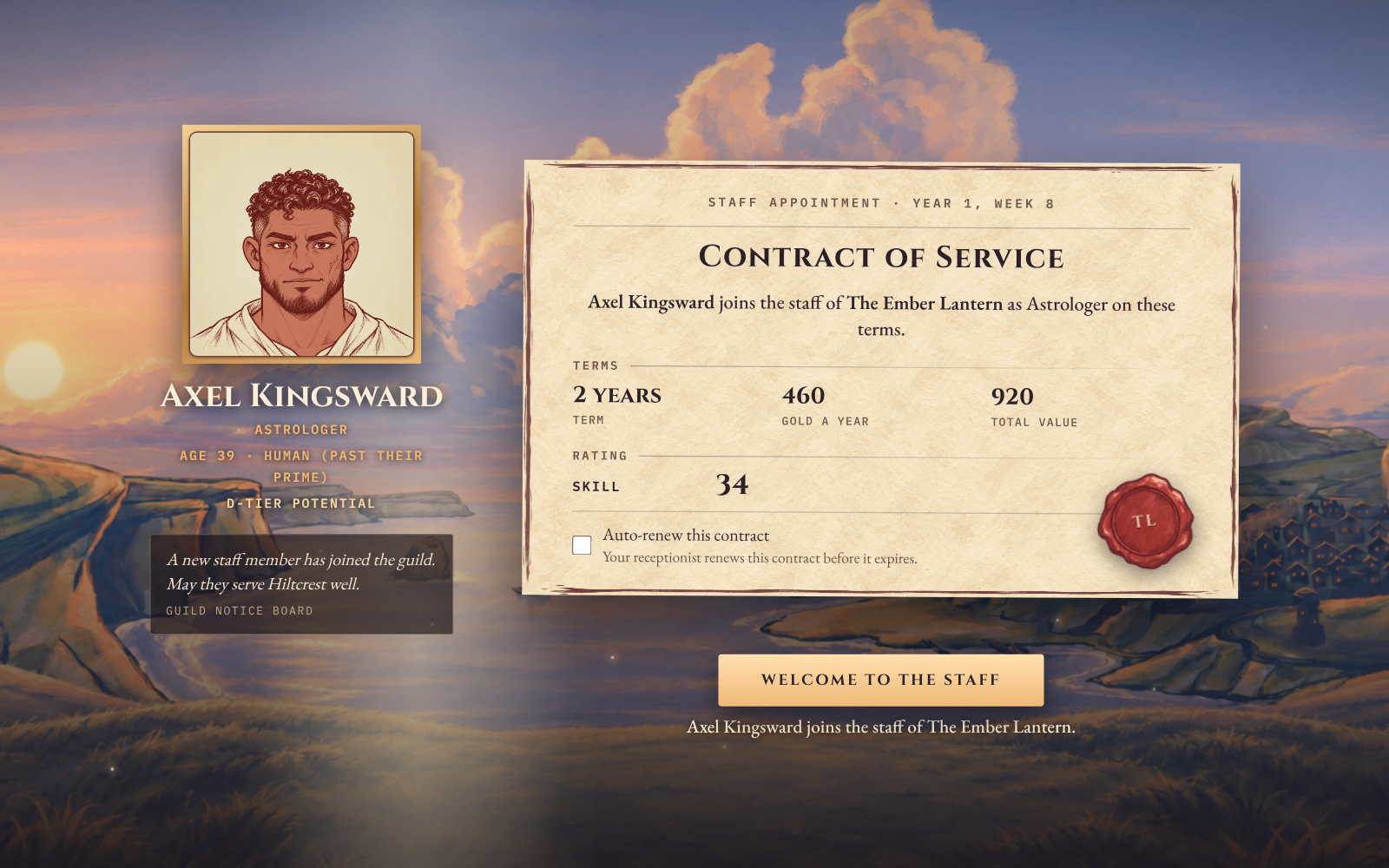
More moments play on the ceremony paper. Staff hires, contract extensions and trade arrivals use the signing page with ink portraits of everyone involved. A faction oath presses the faction's own wax with its leader's face. The Severance epilogue plays in the victory room at night and Game Over strikes your guild from its Crown charter.
The first-hour task cards are now short notes from the Great Sage.
In a league the Crown Cup result crowns the champion with its leader's portrait and every rival row shows its leader's face.
More letters arrive on the ceremony paper with the sender's ink face: a rival's answer to your trade offer, the Deepforge letter and its kit-out note, the Crown's insolvency notice and the District Overseer's tower invitation.
A rival beating Capricorn now plays in the night ceremony room with the rival's chronicle beside its leader's face. The mutiny ultimatum arrives as the ringleader's petition with the signers set against the loyalists. The Royal Banquet arrives as the Crown's invitation with crest and wax.
Letters no longer take focus when they open, so the Space key won't start a fight before you've read it.
Heroes & Portraits
About 500 more ink faces join the Portrait tab across every race, each with young, prime and veteran versions.
The Portrait tab offers many more faces: a hero's own face and faces worn by guildmates no longer go missing from the grid, See them all or Favorites. Elf women went from about 10 choices to about 30. A face one hero gives up can now go to another hero of the same race, gender and age.
A hero's ink portrait is now pinned to them. A new round of portraits no longer swaps an existing hero's face on load and the face carries through trades, the Guild Block and graduation. (Reported by players whose orc and goblin heroes changed faces.)
Rapport
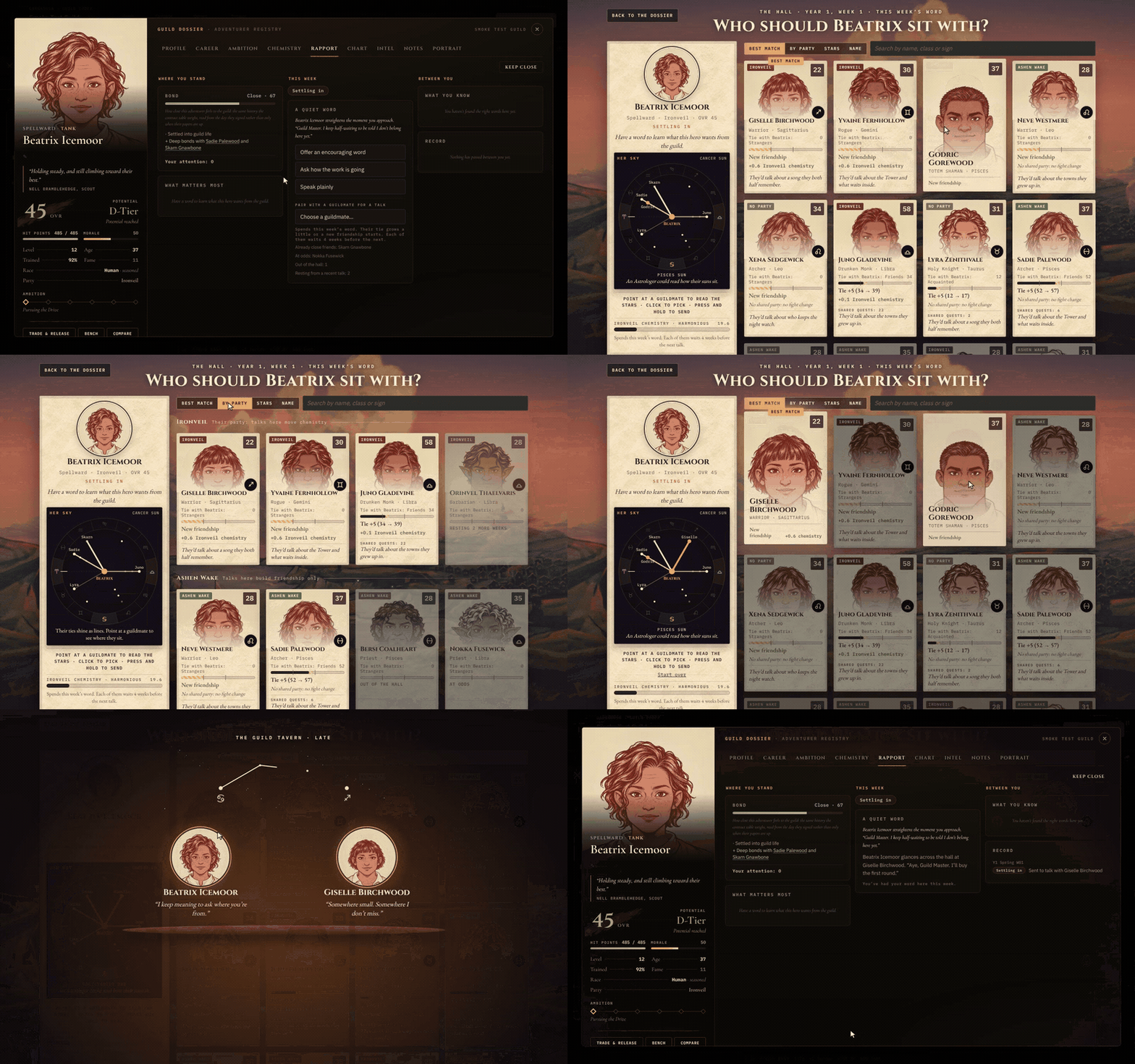
"Pair with a guildmate" now opens the Talk Table, a full-screen picker with every guildmate as a card: your tie, the payoff, the party chemistry gain, their sun aspect and a topic. Click to pick, press and hold to seal and a short tavern scene plays out the result. Guildmates who can't talk right now are dimmed with the reason.
Battlegrounds
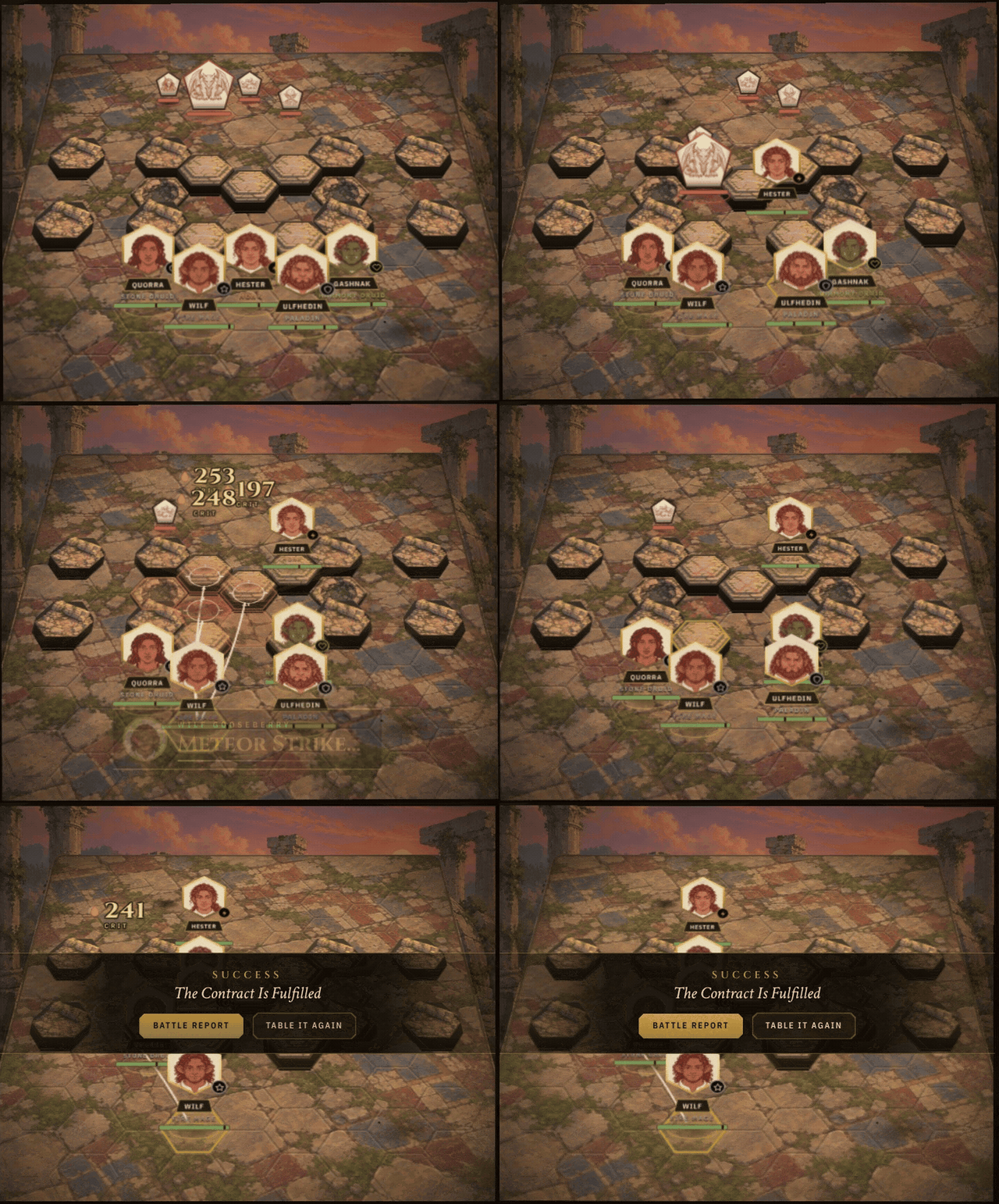
Hazard tiles now show each battleground's own painted lava, fast water, scree or mud instead of the same flat pool. Hazard strength still reads from the tile's rim.
On the tilted board each battleground's painted backdrop now shows as a horizon behind the table. On tall screens the backdrop keeps its scene centered.
Watching a quest's battle replay now draws the quest's own battleground instead of a bare board. The replay's enemy card lists traits, weaknesses and resistances across every creature of that kind.
QUALITY OF LIFE
Parties & Roster

Party member bars now show each hero's attack types beside their class. A type boosted by an active party synergy lights up and its tooltip shows the boost.
The Parties tab search now finds heroes: type a name to find the party they lead or ride with. A renamed hero's birth name finds them too and a search with no match says "No parties match".
The Registry's Class, Level, Age and Race headers now show tooltips like their neighbors.
Age filters no longer hide young Orcs and Goblins or old Elves and Dwarves at their ends, which now read "18 or younger" and "50+".
The Renew tooltip now says a re-sign only happens if the hero is willing and the price fits your budget.
The Parties tab takes the hero Dossier's look. The roster panel has labeled Role, Damage, Show and Sort rows, with bulk actions in an All parties footer. Each party header has a status line, tags behind a + Tag button and Lineup, Commander and When idle rows. The expedition list gets Expedition and Training tabs and a Back home timeline.
Needs action on the Parties tab is its own toggle, so choosing a sort no longer turns it off.
Recruit Adventurers, the Guild Block and the Trading Block searches now match class names and the Class dropdown on Recruit gains a type-to-filter box.
A muted dot now parts a hero's name from their race chip on Recruit, Registry and roster rows.
The Dossier's Trade & release button is now Contract & release. Right-clicking a hero offers Release from contract with the fee shown or the reason it's blocked. The first time you open a Dossier the Sage gives a short tour of the tabs.
On the Recruit tab the D key dismisses an Academy prospect like a free agent and the prospect's right-click menu gains Dismiss.
The Dossier's Extend, Release, Retire, Pin role and Fire buttons work for every hero and Retire as counts the staff seats that are taken. Stat values in the Dossier and the battle viewer sit beside their own labels.
The training list's Sort menu gains Least Trained and Longest Since Training and a button that reverses any sort.
The Registry gains an Amends tab listing every hero with a known flaw: whether they can begin, what it asks and how far along they are. The Flaw panel states the exact condition before you pay and the Sage's flaws page lists all five.
Renaming a hero gives the name field the whole cell, so long names stay visible.
Sorting by role lists each role's best member first in the Registry staff tables and the Workshop.
Recruiting & Rivals
Rival guilds can no longer sign a season's new arrivals in the same week they appear, before you've had a look. A rival's emergency recruiting also leaves a newcomer alone for their first 13 weeks.
When rivals sign free agents at the start of a season, the Live Feed posts one summary of how many they took by potential tier, naming the ones your scouts knew. A rival's short-term signing now shows only what your scouts know of the hero.
Markets & Crafting
Your materials now show their refinement grade (Fine and up) on the Markets stock list and in each material's header. A tooltip explains that a refine sets the grade of the whole stack and better grades raise crafted gear quality.
When auto-refine has no usable recipe it says why and its tooltip lists every candidate with its reason.
The Kitchen's upgrades now raise the Cook's yield. The old craft-speed bonus did nothing.
On the Orders tab the Block and Import buttons stay inside their rows and narrow screens wrap cleanly.
Trade builder: each material you pick now labels its two prices, such as "Market 95g → Trade ~81g/u", so it's clear what each number means.
Sage's Wisdom
New pages: "How Do I Train My Staff?", Challenge Runs and The Four Tournaments. The Markets pages now describe today's tabs, the Crown Cup page names the festivals and the sixteen-guild Cup and the Treasurer page lists the real rank ladder with each rank's sale bonus and order count.
The first-visit CCL guide describes the tab as it is today, all ten tabs. With Disable CCL Events on it no longer promises a week 51 Crown Cup.
New FAQ page: What Does a Patrol Do?
The Read the Week lesson now names the Weekly Summary button.
The CCL tab shows how many weeks until the next CCL event.
The Surface Breach end screen counts only slotted items in the pack, gives hand-carried finds like Soul Shards their own row and puts the Salvage offer under the pack with a warning.
Look & Feel
Faction crests replace the emoji in the Factions intro and locked-feature rows show the building's own art. Locked-feature cards and several headers follow your Icon Style setting.
Title menu: BACK stays pinned at the bottom of long pages like Options and Load Game. Escape leaves any sub-screen.
Staff & Training
A Tier 1 guild with a Tavern now gets a bartender applicant each season and Reception can be built at Guild Tier 1. A new guild's opening pool offers one of each staffer it can hire, so the Astrologer, Bartender, Receptionist and Instructor show up from the start.
Crafter seminars and staff training trips can repeat: until the skill is capped or for a set number of trips. The picker shows about how many trips, weeks and gold that will take. Stop repeat lets the current trip finish and keeps them home after.
You can queue a craft for a crafter who is away at a seminar. The job waits and starts the week they return, at their new skill. A crafter with only unstarted jobs can now leave for a seminar and the jobs wait on the bench.
Battle Musters
The Surface Breach muster, the Goblin Siege gate strike, World Boss sorties and Tower musters list your parties in your party order.
The Surface Breach line chips, the descent's re-form chips and the siege's line picker list your saved formations. A line drawn by hand on the Breach muster can be saved right there.
Rival Challenges and the Crown Cup roster gain one chip per party that loads it as your lineup in one click. In a Rival Challenge injured heroes stay behind; the Cup lets them enter.
Military & Commissions
Military joint operation cards show what the job pays on completion and a "Sent by the Commander" tag when your Commander launched it. A finished operation posts one Live Feed line with what the party earned.
Joint operations no longer list bonus XP and gear they never paid and no longer promise standing with a faction you haven't met. The Commander now picks operations by what they actually pay.
Commissions list eligible items cheapest first with each item's sale value and the Quartermaster's auto-deliver uses the same order. A worn high-tier piece is no longer handed in ahead of a cheaper one.
BALANCE
Standing orders now need only a War Room. The party Focus panel no longer also asks for a hired Tactician. A Tactician still adds the full order sheet and their judgment.
Sanctum Meditation always picks a stat that still has room to grow, so a roll is never wasted on a capped stat.
A crafter away at a seminar no longer refines materials. Quick Craft says a Cook or Alchemist is needed when your only one is away and auto-refine picks a staffed route.
Staff life stages use the same age brackets as heroes of their race again. A hero who absorbed the Grimoire of Endurance now shows the right life stage.
Quest and mission odds now count your heroes' levels. An under-leveled party used to see the odds of a party at the right level; its Success and Death chips, Risk word and clear rate now read honestly. A party at the right level reads a little higher on Success than before. The deploy panel's breakdown gains a hero-level row and world event missions show a Hero levels line. Only the odds you see change, not the fights.
World event and request mission pickers read the fight they preview, so Clear rate and Death no longer drift with squad size. The Danger word on a mission and the Commander's read of a quest follow hero level too, so the Commander won't send a fresh party past your risk ceiling. Frontier Patrols read the same level-aware risk.
Ranged heroes in hex battles now line up behind the front-liner who is actually fighting instead of hanging back for the slowest one. Some close fights will tip differently. (Reported on Steam.)
Long-lived races age in step with their normal lives past human 60, so a Timeless elf keeps their prime longer than a dwarf. Their staff retire at the same point of their lives: dwarf and merfolk staff a few years sooner, elf and fae staff some years later. The Timeless trait now says its century is in human years.
Repeating seminars, training trips and the Academy's auto-intervention only go while your gold stays above zero after the week's spending.
BUG FIXES
The Epic Knight's Indomitable and its Legendary twin Aegis of the Absolute now say "invincible for one battle" instead of a number of seconds and say what they do against another party in the Crown Cup, duels, season events and Trial by Fire. They work the same as before.
Losing a World Boss fight no longer ends on "The Tower Holds". World Boss battles have their own victory and defeat titles. The sortie forecast's risk word now matches the outcome beside it.
Tower Muster: "Call up the best parties" now honors Deployable only and no longer seats injured, resting or away heroes.
Armory: "Worn by" turns green only when the hero can actually equip the piece. A piece the hero is already wearing is no longer dimmed.
The welcome page for a hero bought in a trade shows their own portrait and race.
The quest board's Promised tag no longer appears on a job that would return after the promise's deadline. Celebratory rival raid lines only appear when the raid came home without losses.
Crossroads no longer lists Legend roads a hero can never reach.
Hero card tabs on the Parchment look no longer cut their labels in long languages or at large Text Size.
In the Portrait tab a face another hero wears no longer stretches its tile. The current-portrait frame shows the custom folder art a hero is actually wearing.
On browser saves the custom portrait album now has a size limit and says so when it's full, instead of the save quietly growing.
Quests on your board that featured the Unclaimed keep an enemy on load: a Stitched Thrall stands in until the Unclaimed returns with its art.
Field Dispatch shows the party name on the level-up card after a raid. Ceremony titles keep their bold type on themed pages.
Headhunts under Humans Only no longer name a race your guild can't recruit.
Meditation gains now post under Training Completions, so hiding Guild Life lines no longer hides them.
New Game+ no longer deletes your autosave and backup before the new run has saved. A crash in that first moment used to lose both runs.
The New Game+ "What you keep" ledger prices weekly pay and the starting treasury after your blessing and counts the Academy Only cushion.
New Game+ setup no longer auto-picks a hero you parked on the Reserve bench. Mend Your Halls can't be completed by demolishing a hall. In Twitch mode New Game+ keeps the halls its setup showed.
The New Game+ return letter now says the frontier kept your fallen, since it counts every death of the run.
The Season Chronicle keeps your Crown Cup honors line even with Year-End Prize Gold at zero. Division, realm award and Strength of the Realm gold each get their own row in the Transaction Ledger.
Faction and Crown letters at the Front Desk wear the sender's own portrait. Some wore another person's face.
The victory card reads "Across 1 year of struggle" in every language.
The Crown League intro describes this season's four tournaments: three festivals and a sixteen-guild Crown Cup at Week 51.
Guild seals skip a leading "The", so The Ember Lantern seals EL.
Hero rows say "their Proving" and "their dossier" instead of "its".
Rival letters and War Table lines no longer read "the The River Hilt". Patrols, holds, threats, convoys and outposts name the region cleanly in the Live Feed and the Week Summary, in every language.
Rival heroes your class limit bars are hidden by Hide won't deal and Make Trade Offer is greyed out on them with the reason.
A Dwarven crew covers a Deepforge trade while your only crafter is away.
Sorting You Request by Price now follows the price each row shows.
A proposal a rival agrees to now counts toward Trades completed on the rival's card.
At re-signing a hero's years served match the bond check, so a hero from an older save no longer reads as a newcomer and a hero who just arrived no longer talks about a year of service.
The Q command palette no longer opens Auto-Renewals before you hire a Receptionist.
Auto-Renew All switches itself off with a Live Feed note when your last Receptionist leaves.
The Quartermaster's commission auto-deliver no longer hands in a piece you locked in storage.
A Crown Cup walkover no longer counts as an earlier win in the finishing order.
The victory screen counts the final year and its Tower Floor Clears row no longer adds 100.
The Sage's letter On the Web You Weave names all six factions.
A faction oath is recorded even if you leave the tab as the seal lands.
"Trades completed" on a rival's profile counts every trade, not just the last ten.
The release confirm for a hero who is your Guild Commander now warns you from the D key and right-click too.
The Academy's capped Potential Trend hint now points to Prodigy Watch instead of curriculum focus.
The Sage's "Dispatching Adventurers" page is now "Faction Dispatches" and says where dispatches really come from.
World event endings show the renown you can really lose. A Crown League match where neither side can field anyone no longer hands both guilds a Cup place.
Older rival raid lines in the Live Feed open the War Table on the right region.
A rival's trade acceptance letter says the hero is on the way when you asked for one hero.
The Endurance Grimoire's confirm, preview, hero log and town feed show the real retirement age for long-lived races.
The Ashen Stag's departure letter reads in your language and only arrives if your guild ever met it.
Town News lists only seasonal happenings and Name Book entries keep their other race tags when one is merfolk.
Ward and heal lines on ability cards say "Guards a cluster of hexes" and "Mends a cluster of hexes". Nine single-target protect and heal skills say "an ally and those beside them", which is what they already did.
CleanOS: gray text variants follow the brighter gray and disabled labels dim properly. With High Contrast Text on, secondary and muted grays are two steps again. Race chips and "Formerly of" badges get a visible edge.
High Clarity and Midnight: buttons on the accent color use dark text, so Advance Week is easy to read. Rival crests follow your Icon Style setting.
MULTIPLAYER
The CCL Loadout counts standing-order slots the same way the league server does. It no longer credits a Tactician the league doesn't use. A War Room damaged by a siege or breach holds no orders in league matches.
Trade heroes with other guildmasters: offer a trade, bid gold to poach a hero or sell a contract. A hero moves only when both guildmasters say yes. A fellow guild's profile lists its heroes with Scout and Ask buttons and Markets ▸ League tracks every offer. Offers keep room on your roster and one hero can't be sold twice in a week.
League rival heroes age, grow, retire and fight in real parties on quests, raids and Tower climbs, so they can be wounded or killed.
In a Rivals 2 league a rival guild can fold as in single player and a new guild takes its seat a few weeks later.
Competitive leagues give each guild its own Goblin Siege scaled to its tier. Co-op leagues run Surface Breach and the shared Goblin Siege and can establish and work holds like a competitive guild.
League festivals gain withdrawals, per-round wagers, scout reports and tournament commissions.
Guild Duels fight on each side's Battle Doctrine and formation.
The Trading Block opens in leagues and rival goods deals settle on the server. Goods trades with a rival build trust and respect the weekly limit.
Scouting another guildmaster's hero now takes at least two weeks.
League goods deals price each material at its market value, say why they're refused and refuse more than eight kinds on a side up front. The Treasurer no longer auto-accepts a rival's goods offer in a league.
Traded heroes keep their exact age, Endurance Grimoire years and career record. Festival withdrawals and wagers changed in the final week reach the server. Co-op siege sorties play their replays again.
League fights now use the new ranged line, so update to watch joint fights the way the server plays them.
League recruits roll a class kit and a Drive and follow the founder's difficulty settings. A Rival Challenge win calls off a shared contest against that rival.
Fixes: a counter to a rival goods offer spends its caravan when sent, a bid for a hero traded away says so, goods trades count toward Trades completed, Deepforge no longer waits for an unlock with the story switch off, a withdrawn guild no longer collects walkover pay, a collapsed rival lets go of heroes it bought, a newcomer never inherits a departed hero's record and the CCL intro matches your league's settings.
TRANSLATION
The load-failure and crash screens now speak your language.
Hero and staff names use your language's name table on every screen. Before, some screens showed Cyrillic names while others showed English. A Cyrillic first name you type still gets a translated surname.
Now translated: the new-game intro's Sage aside and Chapter One excerpt, the game mode names on the New Game, league and New Game+ screens, refinement grade names, the Contracts tab's busy label, a scouted instructor's role, Visitation creature names and the World Boss departure letter.
Traditional Chinese: about 55 lines that read "taxi" where they meant morale or soldiers are fixed, along with other mistaken conversions. Rival signings read 簽走.
Korean and Russian: story characters' names now read the same alone, in full and on the roster. Random recruits no longer share a story character's name spelling. The same fix covers Japanese recruit names.
French: the New Game+ blessings read in one consistent voice.
Supply convoy and outpost lines, the town words tooltip, the staff release confirm and New Game+ trait descriptions now read in your language.
War Table lines name the region in your language.
Grimoire results in the hero log and the town feed read in your language.
The Military Services operation card names the operation in your language.
Russian, Japanese, Korean and Chinese: Parties and Registry search match the names as written on screen.
Dutch War Table lines lead with the region name. Russian: Seraphine reads Серафима.