Hello, friends!
It's October 2026, and we're releasing a new update for Pathologic 3. We're fixing bugs, improving existing mechanics, and adding several new features. We've published the full patch notes separately. They're rather extensive — ten whole pages.
But today, we'd like to talk not so much about individual fixes as about the process of fixing something that's already finished.
Think of this devlog as a letter. Two hundred years ago, people wrote to their friends to ask how the winter crops had turned out and what price oats were fetching at the market. But the crops were often just an excuse. The real reason for writing was to stay in touch and reflect on life. And that's what we're doing here. We've already released quite a few patches. Let's talk about games in general, about theater, about art, and about mistakes.
If you'd rather watch and listen than read, we've also prepared a video version of this letter.

Fixing What's Already Finished
What's so wonderful about theater? The fact that it never stays the same.
You can have the same production, the same director, the same theater, and the same actors. Yet every performance is different. The delivery changes, the pacing shifts, and sometimes even the actors are replaced. Did a scene fall flat? Did a joke fail?
Next time, you can try something else.
Cinema is different. Once a film has been edited and released, it generally remains as it is. Of course, there are director's cuts and re-releases, but those are different versions of the film. You had one film, you re-edited it, and now you have two. You had one play, performed it differently, and it's still the same play.
But what about games?
For its creators, a game is never truly finished. Unlike a film, it can keep changing after release. Bad balance can be fixed. An awkward mechanic can be reworked. Sometimes the changes can be far more radical than anything you could do to a theater production. But there's a problem.
In theater, the audience's experience is shaped by the actors and everything happening on stage: sets, lighting, music, costumes, and even the arrangement of seats in the auditorium. Antonin Artaud, who developed the concept of the Theatre of Cruelty, paid particular attention to this. We think he might have liked Pathologic.
In video games, however, the performance is created by the players and the game's code. Neither is entirely under the developers' control.
We expected the player to view a scene from a certain angle, but they walked into a corner and triggered it from there. We expected the code to do one thing, but it did something else. This is a kind of fog of war. We can never fully predict how a game will work until someone actually starts playing it.
And there's another difficulty. A filmmaker can watch their own film almost on equal terms with the audience. A game developer can never quite do the same. We know too much about the game. We've spent hundreds of hours with it and played dozens of different versions. Our senses have grown dull in precisely the places where we need them most.
That's why your impressions, reviews, and feedback matter so much to us.
Art, Function, and an Invisible Apple Tree
There's another fundamental difference between video games and other art forms: a video game is software. It has to work.
Roger Ebert, the famous film critic, once argued that video games could never be art. It's curious, then, that urinals and bottle racks achieved that status with hardly any struggle, thanks to Marcel Duchamp.
So Myst, StarCraft, or Pathologic can't be art, but a urinal can? The distinction, perhaps, lies in function. A urinal placed in a museum stops being plumbing and becomes a symbol. A video game, on the other hand, remains a functional object. We still have to use it.
But enough about urinals. Let's turn to another famous work: Joseph Kosuth's One and Three Chairs.
In this work, a chair is no longer simply something to sit on. Whether it's comfortable hardly matters: as a work of art, it still functions. A video game can also become a symbolic chair. But you still have to sit on it. There's a running joke that Pathologic is a great game that nobody actually plays. Somehow, it really has become something like Kosuth's symbolic chair, one nobody is obliged to sit on. Which raises a question: should we even fix Pathologic if its symbolic nature has almost overtaken its function as a product?
Take visual bugs, for instance. Are they broken chairs you can't sit on, or artistic decisions?
Consider our famous invisible apple tree. Oh, apple tree! Why are you here? What are we supposed to do with you? This is probably the most famous bug in Pathologic 3. We've received more complaints about it than almost anything else. We have to admit there were moments when we genuinely hated that tree. Are we going to fix it in this update? Perhaps not.
After all, it's a creation of the machine. Somehow, the game's code produced this impossible object. And over time, our annoyance at it has begun to turn into a strange affection. Sometimes an artistic act lies not in creating something, but in the artist's decision about it. Maybe this apple tree is trying to tell us something. So the tree stays.
What, then, are we actually changing?
What's New in This Update?
New Difficulty Modes

We're adding two new difficulty settings while keeping the original one unchanged.
Easy — significantly reduces the pressure of the gameplay systems, allowing you to focus on exploring the story without constantly having to solve gameplay challenges.
Normal — remains the experience we designed for release. We think it's important to preserve it.
Hard — demands more careful resource management and a deeper understanding of the game's mechanics.
Photo Mode
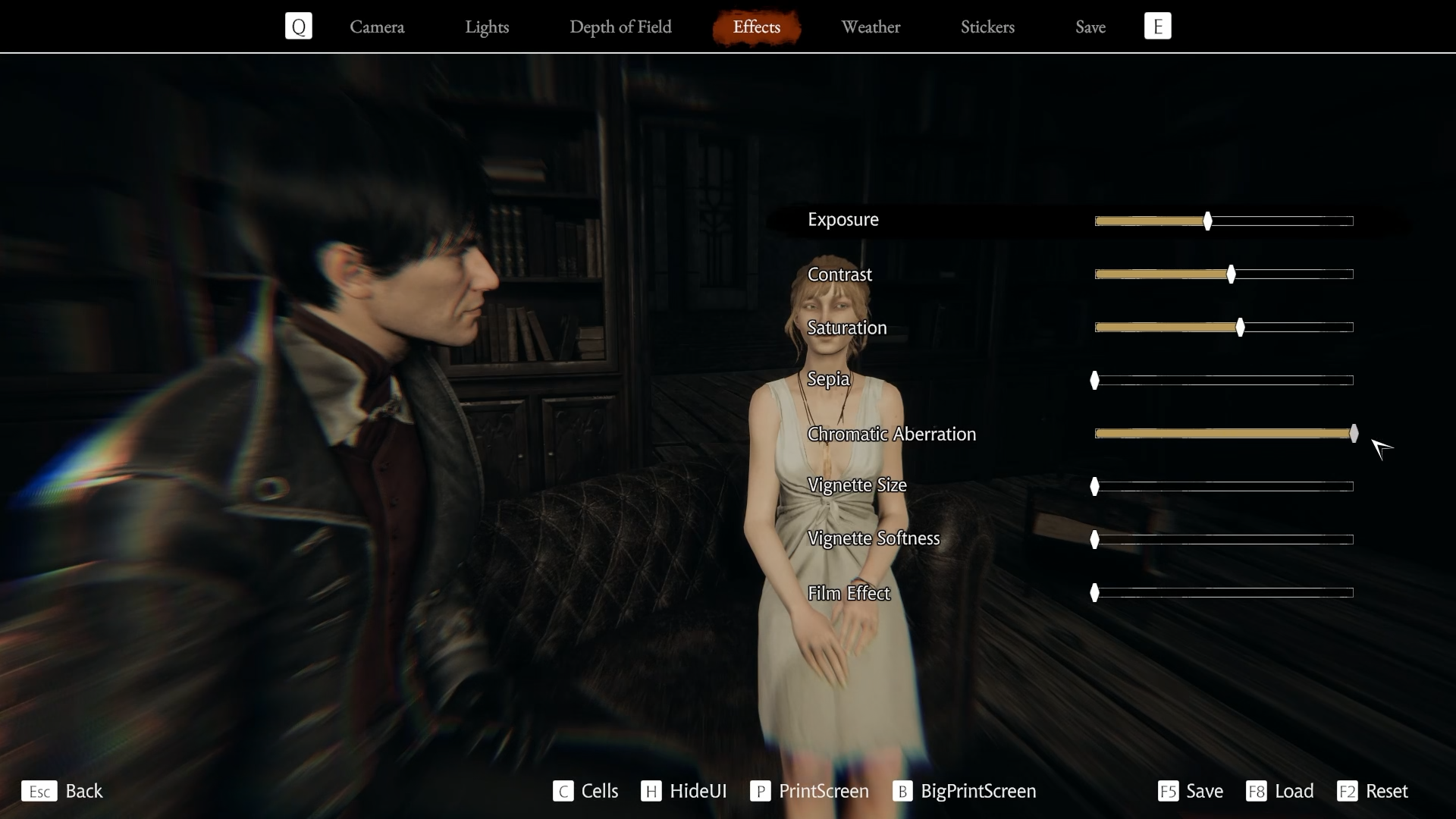
Now you can create your own works of art using Pathologic 3. The Pathologic community has always shown remarkable artistic talent. We hope this new tool will help you see the Town from a different perspective and capture things that perhaps even we haven't noticed.
New Decree Icons
We've added new icons for decrees. They should now be much easier to tell apart, especially later in the game.
Two New Ways to Kill Shabnak
One resembles a game of hide-and-seek. The other is more like choosing a bride, as in the Novgorod tale of Sadko, the Celtic tale The Green Man of Noman's Land, or the Scottish fairy tale The Battle of the Birds. Why does Dankovsky have to choose a bride? And why is this bride trying to kill him? We'd rather leave that for the players to figure out.
Subtitle Language Selection
You can now choose your preferred subtitle language independently of the voice acting. Whether you want to experience the original performances with translated subtitles or simply prefer a different language for dialogue, the choice is now yours.
Beyond these additions, the update includes numerous technical fixes, improvements, and gameplay changes. You can find all the details in the full patch notes.
You Could Fix Him (And You Did)
There's a saying in game development: "A game can never be finished, it can only be released." We could have spent several more months working on this update — it's hard to stop fixing and tuning. First you fix bugs, then you improve individual mechanics, then you start rebuilding entire systems. Before you know it, "fixing" has turned into "remaking."
But the Bachelor is standing firmly on his own two feet now.
This update would have been impossible without the people who helped us along the way. Above all, we'd like to thank our team of volunteers. Your reports, comments, and suggestions helped us stay focused and bring this work to completion. Without you, this patch might never have made it out of closed beta.
Special thanks to our technical director, Albert, who not only helped with the Pathologic 3 update but also joined the work on a patch for Pathologic 2. Albert, you're a force of nature! And we'd also like to thank Marcel Duchamp — for his humor, his notes on art, and especially his work The Bride Stripped Bare by Her Bachelors, Even.
There's something strangely familiar to us in that image of the bride, those absurd bachelors, the ambiguity, and the playful way the artist treats his own work and its possible interpretations.
We think our invisible apple tree could become good friends with that piece.

And Finally, Thank You
This has turned into quite a long letter. And some rather strange thoughts. But Pathologic 3 is a very unusual game — in fact, it's almost impossible for a game like this to exist in today's market. And yet, it does. It's possible thanks to you — the people who play, debate, criticize, search for meaning, and keep returning to the Town. We hope you'll enjoy the update. Take care of yourselves.
With warm regards,
Ice-Pick Lodge