
Starting out
[p align="justify"]One of the earliest decisions that became pivotal in creating Park Adventures was the notion that a park should be an area you are able to define yourself. We had a lot of ideas, like setting up an individual building that would work as a main hub, but after a while of throwing these different concepts around, we moved away from having one building or entrance define the park, and instead started looking at something that is already familiar: districts. [p align="justify"]The basic idea became that you define a park district, and that district would determine where the park exists, while leaving the contents in your hands. Rather than prescribing a specific layout, the district gives the different park elements a common structure to work with. This also meant that we could make the park itself more flexible. Different park types can exist together in the same area, the buildings can be mixed freely, and you can use the pathways and roads that make the most sense for your park. Even public transportation can run through the park itself rather than simply stopping at a predefined entrance.
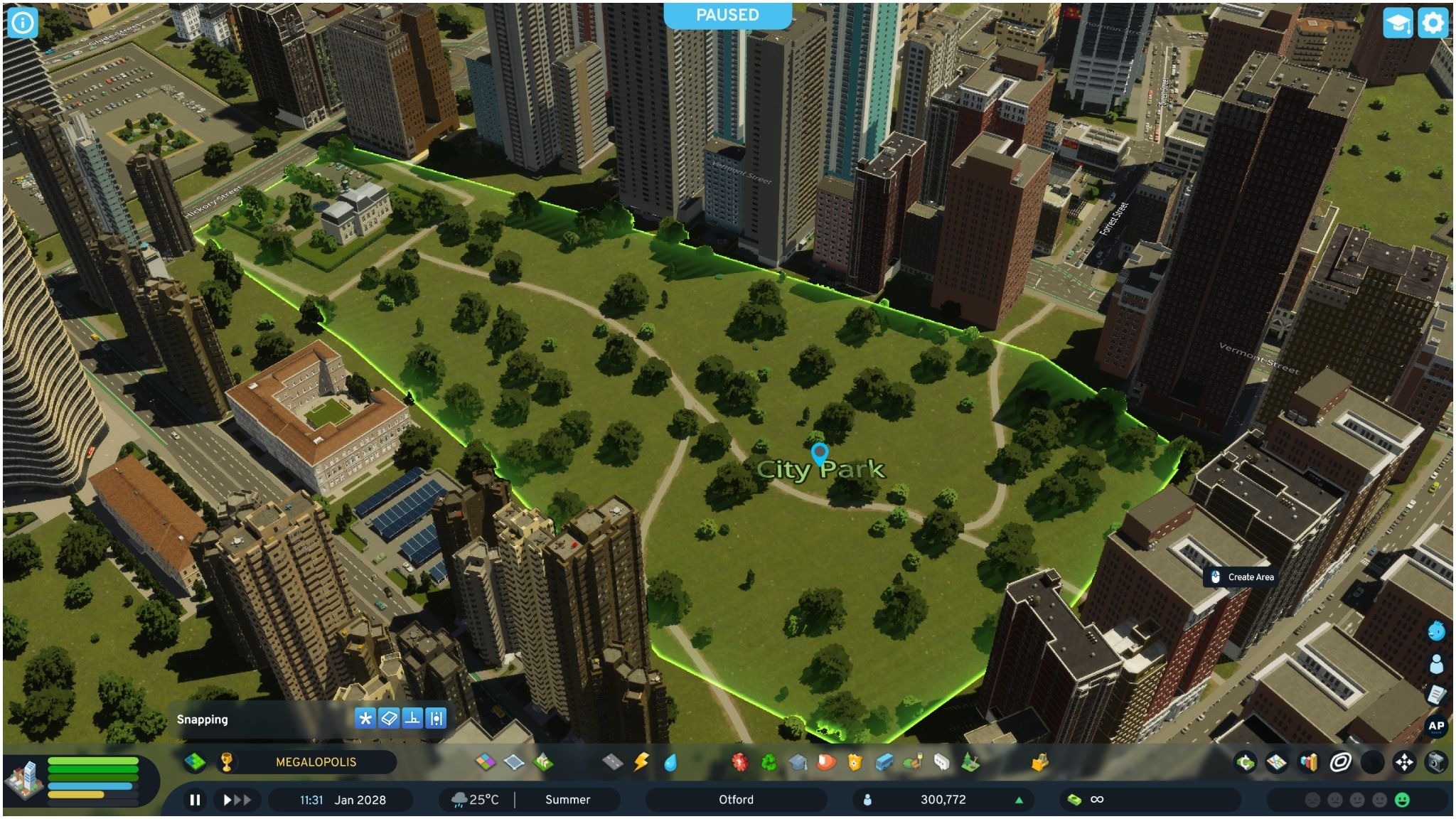 Once you have defined your park district, it will show up as a green area within your city.
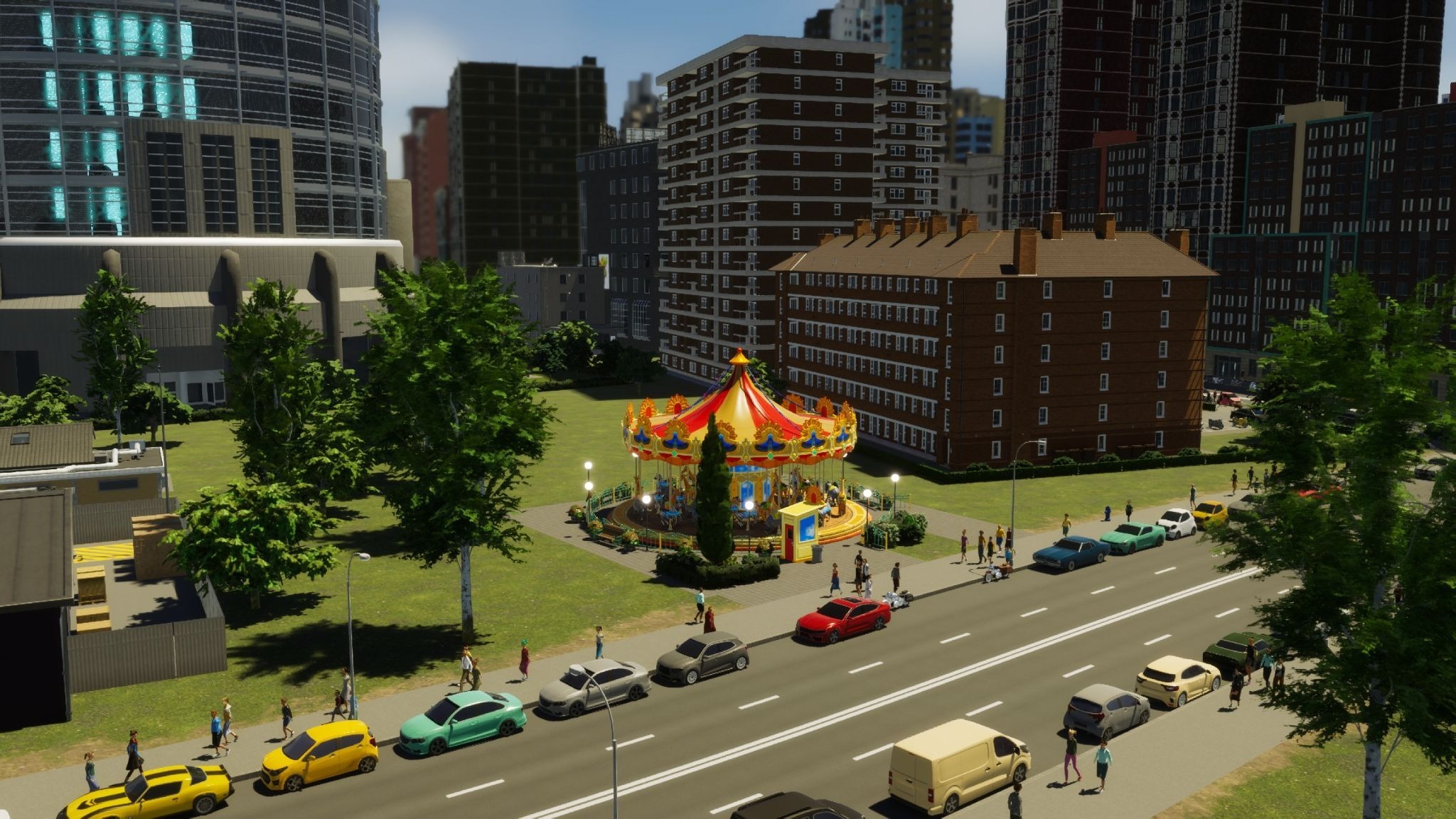 Want to plop Merry-Go-Round next to an office building? No problem!
The Gameplay Loop
[p align="justify"]Once we had the park district figured out, we had to think about what actually happens when you start filling that area with buildings. The core gameplay loop is fairly straightforward: you draw the park area, start placing buildings, and then watch citizens move through and around it. Their visits contribute experience to the different park types, which in turn unlocks more buildings as the park develops.[p align="justify"]We ended up choosing four different park types: Amusement Park, Zoo, Nature Reserve, and City Park. However, we did not want the park area itself to dictate which one you were making. Instead, the buildings determine the direction of the park, and different types can be mixed together. That means you can start with one idea, and gradually take the park in another direction, rather than having to decide everything before you have even placed your first building.
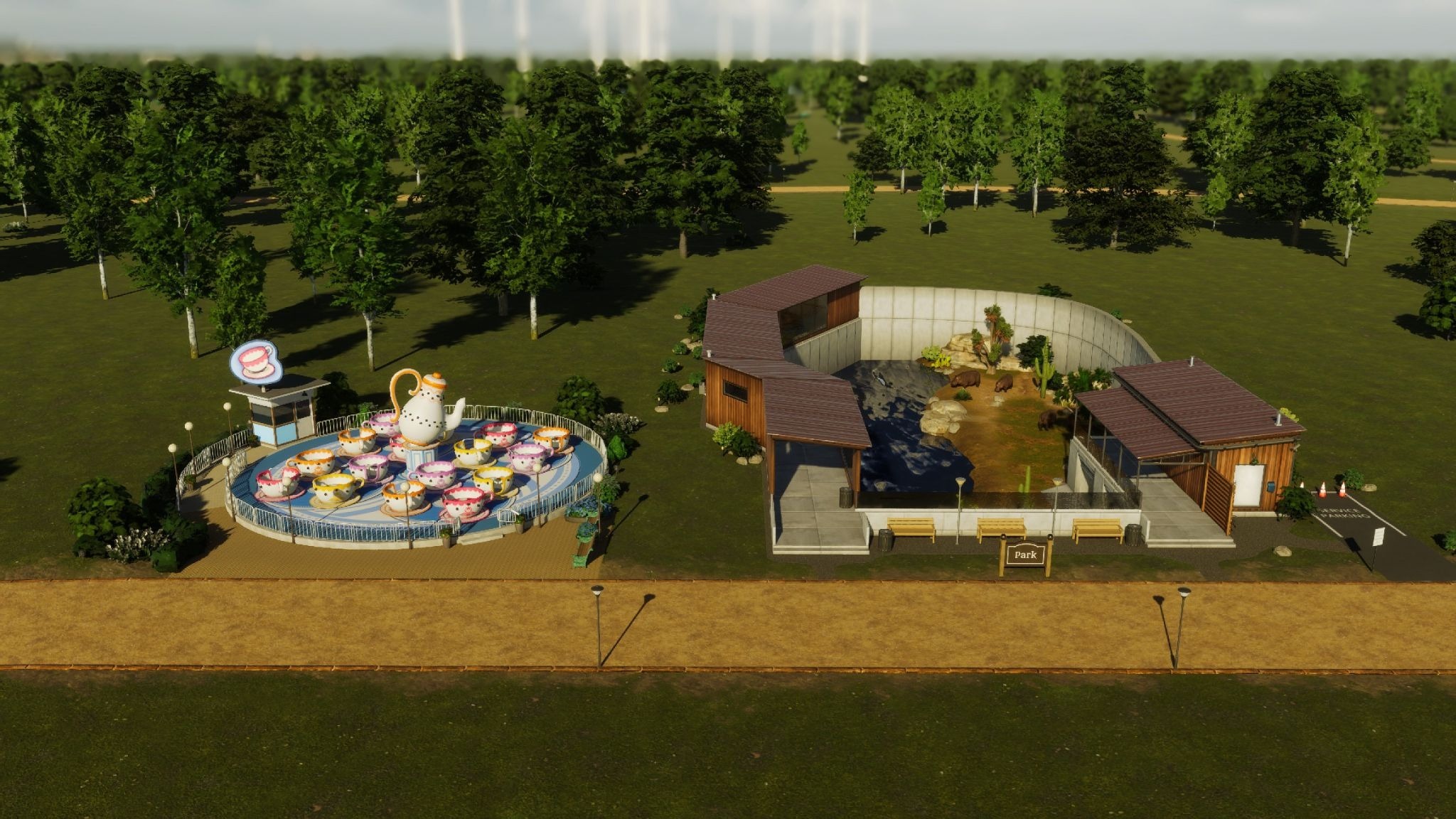 Spinning Tea Cups and a Hippo Enclosure, representing the style of Amusement Parks and Zoos.
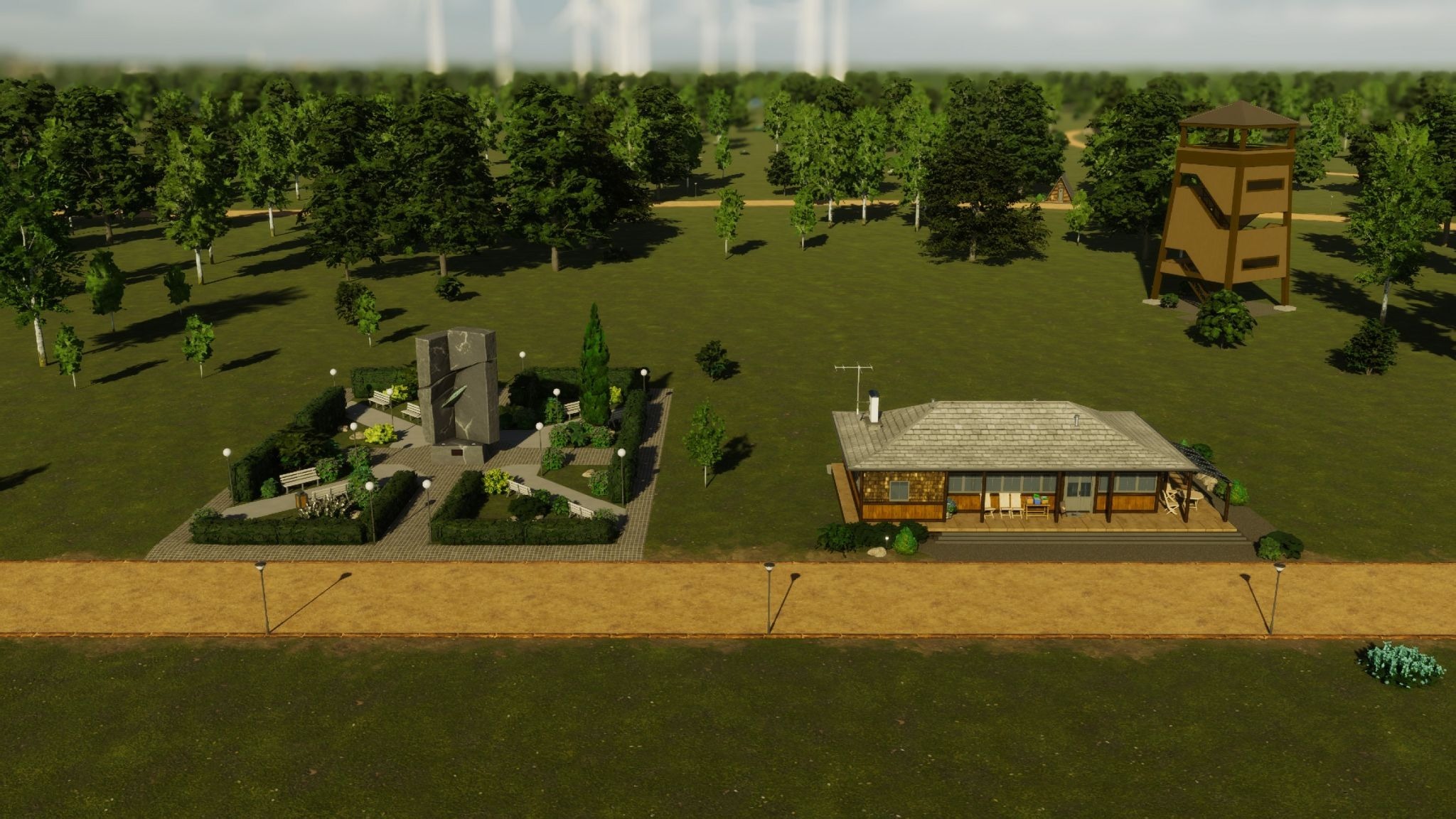 Memorial Sculpture and a Guest Lounge Cabin, representing the style of City Parks and Nature Reserves.
Rethinking Leisure
[p align="justify"]As we progressed, another issue became increasingly difficult to ignore; leisure itself needed a much broader rework. The existing system is quite straightforward. A citizen determines what kind of leisure they want and finds a suitable destination, which is generally chosen based on the distance. Once they have done that, there isn’t much reason for them to reconsider this decision. Of course, that doesn’t leave much room for the idea of actually spending time in a park, which became a problem.[p align="justify"]One of the first concepts we experimented with gave individual visitors their own leisure preferences. We looked at things like excitement, socialization, and relaxation, and considered having different types of citizens lean toward different activities. For example, child citizens would prefer excitement, adults socialization, and elders relaxation. [p align="justify"]This sounded interesting on paper, but it quickly created other problems. If a visitor had a very specific preference and the park didn’t contain exactly what they wanted, they would always be disappointed. We also didn’t want to turn leisure into a system, where you had to constantly check whether every individual citizen had all of their personal needs perfectly satisfied. The general age distribution also created issues, due to the adults covering 60-70 % of the population, which meant that you would only really need to build one type of park. [p align="justify"]There is a balance to find between having individual citizens behave in believable ways and having the larger simulation remain understandable. So, the system moved towards looking at the park as a whole, while still allowing individual visitors to make decisions within it. One of the biggest changes is that the citizens now make their leisure choices based on more factors than how close something is. Capacity matters, for example. If one destination is already crowded, a citizen may decide that another park is a better choice, even if it’s a little bit farther away. Not only that, but the condition and the quality of the leisure destinations also affect the experience.[p align="justify"]The citizens within a park also evaluate what is available as they move through it. They might consider the distance to something, whether there is a long queue, whether another destination looks like a better option, and eventually deal with the consequences of those decisions. A hot dog stand that seemed like a good idea can become less appealing if a large queue forms by the time the citizen gets there.[p align="justify"]The amenities add another layer to this. Restaurants are treated more like attractions, while amenities fulfill the secondary needs that can arise during a visit. A citizen may decide they need to use the restroom, for example, and the quality and availability of those services can affect their experience, which can further affect the rating of your park.
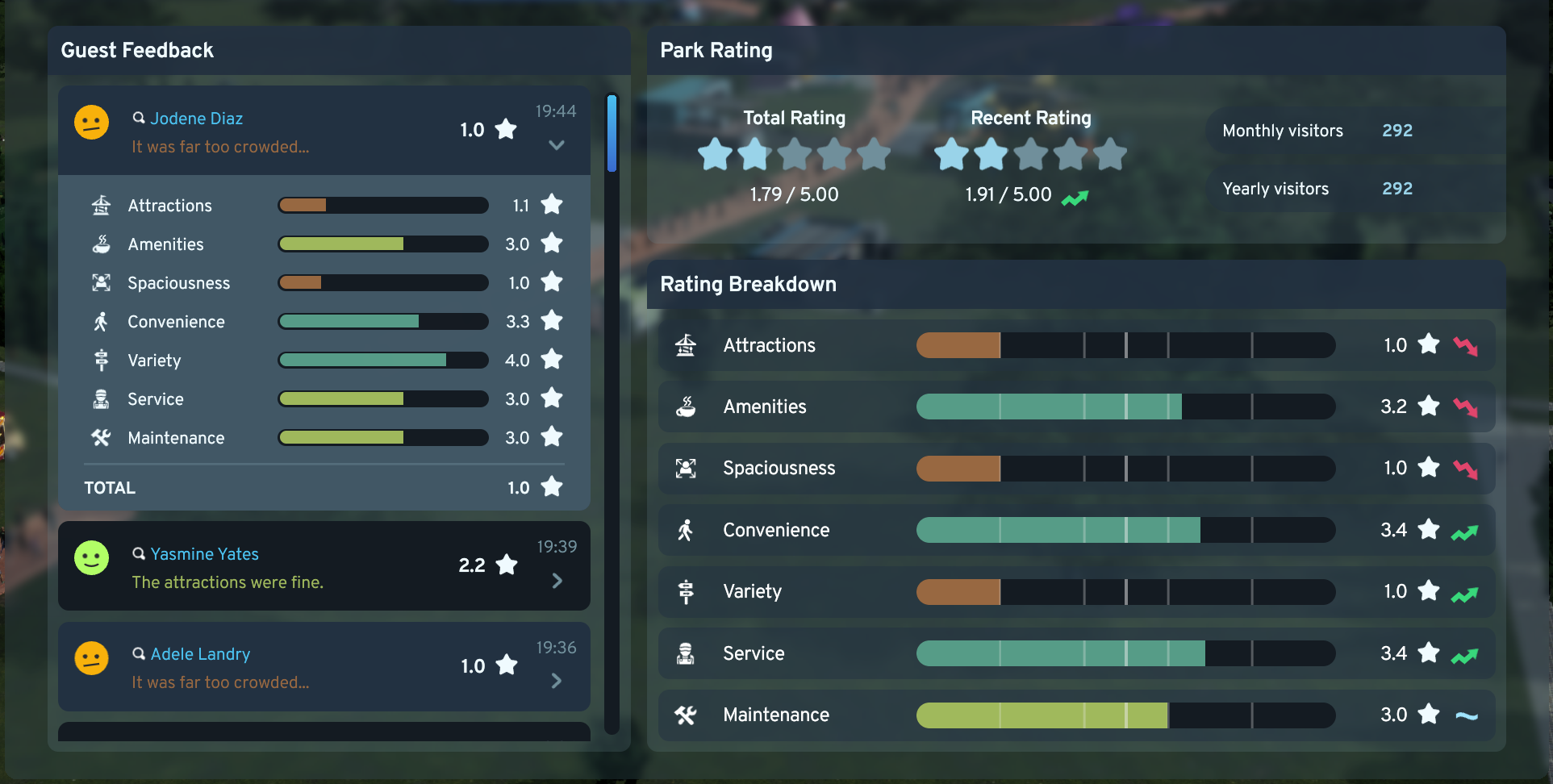 Following the Guest Feedback and Park Rating can help you in deciding what to do next.
Looking at You, Citizens
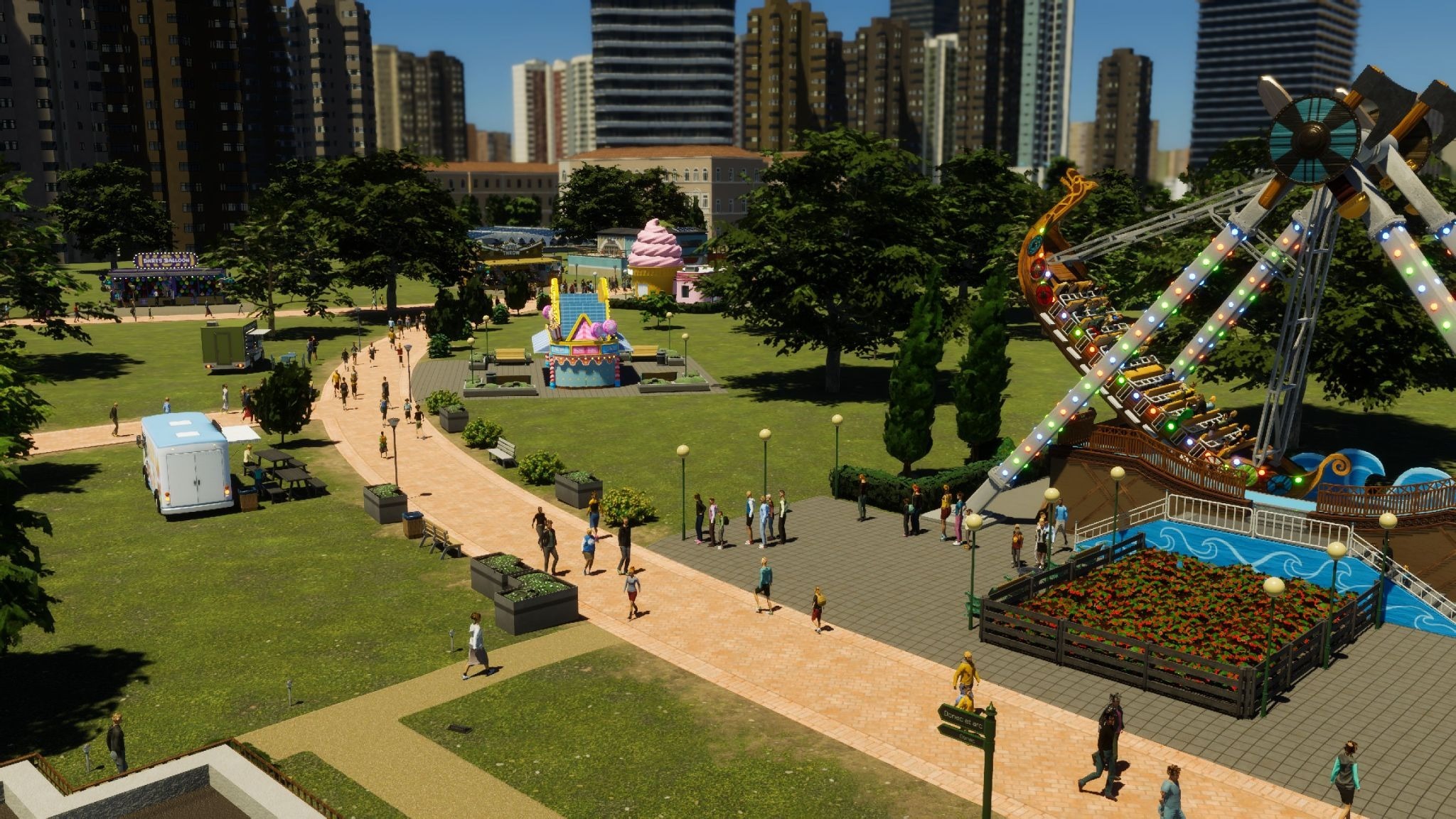
[p align="justify"]Naturally, the above-mentioned aspect brought us to another part of the development. What do the citizens actually do once they arrive at the park? One of the things we have wanted to improve more broadly is the visibility of everyday life in the city. A citizen travelling from one building to another is important to the simulation, but watching those citizens actually stop, interact with their surroundings and spend time in public spaces adds something different. Leisure felt like a natural place to start experimenting with that. [p align="justify"]Citizens can now visibly queue for attractions, sit on rides, and watch animal exhibits. These are things that might look fairly straightforward when you are playing, but technically they involve quite a few different systems working together. This same thinking also led to interactive props. Before leaving home, a citizen does not necessarily decide that they absolutely must sit on one particular bench. Instead, if they are already travelling somewhere and encounter a suitable interactive prop along the way, there is a chance that they stop and use it before continuing on their original journey.
Final Thoughts
[p align="justify"]There is one other part of Park Adventures that might be easy to overlook when talking about the DLC itself; a lot of the work we have been doing is coming to the base game as well.[p align="justify"]The leisure rework is probably the biggest example of this. While it started as a core part of developing the new parks, the changes are not limited to the DLC. The new leisure systems, along with improvements to how citizens choose and use leisure destinations, will be available to everyone, whether you own Park Adventures or not. [p align="justify"]And that’s not all! We are also bringing plenty of visual and other improvements to the base game, which we will dive deeper into in future Dev Diaries. Needless to say, there is a lot of work going into the free updates alongside the paid content, and some of it reaches beyond parks themselves! So, while Park Adventures is about creating parks and giving citizens new places to visit, the work around it has ended up touching a much wider part of the game.
