Hi everyone!
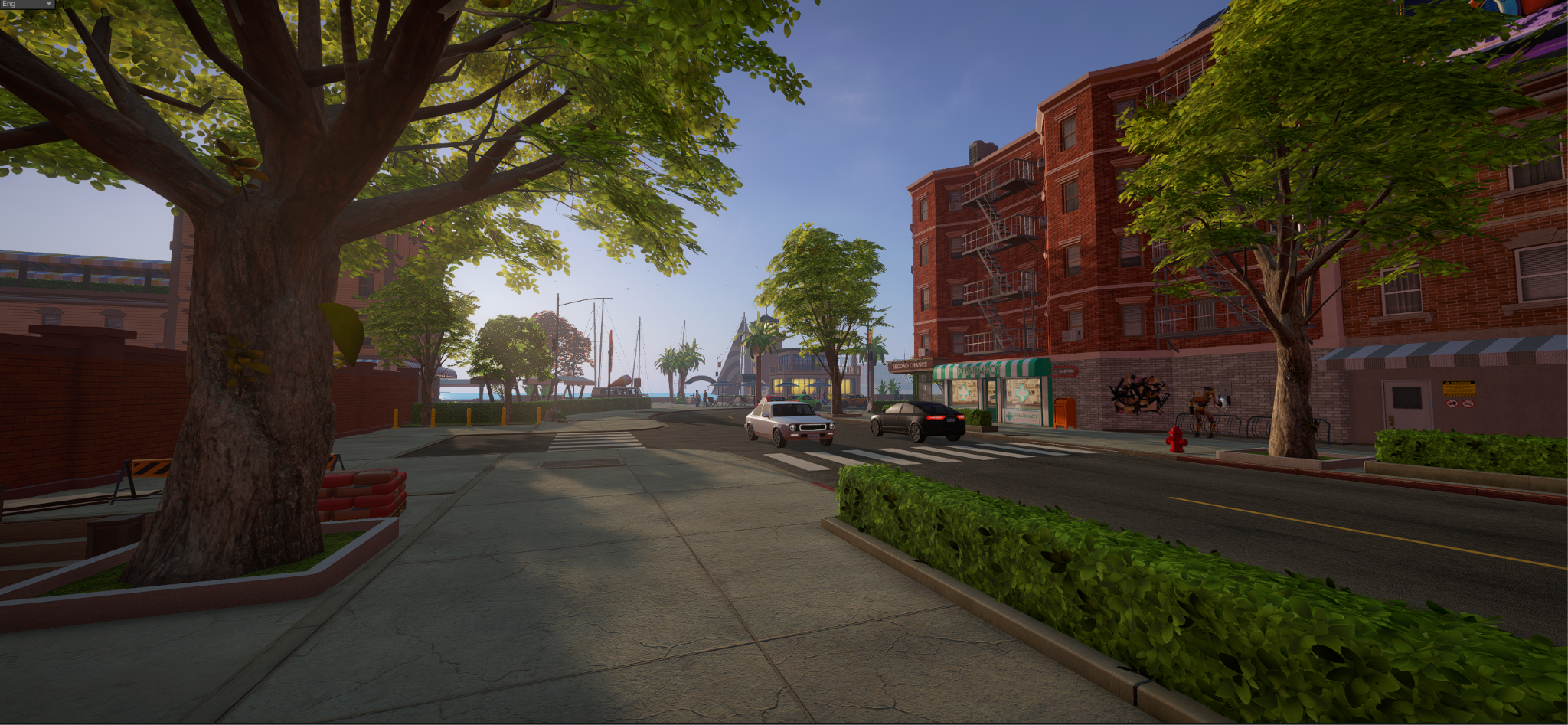
We’re back with another Dev Diary, and this time we’re taking a closer look at Cranelock: how the city changed during development, why we rebuilt so much of it, and how we found its final look and structure.
And before we get into it, if you’d like to follow development more closely, share your thoughts, or chat with other players, you can join us on Discord:
Now, let’s take a look at how Cranelock became the city it is today!
Cranelock is now a compact coastal city where most important locations are only a short drive away. It wasn't always like this.
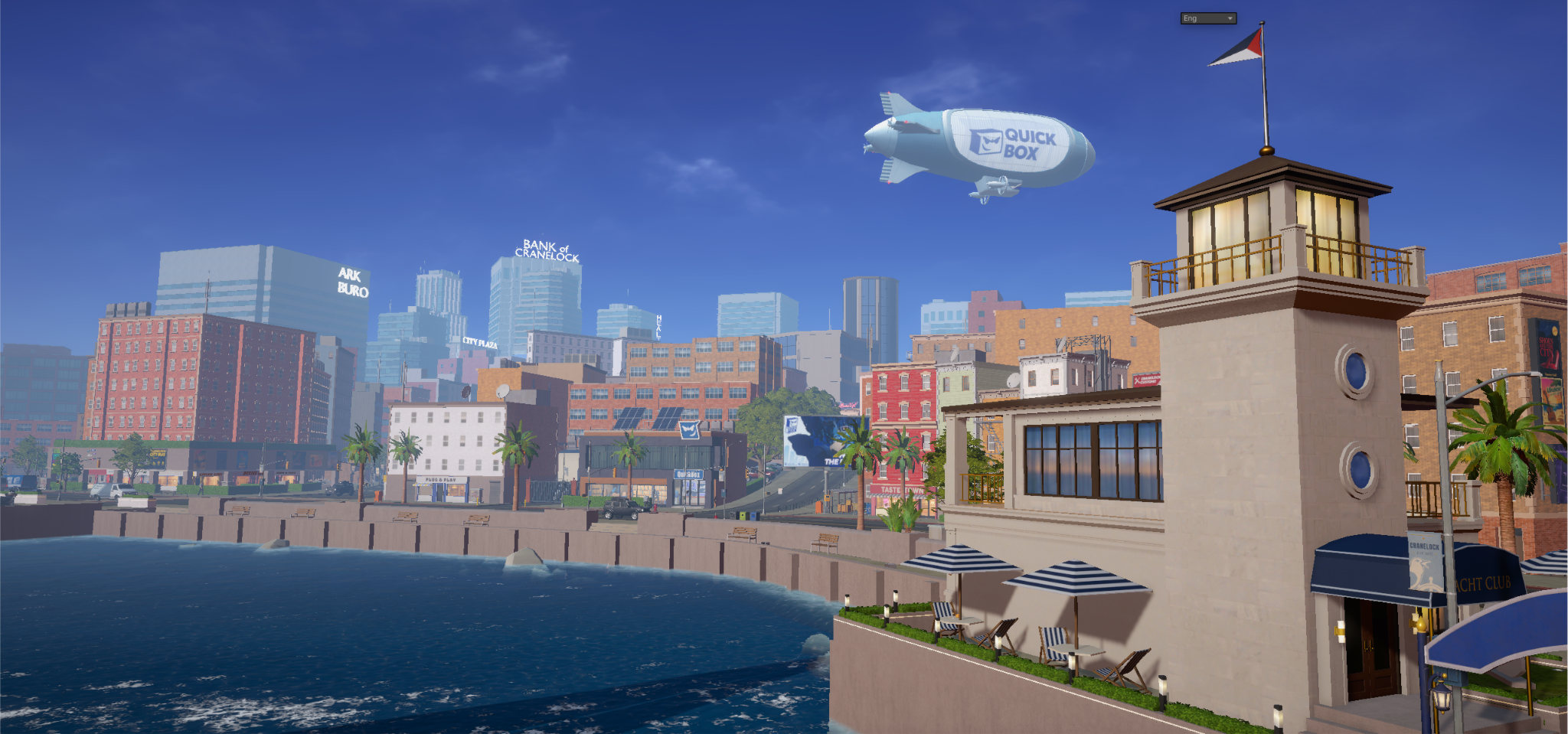
During development, we changed the size of the map, the road network, the city's height relative to the water, the location of the player's warehouse, and even our approach to progression through the city. By the end, around 90% of the city had been rebuilt from the first blockout.
First came the idea of Cranelock
From the start, we looked at recognizable American cities, especially San Francisco, with some influence from Chicago and New York.
Before level design work started, we already had a visual concept and a modular kit for Cranelock. The artists studied real American streets and looked for the details that would help the city feel right.

Then we started building the map itself.
Blockout first, beauty later
From a level design perspective, it all started with a blockout.
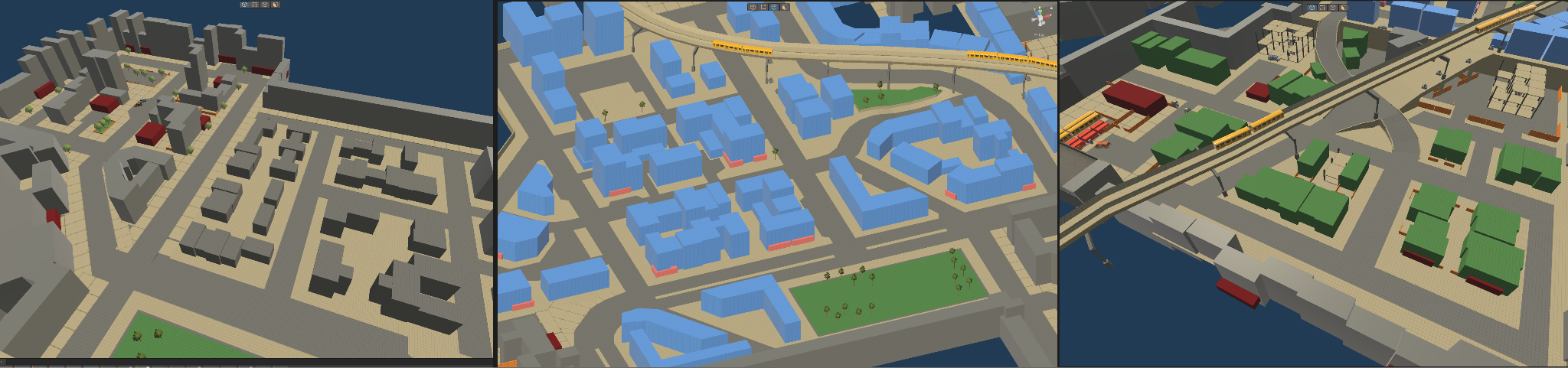
At first, there were very few hard constraints. We were building the city while prototyping the main mechanics, so there was plenty of room to experiment. Limits on the map size and warehouse location came much later.
Once the core mechanics were clearer, three requirements became obvious: the city had to be compact, easy to navigate, and comfortable to drive around. The map itself was not the only thing changing.
The city used to be retrofuturistic
In one of the earliest concepts, the city had a retrofuturistic look.
As the narrative took shape, that style stopped fitting the world. We stopped trying to imagine the future through the aesthetics of the past and looked at the present instead.
We looked back at ten years of technological change and tried to imagine how another ten years might affect everyday life.
Cranelock gradually moved into a near-future setting. Its structure changed along with the visual direction.
From the Ghetto to the Business Center
One early version of the map split the city into four large areas: the Ghetto, the Industrial Zone, the Business Center, and the Fancy District.
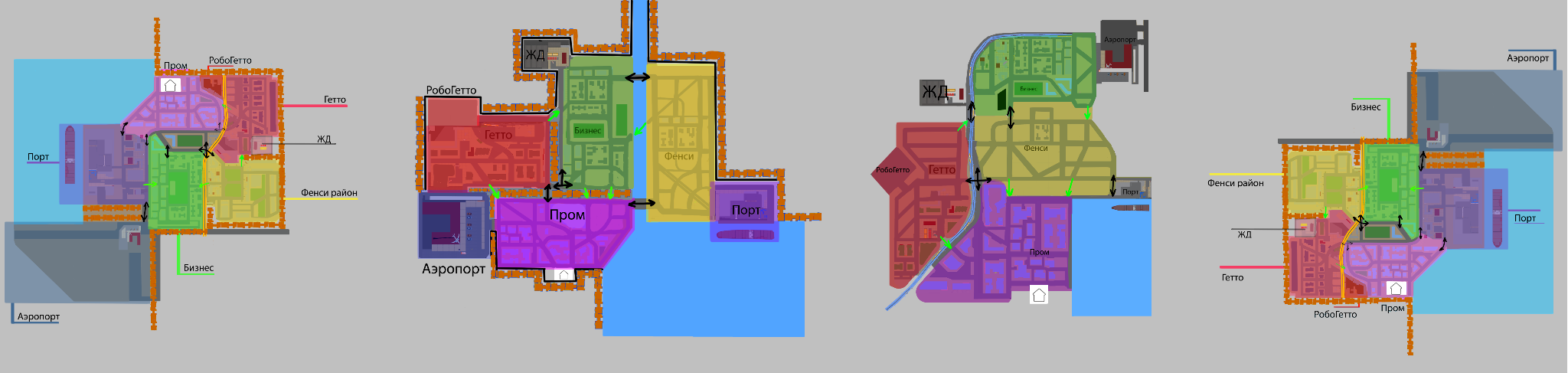
The division affected much more than the map itself. Each district was meant to have its own architecture, color palette, types of businesses, and even potentially its own products and customers.
The Industrial Zone focused on manufacturing and working-class neighborhoods. The Business Center was built around more expensive city infrastructure, while the Fancy District focused on public and cultural spaces.
Even at that stage, we designed the city around deliveries. It wasn't enough to decide what belonged in each district. We also needed a reason for the player to go there.
The plan was to unlock the districts one by one as the player progressed. We eventually dropped that idea.
The game is not really about the city
Testing gradually showed that our game wasn't about a huge open world.
And it wasn't really about driving either.
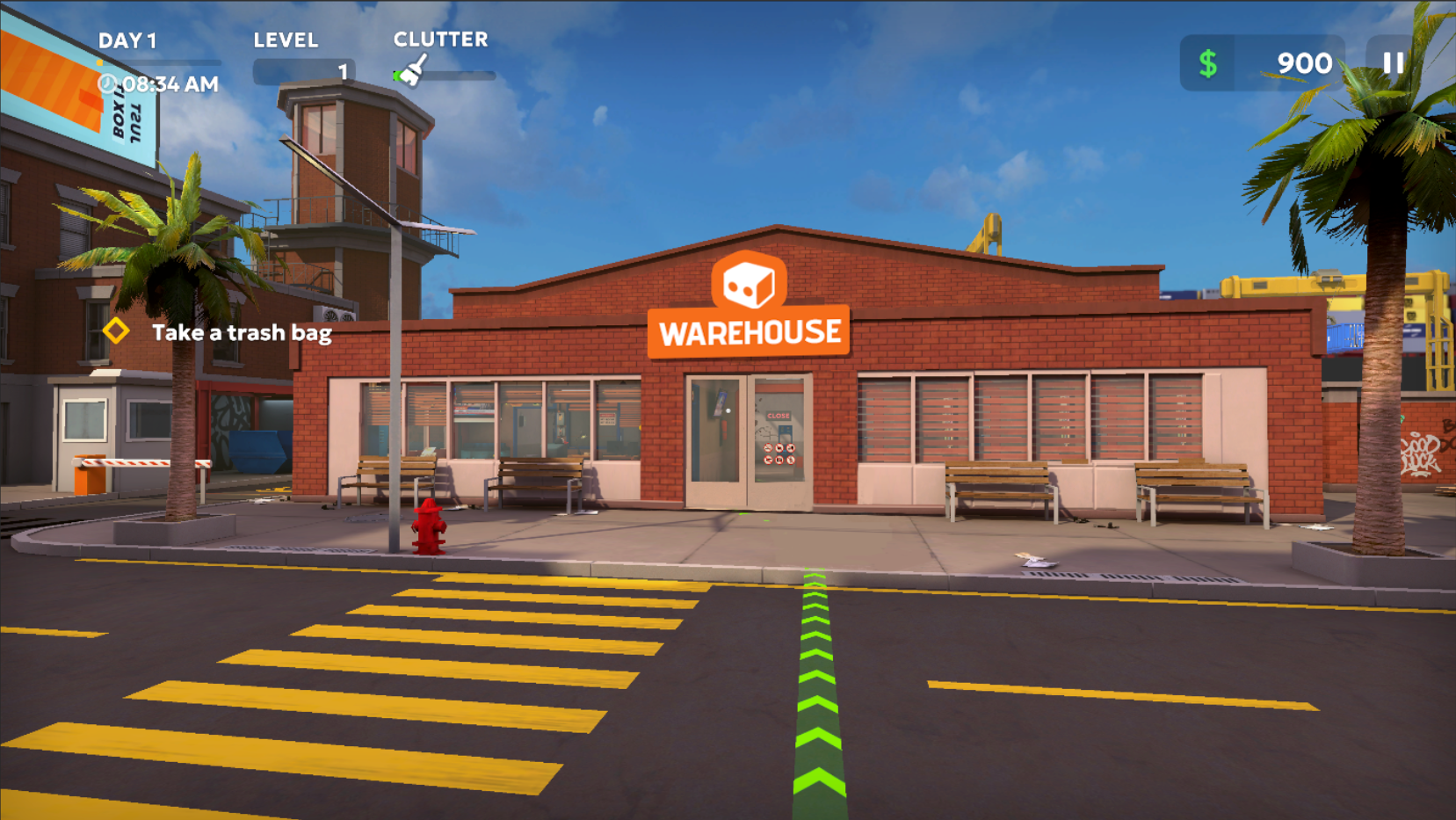
The warehouse is the player's main base. A large part of the core gameplay loop happens there. The city should add to that loop with new customers, places, and situations without making the player spend too much time on the road.
The large map was starting to work against that.
Unlocking the four districts one by one created another problem. We would have needed to explain why the player could drive down one street but not turn onto the next.
We didn't want invisible walls or artificial restrictions just to make progression work.
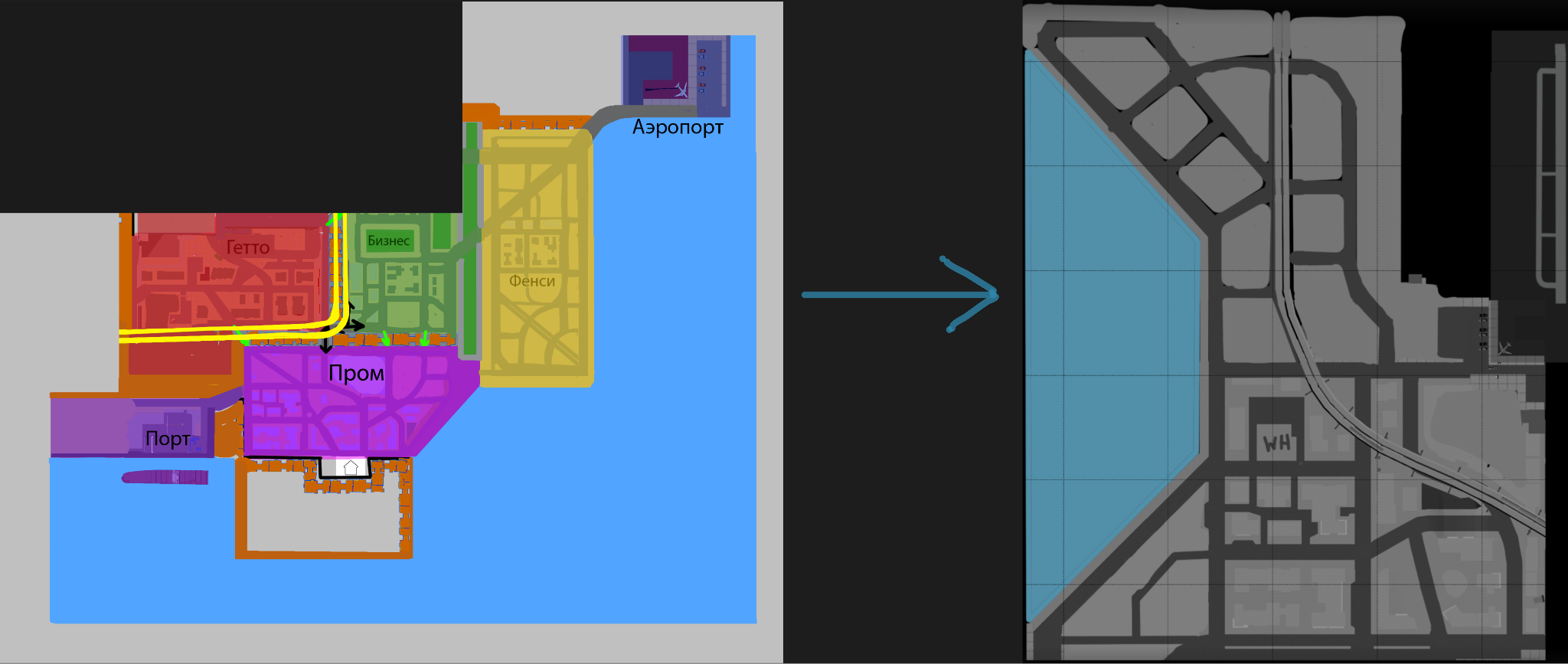
So we started shrinking the city.
Scale stopped being a goal in itself. We wanted the city compact enough that the player could head out on an errand and get back to the warehouse fairly quickly.
Letting go of the old city
Whole blocks and roads changed during development. So did the map scale, the warehouse location, and even the city's height relative to the water.
Very little of the original blockout is still there.
Cranelock taught us one important thing: don't get too attached to what you've already built.
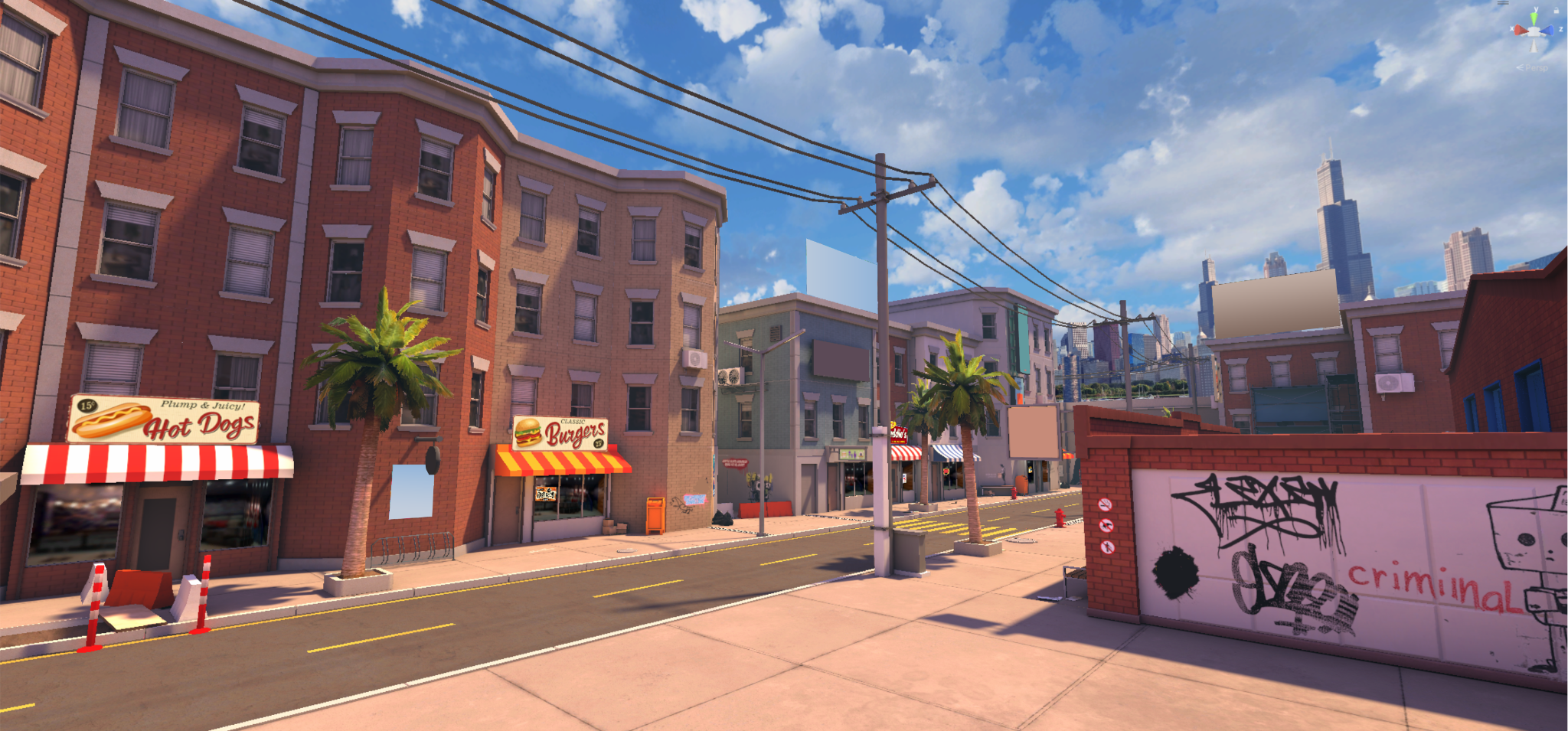 If something no longer works for the game, we have to change it, even after we've spent a lot of time on it.
Cranelock started as a retrofuturistic city divided fairly strictly into four districts. Today it's a compact near-future city, and its layout is shaped largely by how the player uses it.
We made the map smaller.
But Cranelock itself ended up feeling much more like a real city.
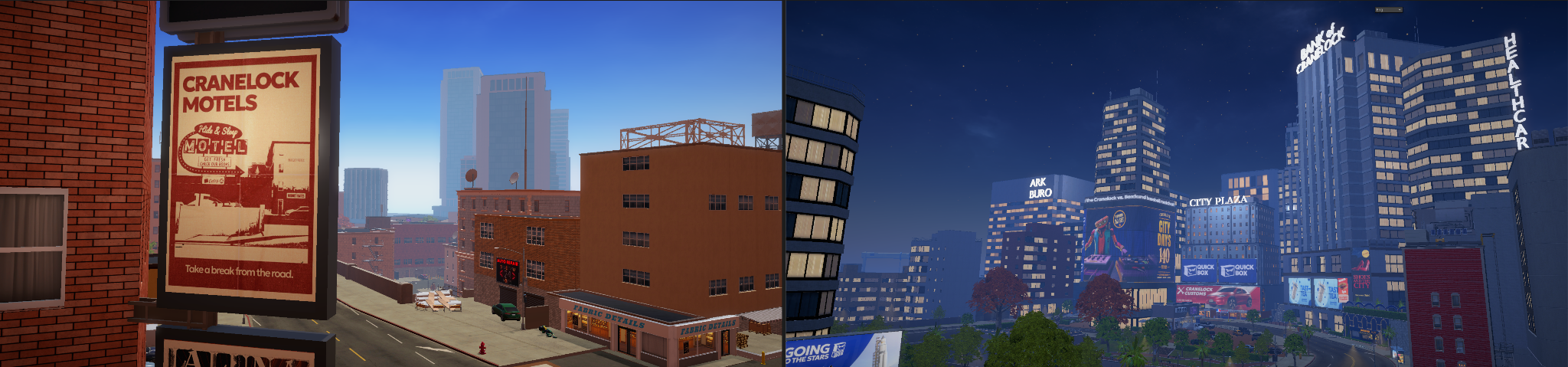
From a Small Shop to a Yacht Club: How Cranelock's Points of Interest Grew
Early in development, most of the city's points of interest were fairly modest.
A pharmacy. A barbershop. A bar. A fishing supply store. A motel. A home goods store.

A small, recognizable storefront along the street was enough to mark a destination.
Looking at the first concepts next to the current city makes the change pretty clear: our idea of what a point of interest should be changed a lot along the way.
Not Copying San Francisco: Finding Cranelock's Architectural Language
When we say Cranelock was inspired by San Francisco, it's easy to take that too literally.
We never set out to recreate a specific American city.
The question we cared about was simpler: what makes a place feel like that?
We weren't looking at postcards
We weren't interested in San Francisco's famous tourist views or the large buildings downtown.
We focused on ordinary streets: small homes, low-rise buildings, outskirts, and working-class areas. We paid attention to how buildings sit along the road, how entrances and stairs are arranged, and which materials are used on the facades.

We were especially drawn to San Francisco's hills, and to the way dense streets can still feel bright and sunny.
We also studied New York and Chicago.
The artists spent hours studying real streets in these cities and collecting elements we could use to build our own city rather than copy an existing one.
Style as a starting point
Historical accuracy was never the goal. We needed a set of rules that would keep the streets coherent without making every building look the same.
The Edwardian base quickly picked up elements of Late Victorian, Mission Revival, and Chicago School architecture. We cared less about putting each building into a precise style category and more about whether its scale, proportions, and materials worked with the surroundings.
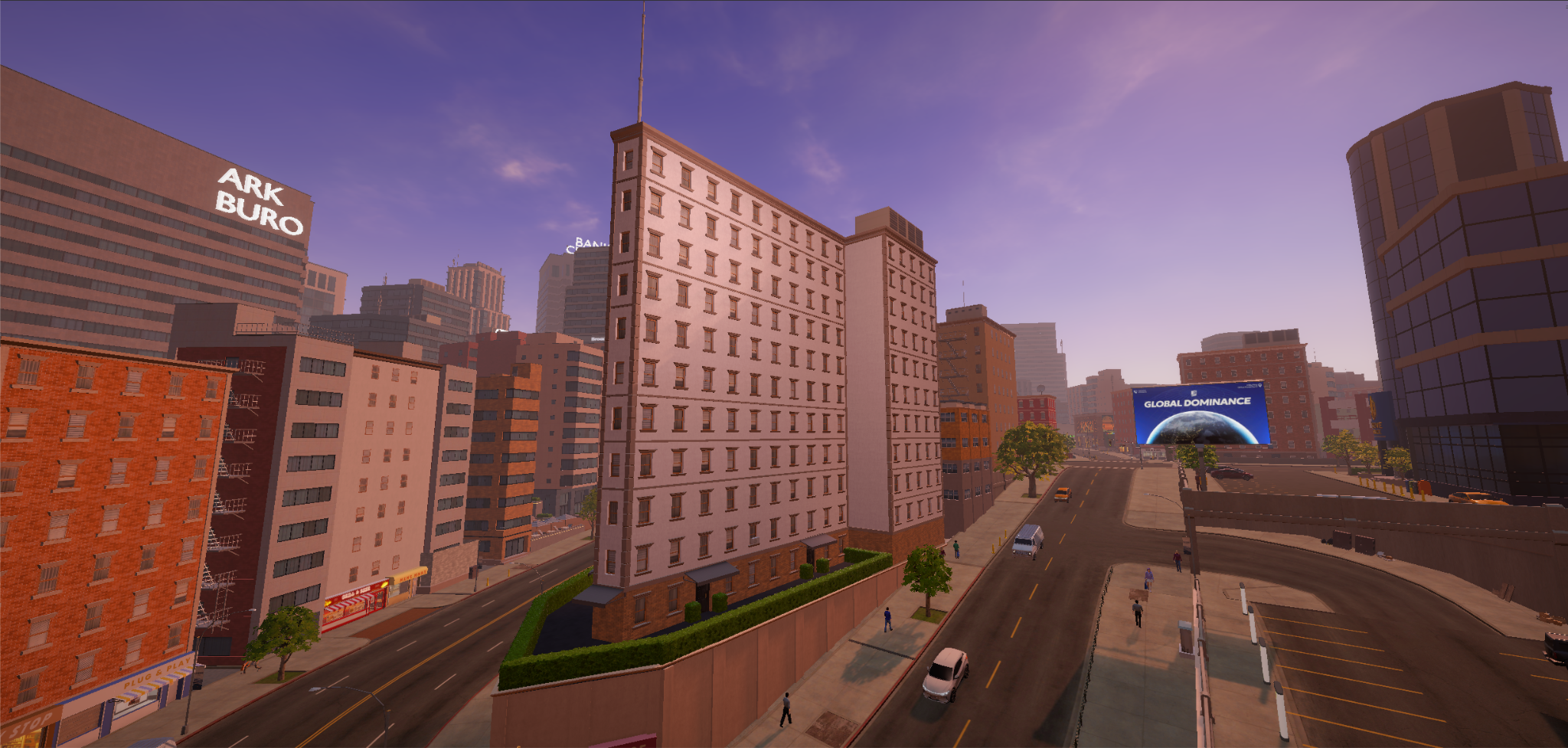
The next challenge was bringing all of this into 2037.
Bringing 2037 into an old city
We didn't want the future to erase all of Cranelock's existing architecture. Modern buildings had to fit into a city that was already there.
Sometimes keeping the familiar street scale and materials was enough. In other places, we could move much further away from the original architectural base.
For the Business Center and its huge advertising surfaces, for example, we looked to Tokyo and Times Square: media facades, corner screens, and dense city advertising.
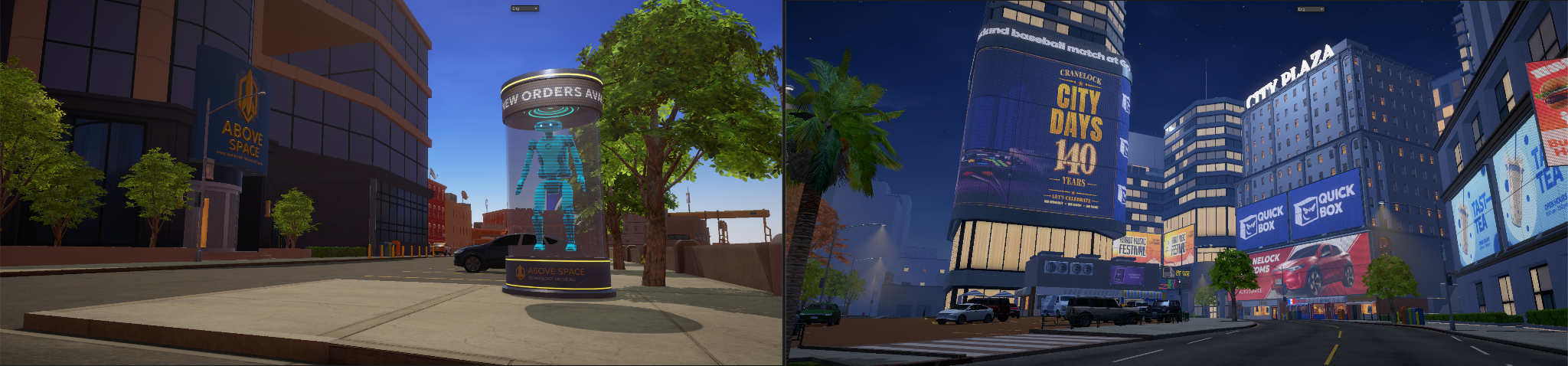
Eventually, it mattered less and less how closely Cranelock resembled San Francisco.
San Francisco gave us a starting point: scale, terrain, the character of residential streets, materials, and architectural details. After that, we mixed those rules with other references, modern architecture, and the needs of the game.
Gradually, we stopped trying to reproduce a real city and ended up with Cranelock.