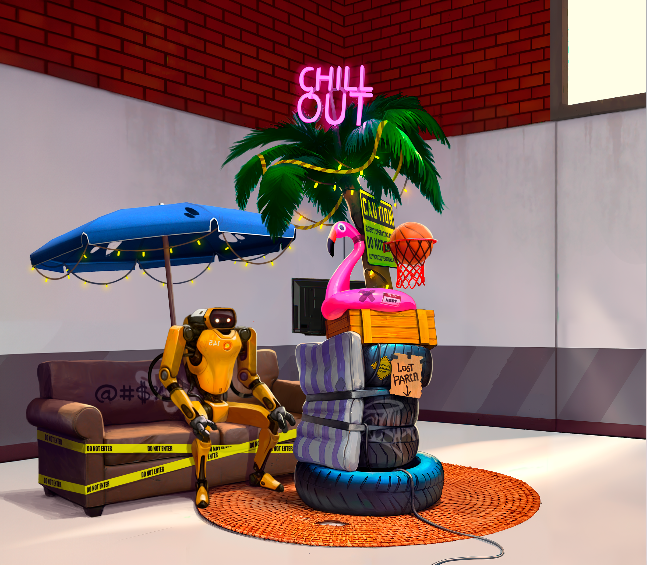
A good automation system should do more than save a few clicks. It should arrive at the moment a familiar task starts competing with something new, then quietly reshape the way the player runs the warehouse.
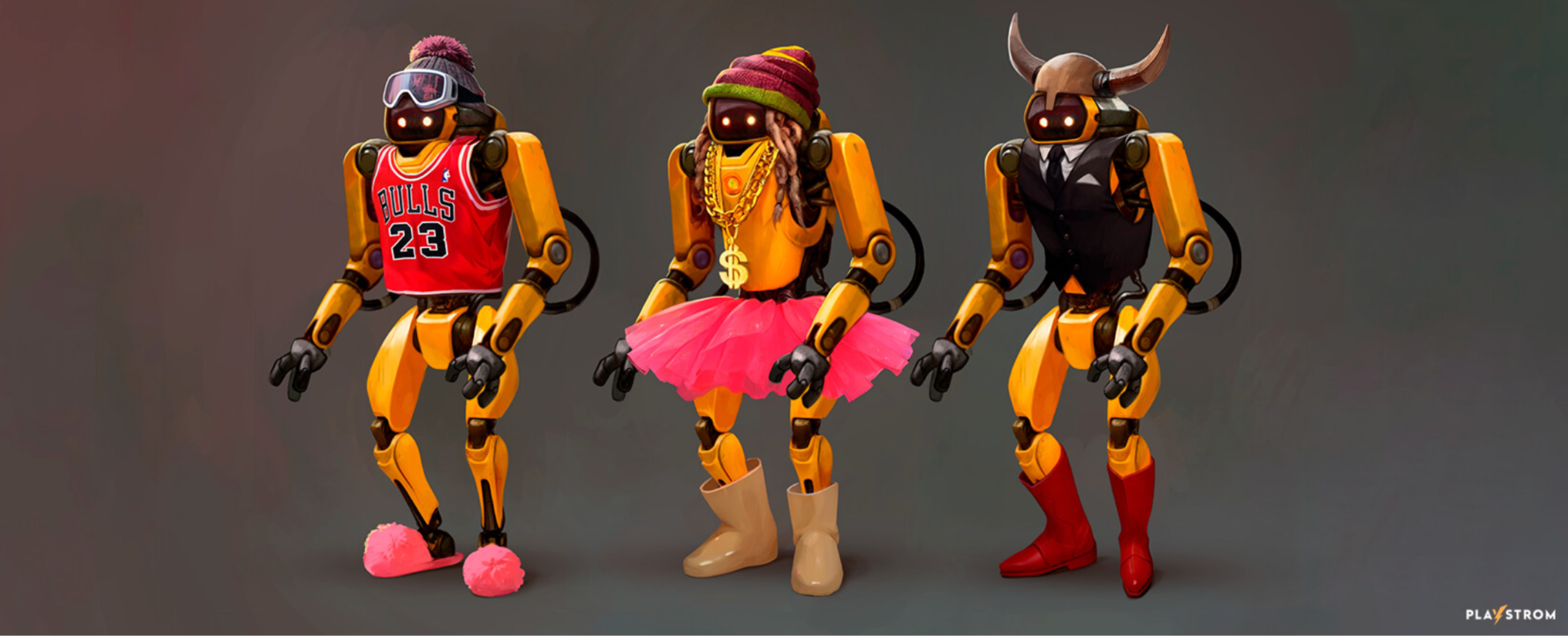 Character concept exploration from the world of Shipping Store Simulator 2037
That principle guided our robots, their breakdowns, and even the features we eventually left behind.
AUTOMATION AND PROGRESSION
Help arrives right on time
[dynamiclink href="https://store.steampowered.com/app/4098030/Shipping_Store_Simulator_2037/"]
The demo introduces two assistants: the Customer Service Robot and the Loader. We deliberately do not hand them to the player at the start. Each appears only after a once-new mechanic has become familiar enough to demand too much attention.
The Customer Service Robot joins when the player has learned the rhythm of serving visitors and the queue begins to grow. VIP orders arrive at the same time, so standing behind the counter all day is no longer an option. The robot can take over that routine: it accepts orders, packs them into branded bags, and hands them to customers.
The Loader follows the same philosophy. Early deliveries are small enough that unloading boxes is a meaningful part of warehouse work. Later, the player spends more time running errands around the city. That is exactly when the Loader becomes useful: it keeps the entrance clear while the player is away, rather than leaving a mountain of untouched deliveries at the gate.
For us, the robots are not simply a path to full automation. Each one removes a routine the player has already mastered at the exact moment the game is ready to introduce a new layer of work.
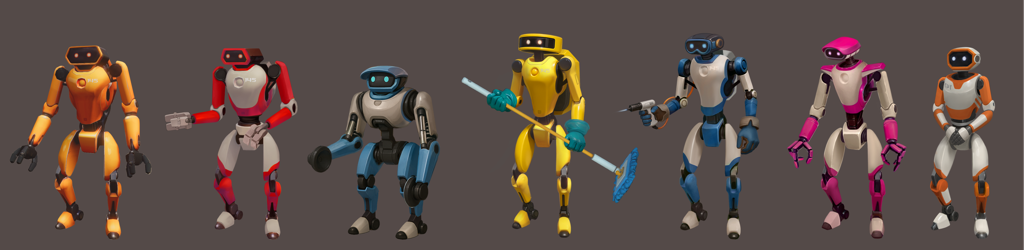 The wider robot family is built around distinct jobs rather than cosmetic variation
And the family is growing. On October 14, players will meet five new robots, each with a unique function designed to help with new mechanics and the next stage of business growth.
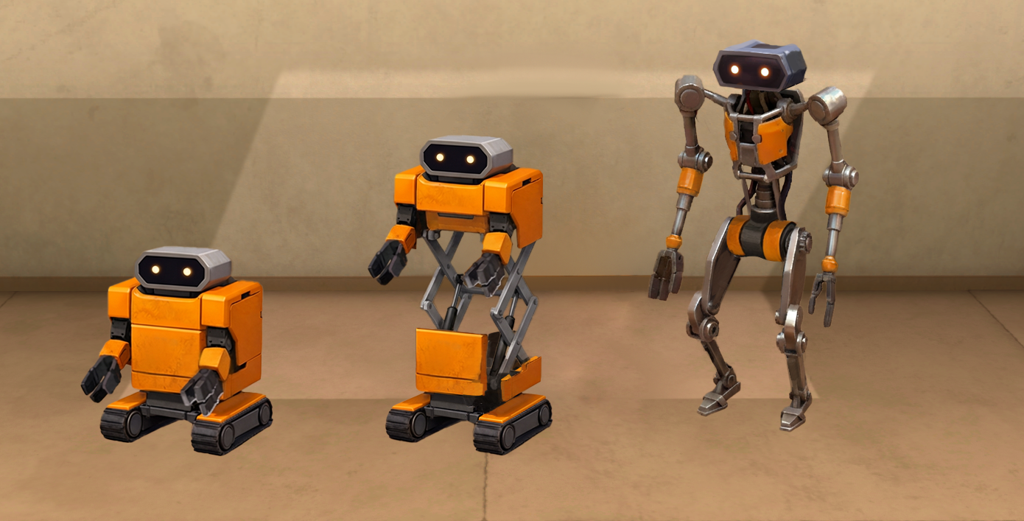 Early exploration of a helper model across different proportions and levels of detail
MAINTENANCE SYSTEMS
Wear tear and the occasional fire
Every robot and every piece of warehouse equipment has a hidden durability value with a maximum of 100. Each use reduces that value, and the rate of wear depends on the machine.
For example, the manual labeling machine is designed for 50 uses at full durability, so every use removes 2 points. The automated labeling machines unlocked after expanding the warehouse wear down more slowly.
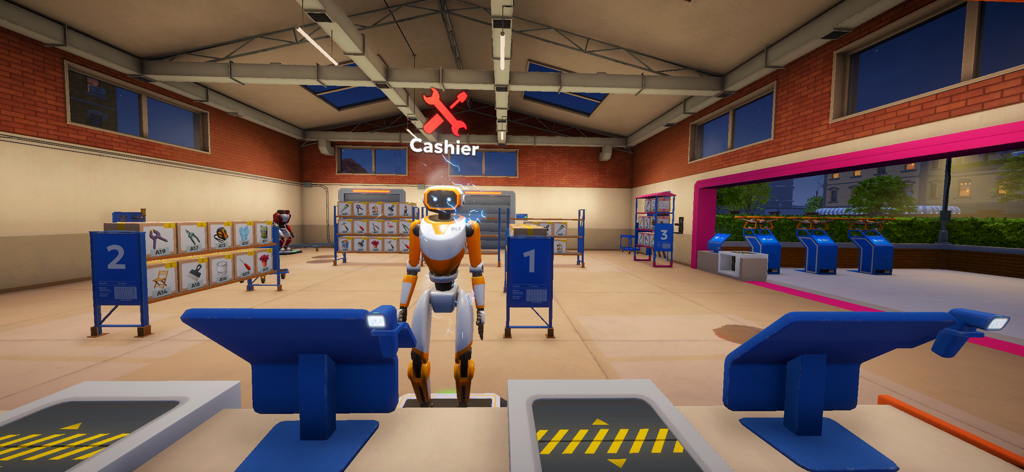 Equipment and robots share the same durability logic behind the scenes
As durability drops, machinery and robots begin to work more slowly. Ignore a robot for too long, however, and the result becomes much more visible: it catches fire, panics, and runs around the warehouse. At that point, a normal repair is no longer enough. First, you have to catch the poor thing with a fire extinguisher.
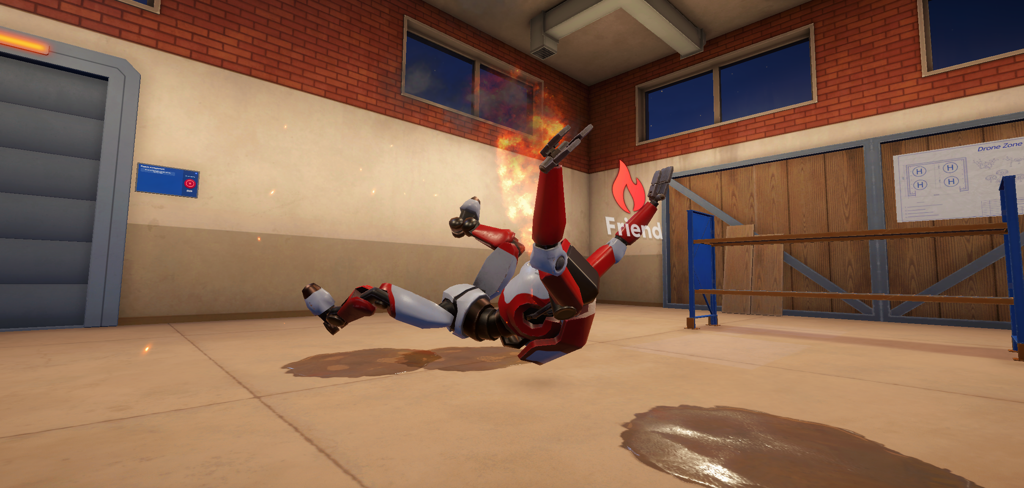 Critical condition is intentionally dramatic and a little chaotic
Repairs use a repair kit. It can be applied to any machine or robot below 100 durability, and a single kit restores it to full condition regardless of how badly it has worn down.
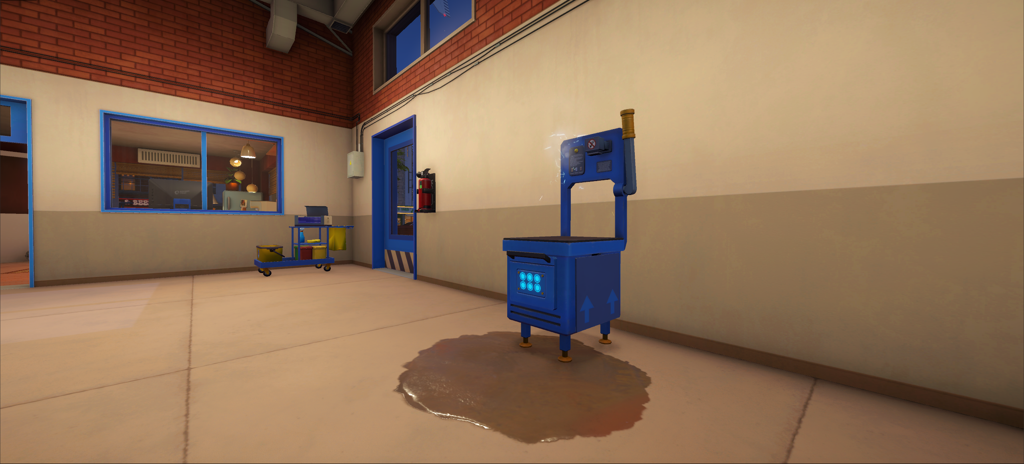 A repair kit restores a worn machine or robot to full durability
| [p align="center"]Work → gradual wear → slower performance → critical condition → repair → full recovery |
One release secret remains. Observant players will discover a second, bonus use for the repair kit on certain robots.
ART DIRECTION AND WORLDBUILDING
Designing a robot for Cranelock
Writers sometimes build a complete biography for a character: where they grew up, who their parents were, what they fear, and what happened before the story began. The reader may never learn most of it, but that background helps the writer make consistent choices.
We took a similar approach with the robots. Instead of writing biographies, we defined the context in which they exist. Can you walk into a shop and buy one? Is it normal to see a robot on the street? What sits underneath its outer shell?
Cranelock already contained the answers. Robots are sold in city stores. Delivery drones move calmly over the streets. Competitors use their own machines in advertising campaigns. The technology is so ordinary that a robot can stand in a queue among people and nobody gives it a second look.
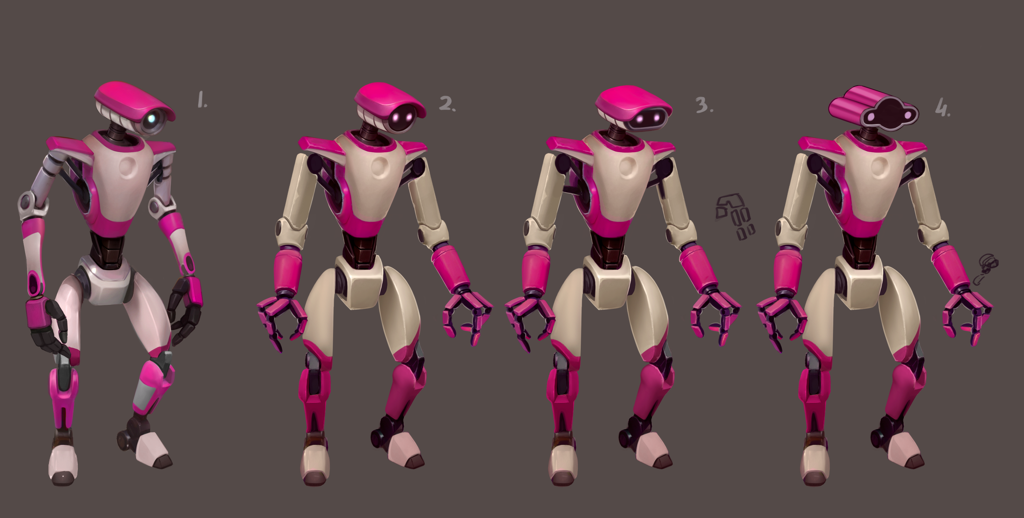 Customer facing forms became a study in approachability without turning the robot into a toy
That context became the model’s “biography” and gave the art team useful boundaries. A robot should not look like an experimental prototype from a secret laboratory, but it should not feel like something welded together in the garage next door either.
Too much polished metal, neon lighting, and spotless surfacing pushes the design into distant science fiction. Too much dirt, exposed welding, and rough construction makes the technology feel rare and improvised. We were aiming for something from the near future: modern and friendly, but still practical and believable.
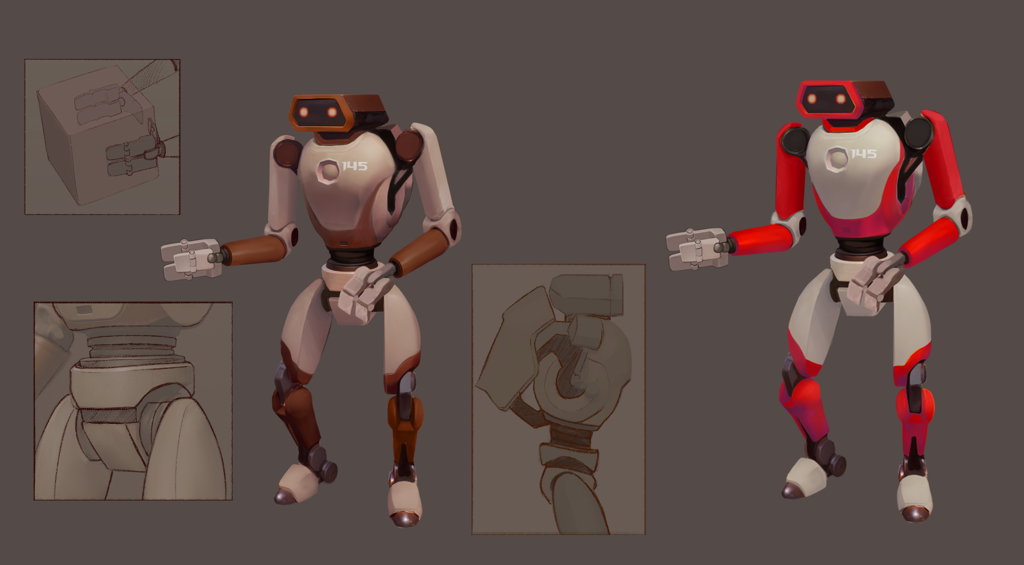 The arms and heavy rotating waist were designed around the physical work of handling boxes
We were equally careful not to overdo the “cozy” side. The robots were never meant to be cute or toy-like simply to win the player over. Their personalities come first from their jobs. The Customer Service Robot uses smoother, friendlier shapes. The Cleaner borrows a familiar language from robot vacuums. The wholesaler model has reinforced limbs and visible hydraulics because it must carry heavy loads.
We continued that logic even in places the player will never see. The team explored what sits under each shell, how the components connect, and what makes the mechanism move. None of that detail appears directly in the final game, but it gave everyone the same mental model.
That was the artistic goal: the player may not know a robot’s history, but they should immediately understand what it is and why it exists.
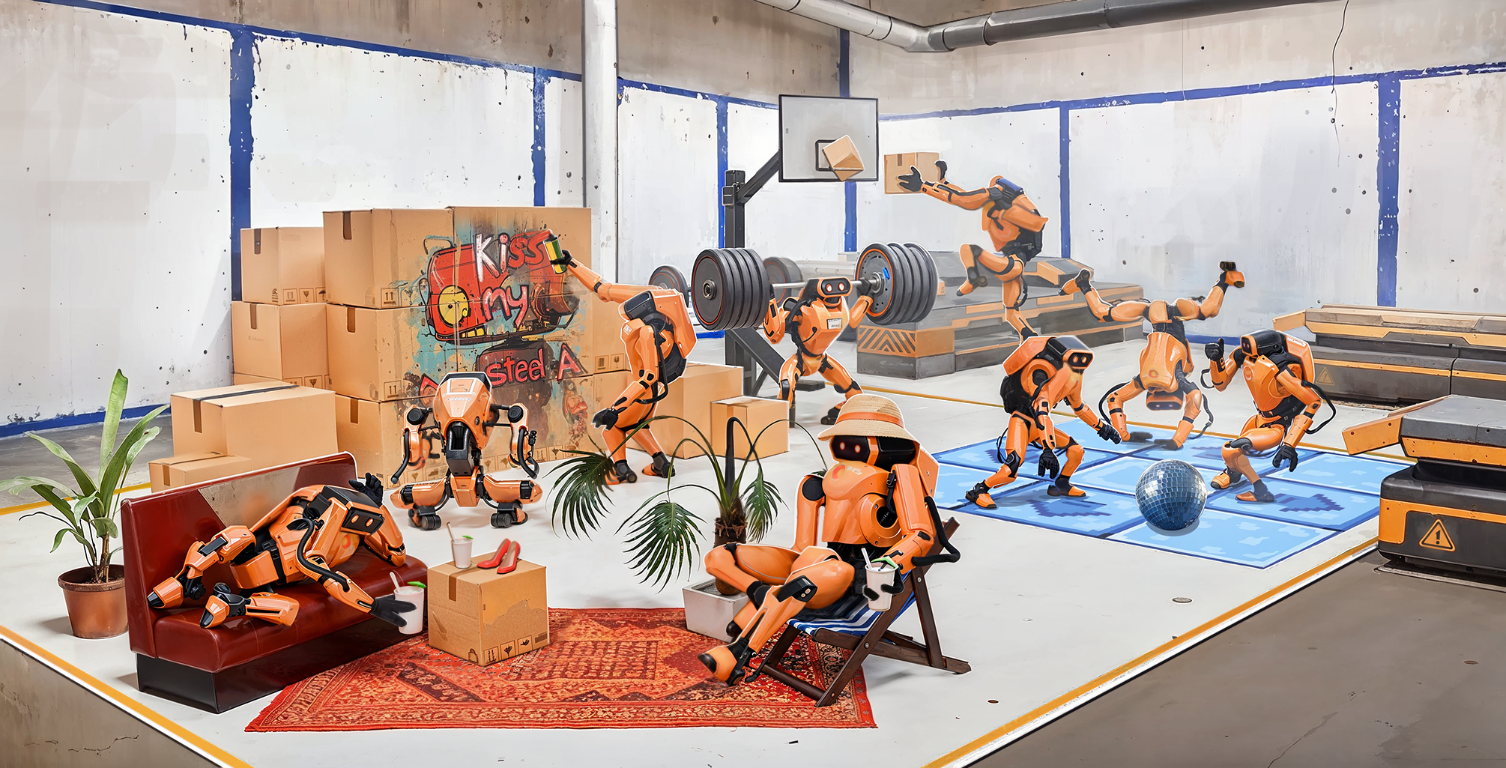 A broader concept study of robots as everyday machines with different roles
IDEAS THAT CHANGED DURING DEVELOPMENT
What stayed behind the scenes
Over the course of development, plenty of ideas reached the concept or prototype stage without making it into the final version. Sometimes they simply did not work. Sometimes they worked perfectly well, but we found a better solution.
A Warehouse you can read at a glance
The warehouse did not always look the way it does now. We tested many layouts before settling on a compact, single-storey building. The reason was practical: from almost anywhere, the player should be able to scan the space and understand what is happening.
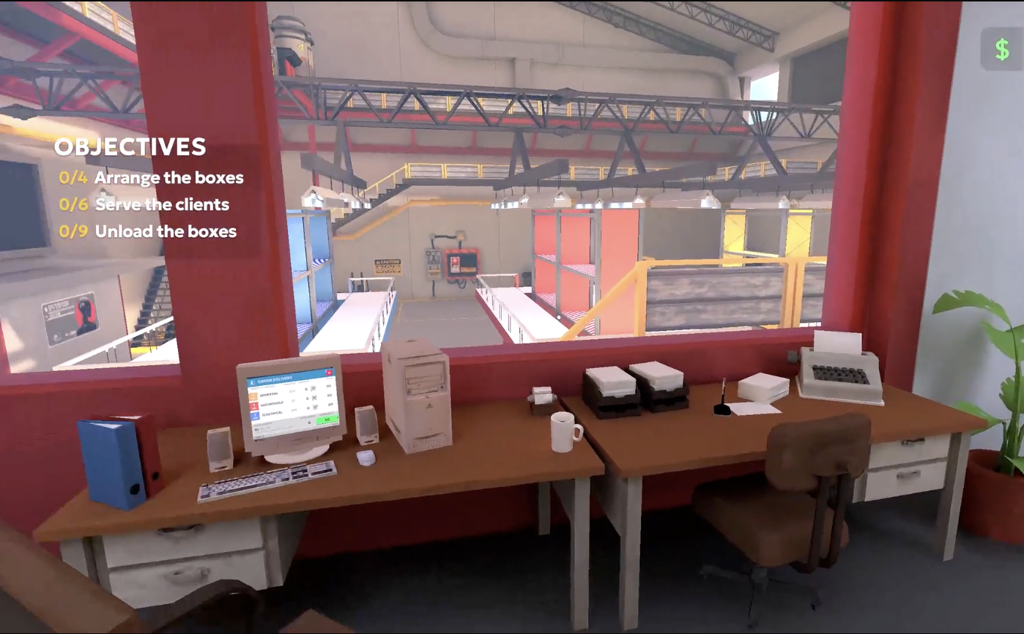 We considered placing the player room upstairs, then chose to keep the warehouse visually accessible
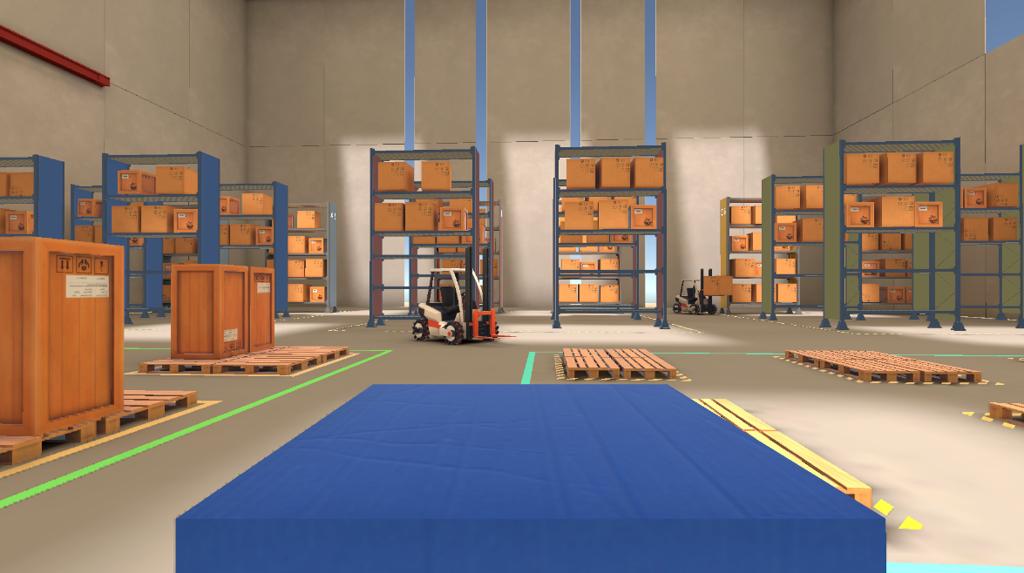 One of the experiments with warehouse layout and circulation
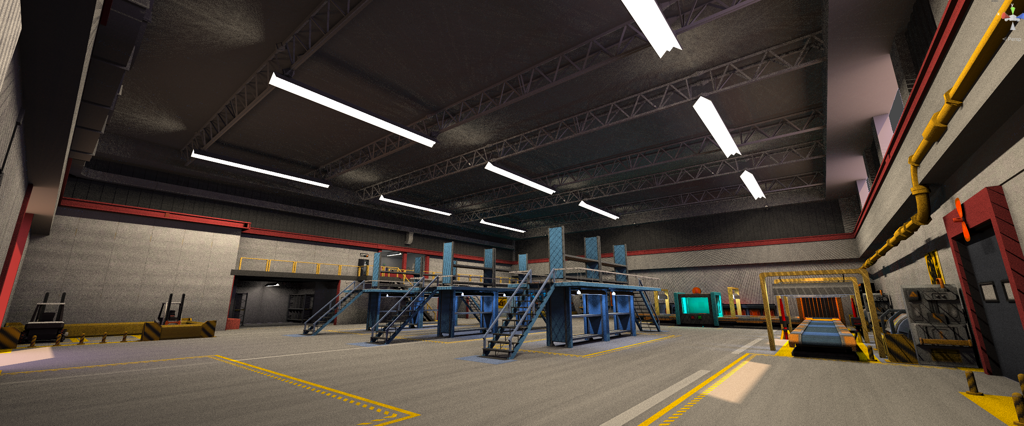
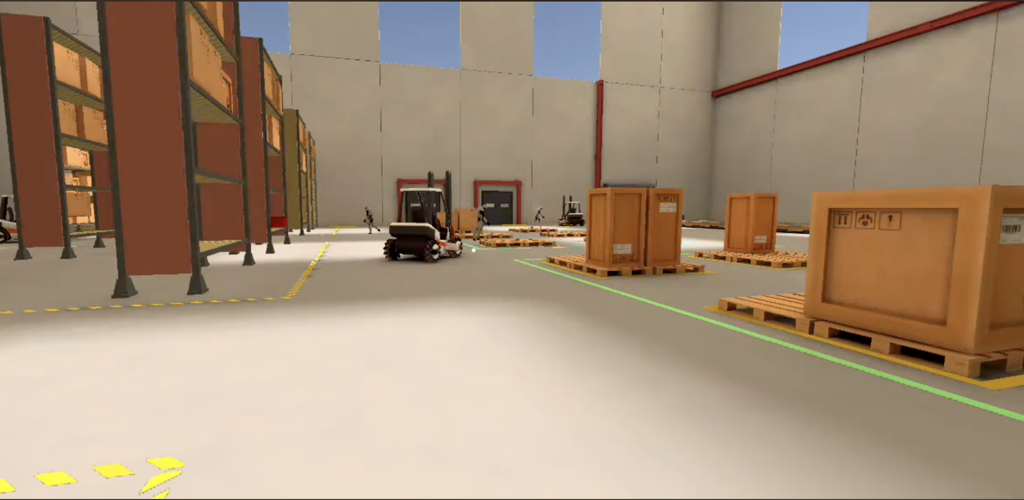
Searching for the right scale meant testing very different warehouse proportions
Why the conveyor belt had to go
We also experimented with conveyor belts. At first, nothing seemed better suited to an automated warehouse. In our space, however, the conveyor quickly demanded too many convenient exceptions. Where does a box go when the belt reaches a wall? Does it disappear behind it and magically reappear somewhere else?
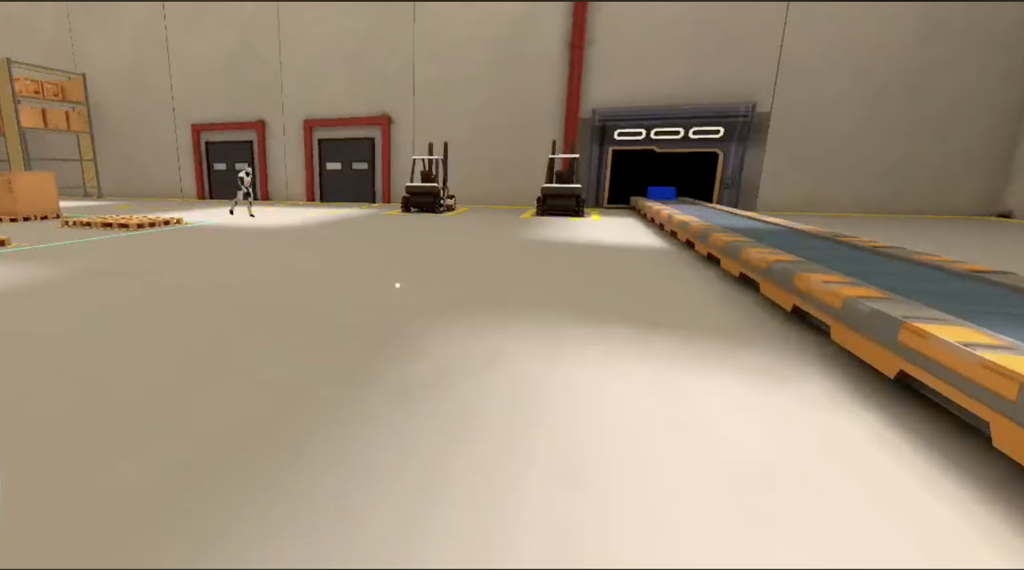 An early conveyor belt experiment
We wanted the opposite. The player should see the entire life cycle of a box: unloading, labeling, and movement through the warehouse. For a simulator, feeling connected to those physical processes mattered more than maximum automation. We handed some of the work to robots and removed the conveyors.
Freedom over a perfect grid
For a similar reason, we eventually removed the placement grid. It made the warehouse tidier and more predictable, but it also began deciding what a “correct” layout should look like. We cared more about player freedom: where equipment goes, how work zones are organized, and how chaotic the logistics become should be the player’s choice.
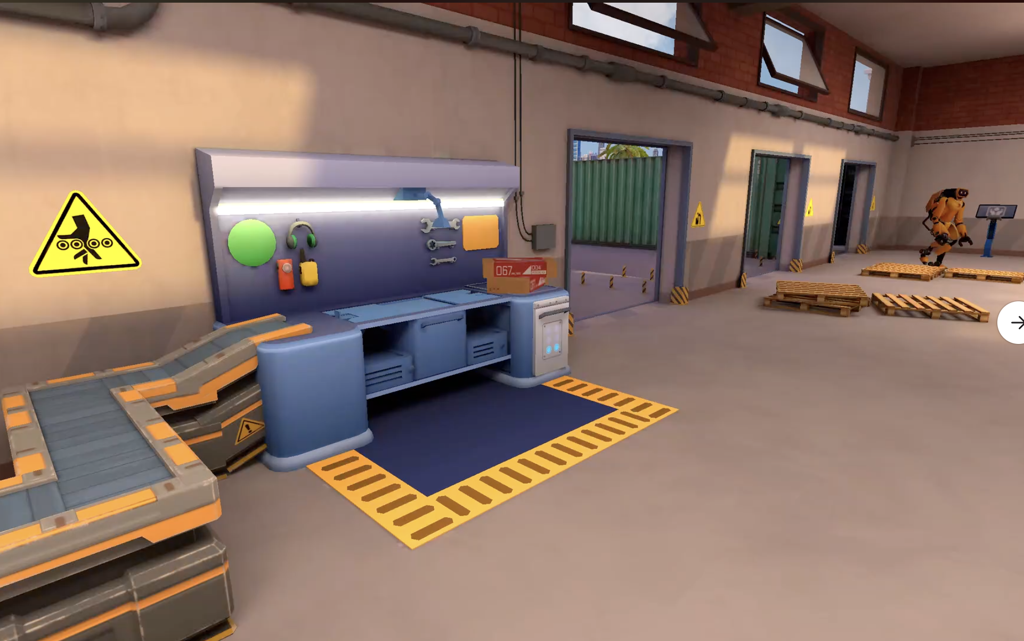
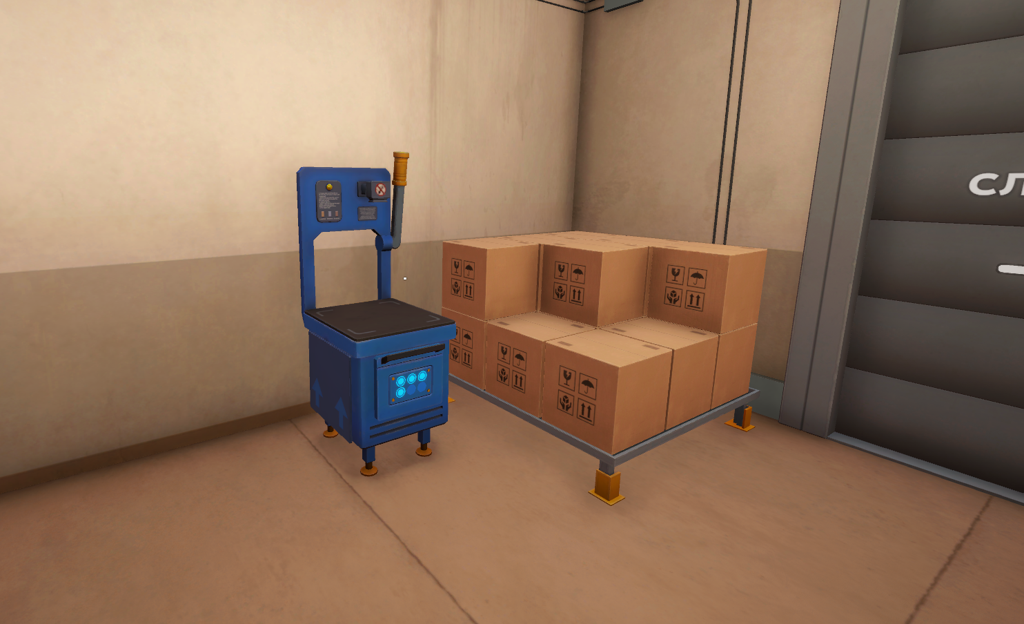
The labeling machine evolved from a visually dominant prototype into a quieter part of the workspace
The current level one labeling machine no longer pulls attention away from the rest of the room. It sits naturally inside the warehouse instead of feeling like the room was built around it.
Failures that were funny once
Some experiments were harsher. At one point, robots could explode if the player waited too long to put out the fire. It sounded fun right up until the explosion destroyed a robot the player had invested time and money into. We decided the joke was not worth the punishment and cut the idea.
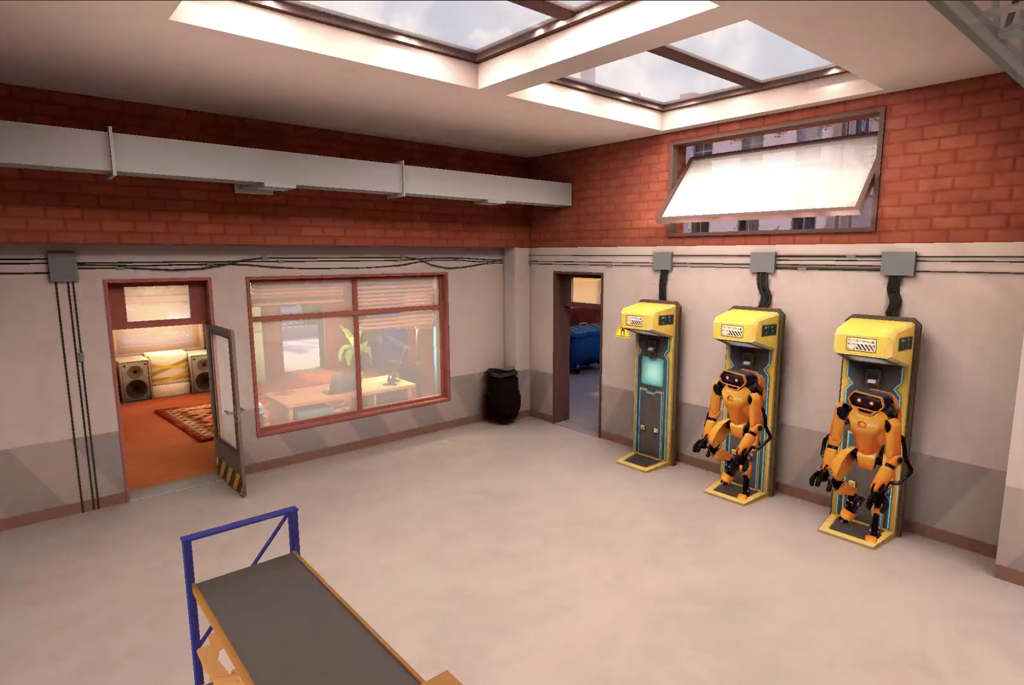 Charging station concepts were also removed to preserve free placement
The player room as a constant
We also considered upgrades and expansions for the player’s private room. The logic seemed obvious: the warehouse grows, so the personal space should grow too. During development, we realized that this was the one place where constant progression was not useful.
While the warehouse is rebuilt, filled with equipment, and reshaped by the player, the private room remains familiar. It is a recognizable constant: a place where the same objects stay roughly where the player expects to find them.
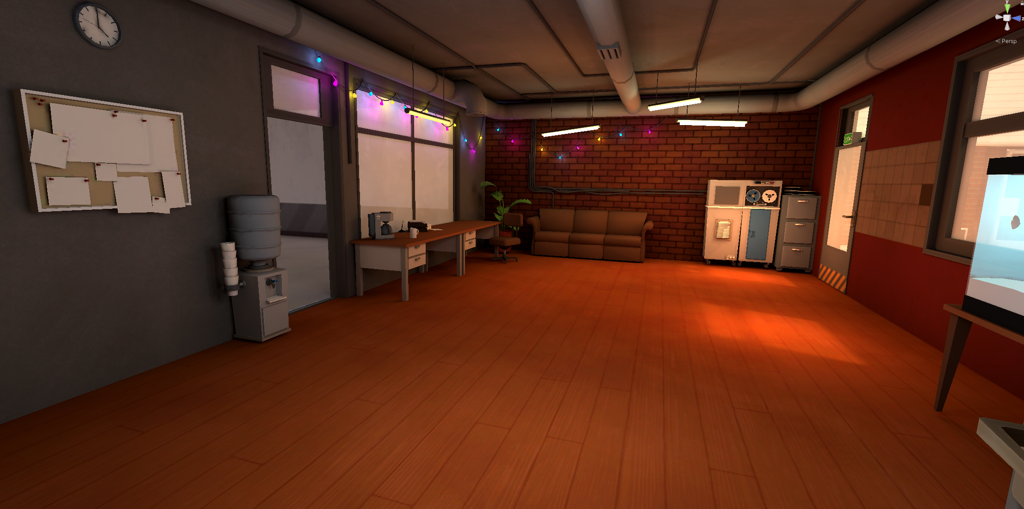
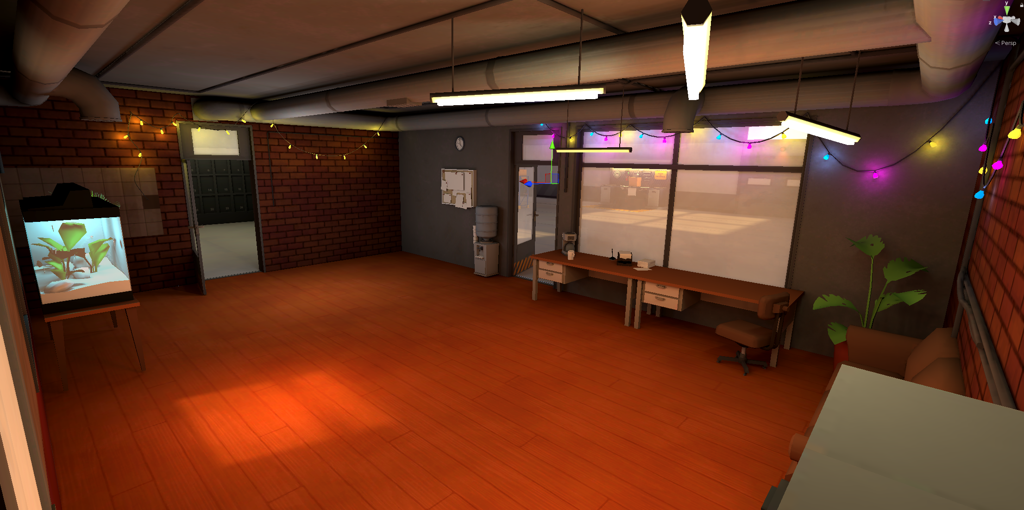 Two versions of the player room explored during development
THE WORLD AROUND THE WAREHOUSE
A technology that feels ordinary
The same rules extend beyond the warehouse. Cranelock has to feel like a place where deliveries, service robots, and unusual machines are part of daily life, not a spectacle reserved for a distant future. Street scenes, interiors, and character studies helped the team keep that tone consistent.
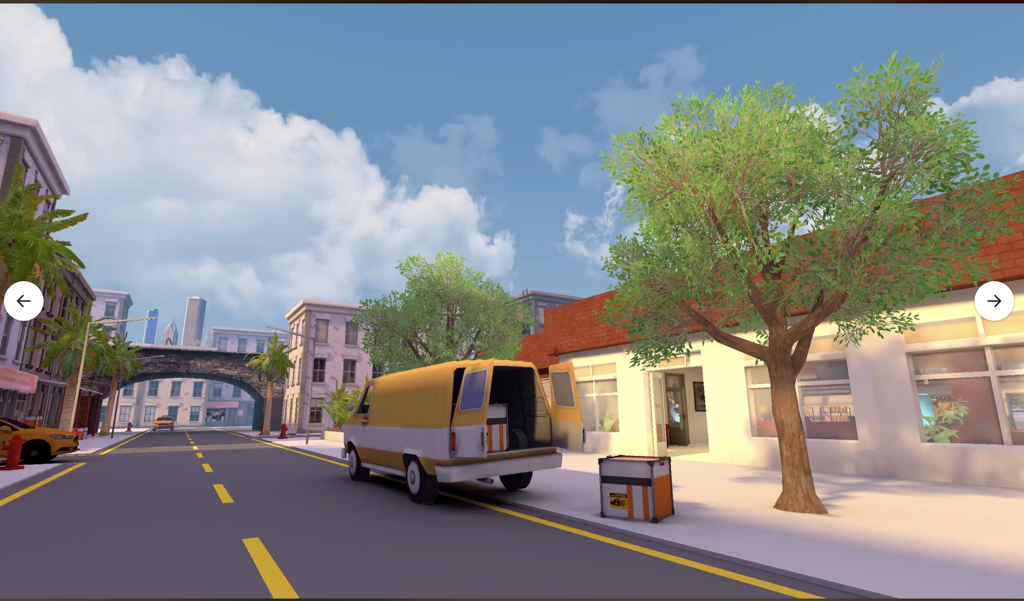
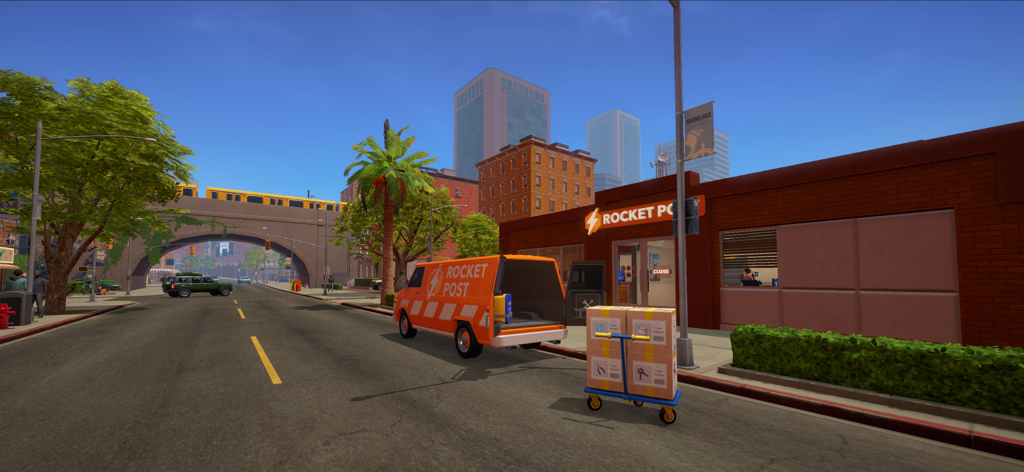
Cranelock street studies connect the warehouse to a broader city built around everyday logistics
That process sums up how the game changed during development. We did not remove ideas only because they were bad. Some mechanics were interesting on their own, but they got in the way of something more important: player freedom, readable spaces, and the sense that every process in the warehouse happens for real, right in front of you.
After all, we are making a simulator. If a box goes somewhere, we want the player to know where it went.