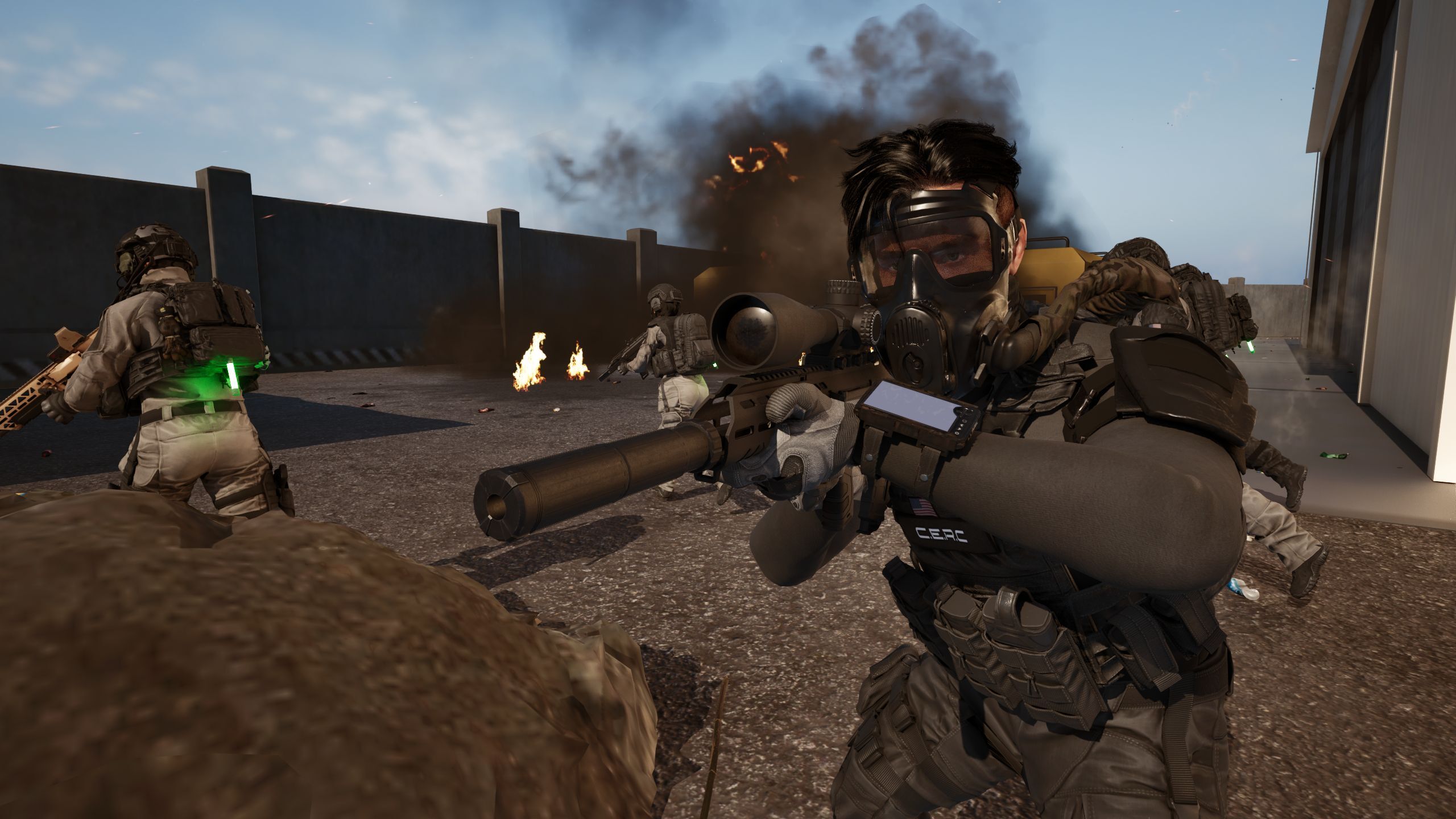


THE BAY AREA IS COLLAPSING. The virus is loose across the peninsula. Flashpoints are erupting across the region as entire districts fall into chaos and infected swarms push deeper into civilian zones. CERC forces are already in the field.
Embedded military reporters and frontline operators are transmitting battlefield coverage directly from active operations. The images you are about to see were captured during recent combat deployments across the region.
These transmissions come directly from the front. The battle for the Bay Area continues.
Experimental Update Highlights
Minimap Overhaul
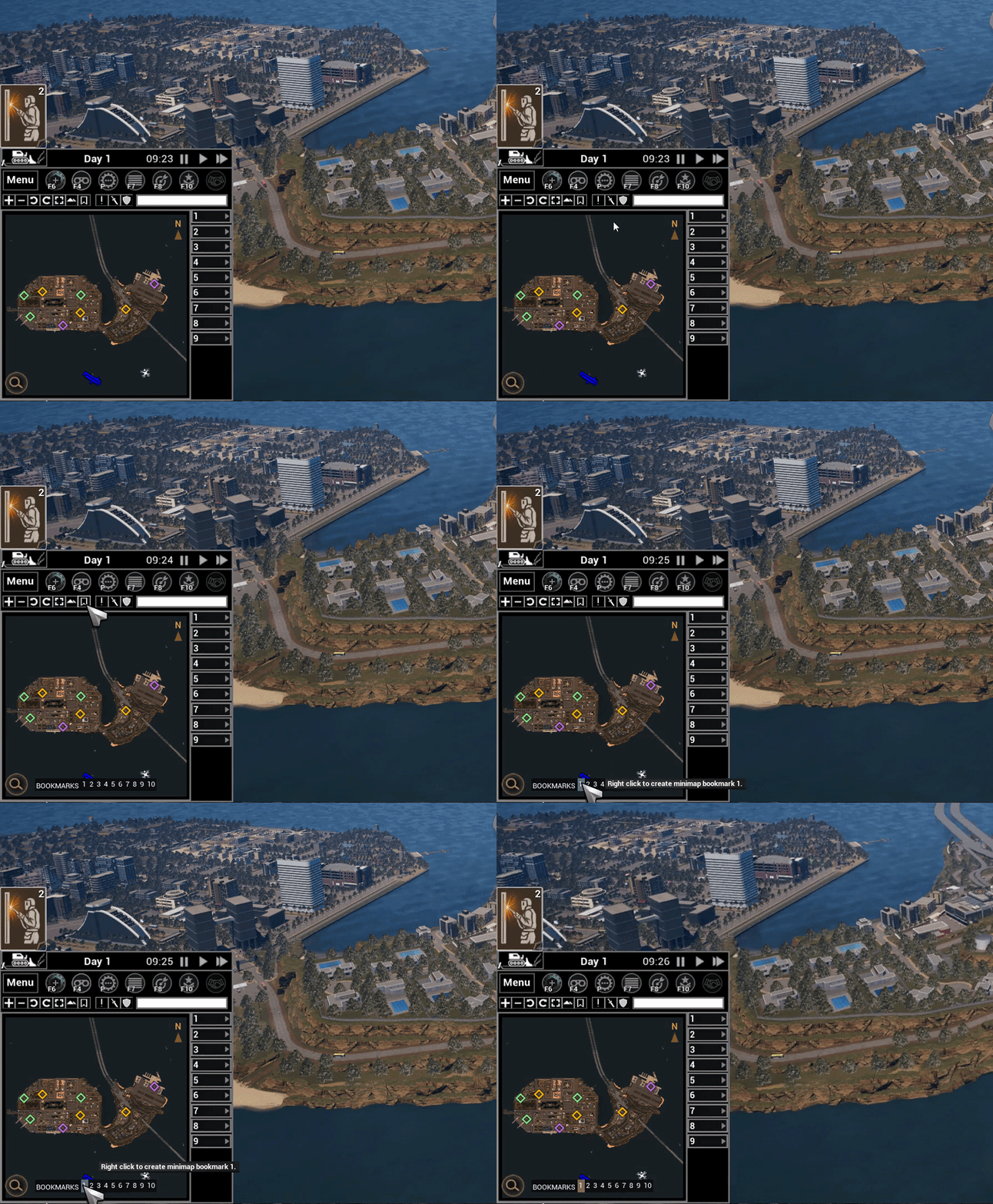
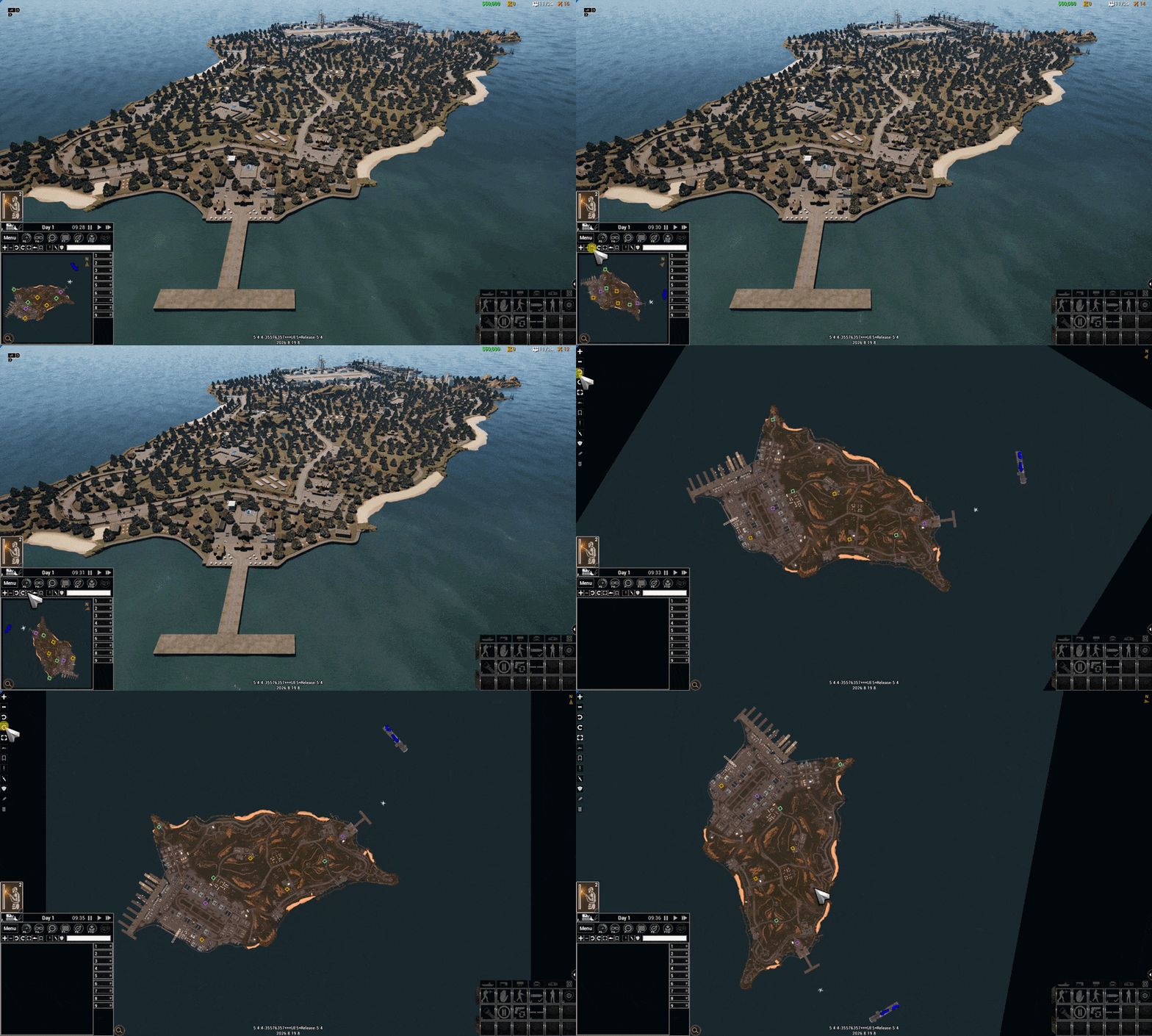
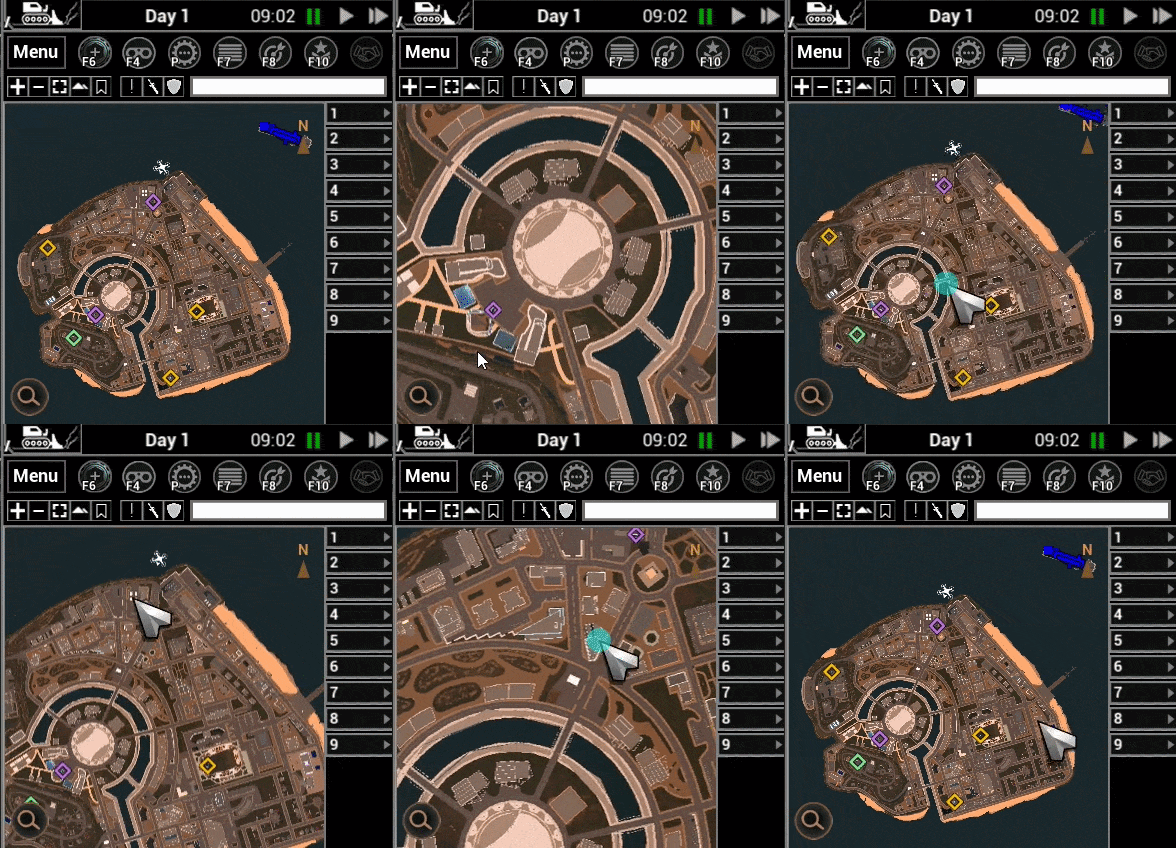
More control and more information directly from the Minimap. The Minimap has received one of its largest usability passes yet, with mouse scroll wheel zoom support, rotation + Q& E support, bookmarks, improved panning, Its size was improved by 20%, improved damage alerts, and additional multiplayer improvements for planning on the map.
Bookmarks now preserve the Minimap's current perspective, including zoom, rotation, and panning, allowing you to quickly jump between different areas of an operation.
Selection, Abilities & Active Weapon Feedback
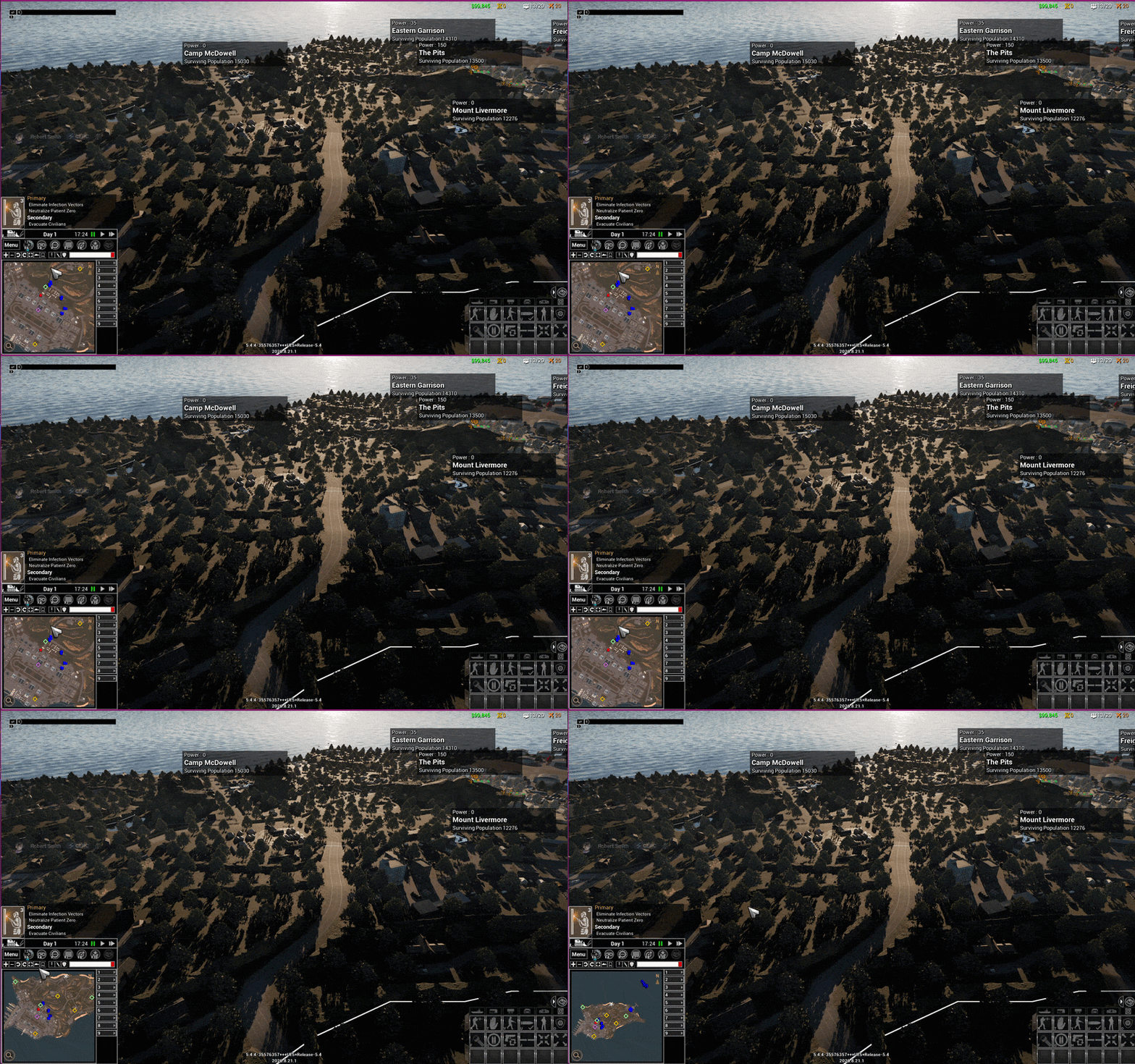
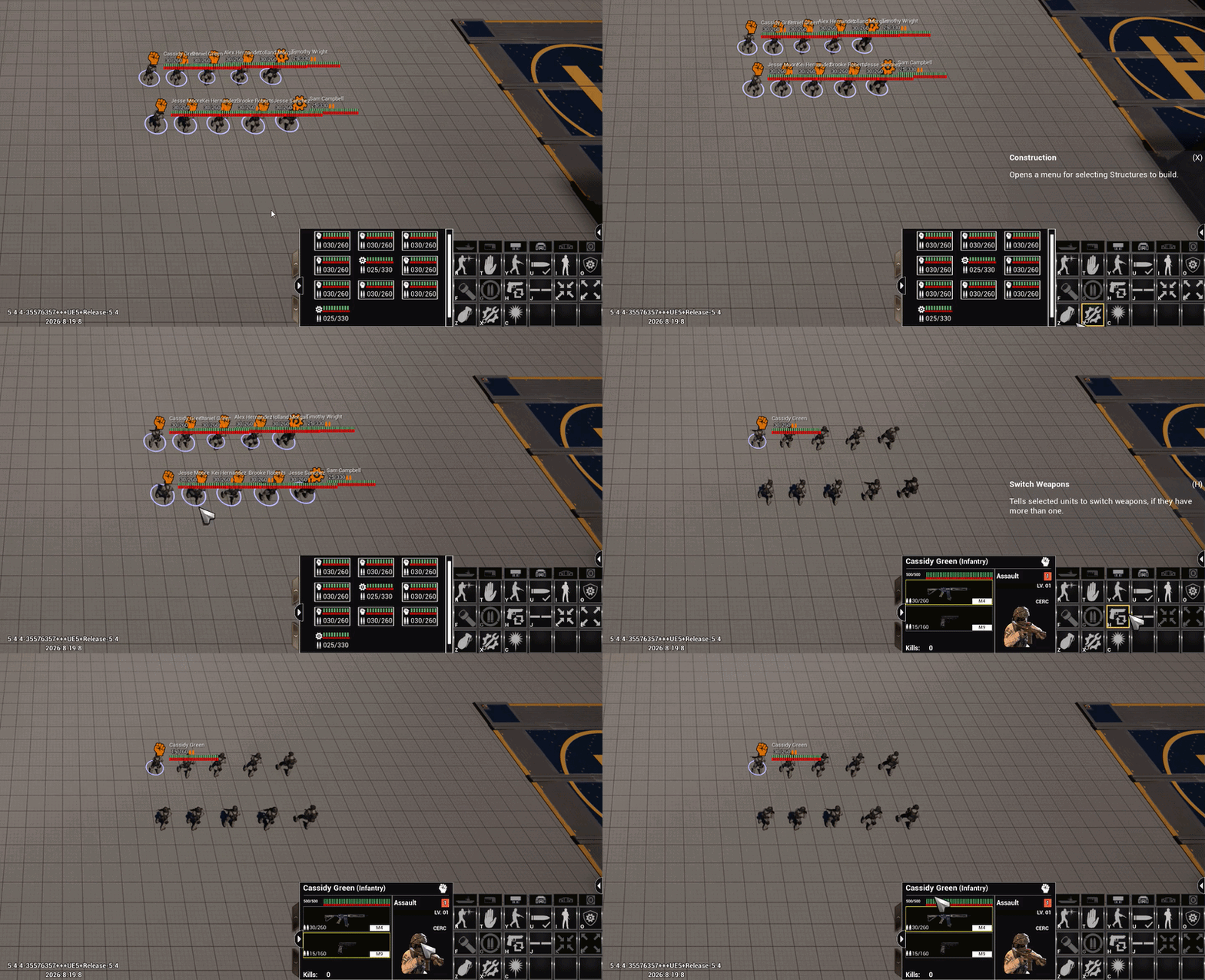
Better feedback for exactly who and what you're commanding. When multiple units are selected, units corresponding to the currently selected ability group are now highlighted in the Details Panel. Weapon displays also highlight the weapon currently equipped by a unit, making weapon swaps immediately visible without having to infer the unit's current state and go looking for them. Ability cycling has also been moved to TAB, making it faster to work through larger selections.
Fog of War, Vision & Late-Game Performance
A significant amount of this week's engineering has gone toward making vision more reliable under heavy simulation load. We've continued profiling and optimizing the VisionGrid, reducing memory operations, improving deferred processing, prioritizing relevant sight results, and preventing older results from becoming stale. This work also addresses cases where low framerates or extremely heavy late-game waves could cause units to detect enemies late, ignore them, or seemingly have infected disappear from vision. This remains an active area of development, but the changes in this build are another meaningful step forward.

Combat & AI Reliability
A wide range of combat and AI behaviors have been tightened up this week. Fire-mode changes now immediately cause units and independent weapons to reevaluate valid targets, patrol behavior has received additional reliability fixes, combat facing has been improved, garrison movement has been cleaned up, and the Stun and Enrage systems have been reworked to interact more predictably.

Patch Notes for 2026.8.21.1 (Experimental)
Minimap
Added Minimap rotation support.
When hovering over the Minimap, Q/E and camera rotation controls can now rotate the Minimap instead of the camera.
Added dedicated Minimap rotation buttons in both regular and fullscreen modes.
Added mouse-wheel Minimap zoom support.
Zoom controls now function while hovering over the Minimap and while using fullscreen map mode
Improved Minimap panning speed when heavily zoomed in.
Operator fullscreen map mode can now use Minimap zoom and rotation controls.
Operator fullscreen map mode can now pan around the map.
Increased the size of the RTS HUD Minimap by approximately 25%.
Updated surrounding HUD elements to accommodate the larger Minimap.
Added a North marker to the Minimap.
Minimap Bookmarks now save the current zoom, rotation, and panning perspective.
Added keybind support for jumping to Minimap Bookmarks.
Added feedback when creating or overwriting bookmarks.
Improved the Minimap Bookmark bar and its fullscreen positioning.
Moved map-specific Minimap information into dedicated Data Assets to make future Minimap updates easier to maintain.
Improved initial Minimap positioning and zoom across multiple maps.
Improved the initial Minimap view for Half Moon Bay.
Improved Minimap hierarchy clipping behavior when the map is rotated resolve bad edge border users were reporting.
Improved Minimap damage alerts with an edge sweep and compact blinking incident ring so its "obvious" enough but doesn't blind you
Improved damage alert visibility and scaling on larger maps as they were super tiny on larger maps
Improved multiplayer Minimap ping scaling on larger maps as they were super tiny on larger maps
Improved drawing and erasing reliability overall ( CTRL + Left mouse button)
Improved Minimap drawing replication
Unit Selection, Commands, and Interface
Units matching the currently selected ability are now highlighted when multiple units are selected.
Currently equipped weapons are now highlighted in yellow in the Unit Details Panel.
Weapon highlighting dynamically updates when switching between weapons such as rifles and pistols.
Moved the Ability Selector from ALT+TAB to TAB.
Camera Follow has been moved to the Backslash key by default.
Input rebinding now supports modifier combinations such as CTRL and ALT.
Rebound controls using CTRL/ALT modifiers are now displayed correctly in the Options Menu.
Improved long-name text wrapping for disabled Command Action shop items.
Fixed an unintended camera jump behavior while updating the Unit Details Panel.
Updated the Unit Details Panel and Weapon Market Button internals for easier maintenance and future updates.
Fixed a Unit Details UI cleanup issue related to infected conversion.
Updated Scout Drone command layouts so Engine, Land, and Radio remain in consistent keybind positions compared to other helicopters.
Adjusted the Message of the Day so it appears alongside the Upcoming Features panel instead of covering the entire screen.
Adjusted Recruit Popup sizing to reduce overlap between Unit Presets and Squad Presets at different resolutions.
Fog of War, Vision, and Performance
Optimized failed VisionGrid trace processing to reduce memory operations.
Improved deferred VisionGrid processing during heavy simulation loads.
Deferred vision results now uniquely map Perceiver and Stimulus pairs to reduce unnecessary processing.
Added processing pressure controls so new VisionGrid tasks can wait when deferred sight processing becomes overloaded.
Improved late-game vision reliability during large infected waves.
Deferred sight results are now ordered and nearby targets are prioritized.
Added resumable trace limits to reduce cases where enemies could become invisible or ignored during extremely heavy waves.
Applied additional safeguards for cases where low FPS could interfere with unit line-of-sight processing.
Changed VisionGrid result processing to a FIFO system with a read cursor to retain memory-operation savings while preventing older results from becoming stale.
Optimized Squad Manager where it could cause FPS drops in larger Infected Waves
Improved projectile performance. Additional projectile optimization remains ongoing.
Combat, Targeting, and Infected
Fire-mode changes now immediately force units to reevaluate and retarget valid enemies.
Independent weapons now correctly reevaluate targets following fire-mode changes.
Fixed an issue where cycling to Special Infected Only could incorrectly hide infected from vision while units were looking at standard infected.
Juggernauts are now correctly classified as Special Infected so target Special works for the now
Revamped the Stun system and its interaction with Enrage to resolve a race condition that could break the Juggernaut cause them to get confused in combat.
Improved Stun save/load behavior so remaining Stun durations do not incorrectly reset under certain circumstances.
Added speculative fixes for instances where Juggernauts could be launched or fly unexpectedly.
Added speculative fixes for instances where Juggernauts could fail to throw vehicles.
Improved combat facing by adding a cooldown before Set Focus resets so units don't flip between targeting new enemies sometimes visually.
This reduces cases where units in active combat would briefly turn back toward their formation direction instead of maintaining focus on their target.
Movement, Patrols, and Garrison Behavior
Improved general Patrol task reliability.
Added safeguards for cases where units could stop during a Patrol and fail to continue.
Added safeguards for cases where units could fail to stop correctly during Patrol behavior.
Improved AI initialization and gameplay-task handling related to Patrols.
Improved speed-state handling when Patrols start and stop.
Units moving in formation can now immediately transition into a Move To Garrison order instead of needing to complete the formation movement first.
Fixed a temporary freeze that could occur when redirecting a unit from one garrison to another.
Fixed an Engineer focus issue where Engineers could overly focus on the structure they were constructing instead of their current movement direction.
Fixed rappelling units attempting to face combat targets while still descending.
Improved rappelling behavior so units spread out after settling on the ground.
[dynamiclink href="https://youtu.be/UUxZ8WlRTMM"]
Helicopters
Improved helicopter movement paths when aircraft need to gain altitude before traveling.
Helicopter movement paths now include a dedicated move-up leg where appropriate.
Improved helicopter Patrol behavior when resuming a Patrol after combat.
Improved helicopter Patrol path visualization so waypoint flags float at the appropriate helicopter navigation height.

Helicopter Patrol paths now replicate the necessary navigation-height information to clients.
Added additional safeguards to prevent helicopters from attempting to refuel on raised portions of the Motor Pool.
Landed helicopters with their engines running now consume half fuel while idle.
Structures, Construction, and Blueprints
Fixed legacy Structure Blueprints occasionally stretching walls or selecting an incorrectly sized wall piece.
Fixed captured Euthanization Tents placed through Structure Blueprints failing to function correctly.
Adjusted build locations for SAM, MG, VADS, and Cannon Turrets.
Improved turret ammunition behavior so an empty turret can request ammunition later if the player cannot afford ammunition when it initially runs dry.
Fixed a CERC Guard Tower regression that could prevent replacement guards from being purchased following the addition of LHA6 recruitment.
Increased durability for multiple wall and gate tiers.
Recruitment and CERC
Added recruitment support to the LHA6.
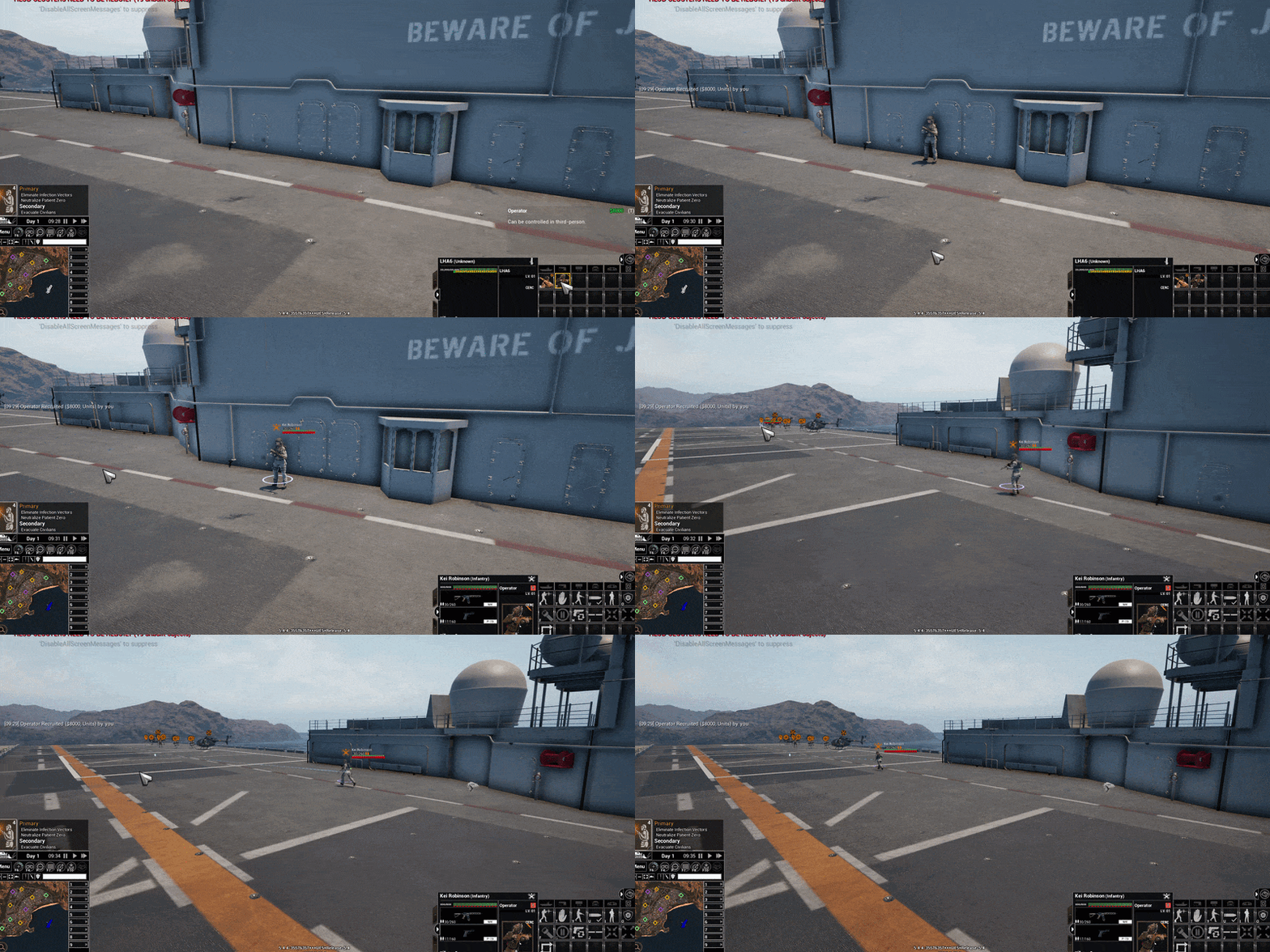
Recruitment requirements have been externalized into a Recruitment Source system, allowing recruitment sources to exist outside traditional structures.
Improved underlying recruitment support for Barracks, Helipads, Main Tents, Motor Pools, the LHA6, and related UI.
Increased CERC starting population from 12 to 20 for new games.
Reduced starting Engineers from 4 to 2 across Pandemic maps.
Reduced starting Assaults from 4 to 2 across Pandemic maps.
Reduced the Sparrow population value from 4 to 2.
Civilians
Improved Civilian Intake balancing when multiple Intake Zones are active.
Civilians will now distribute themselves more intelligently between available Intake Zones rather than overwhelmingly preferring a single zone.
Fixed evacuating civilians incorrectly triggering repeated unit-loss announcements.
Refactored unit-loss audio notifications so non-combat removals and virtualized units remain silent.
Audio and Battlefield Feedback
Added announcer barks for Unit Death.
Added announcer barks for Structure Damaged events.
Added announcer barks for units becoming fully infected.
Added options for disabling announcer barks and adjusting their timeout.

Vehicles and Visuals
Updated Ajax vehicle destruction setup.
Added destroyed Humvee assets and supporting destruction work.
Updated Springbok wheel destruction support.
Added damaged and destroyed wheel states for the Springbok/JLTV asset set.
Added support for vehicle-mounted weapons to receive vehicle-death events for future destruction VFX and behavior. (Still ongoing)
Updated weapon LOD settings across a large number of CERC infantry weapons.
Fixed MK14 LOD configuration.
Added randomized tree scale and rotation across Treasure Island, Angel Island, and North San Francisco.
Continued environment and detail work throughout North San Francisco.
Continued lighting and post-processing adjustments.
Steam Workshop and Mod Uploader
Updated the Cepheus Protocol Workshop Mod Uploader to support importing pre-existing Steam Workshop mods for updates.
Improved wording explaining the difference between importing a mod, updating an existing mod, and creating a new Workshop project.
Improved the Mod Uploader's button flow.
Improved FAQ and interface text throughout the Mod Uploader.
Save / Load and Stability
Fixed a Save/Load validation regression where unlocked weapons could revert to their stock configuration after loading.
Improved Stun Save/Load behavior.
Unauthorized weapons introduced by manually modifying save data will now be reset to the unit's valid stock loadout.
Applied a speculative fix for a reported Formation Actor crash.
Development Update — Finishing the Foundation
Today's Experimental patch is only part of what we've been working on over the last week. A lot of our time has also gone into watching people play, reading feedback and reviews, looking through reports, and profiling what happens as matches become larger and more complicated. That process has been useful because the things that affect how the game feels aren't always the big headline features. Sometimes it's a performance spike late in a match, a pathfinding edge case, or a system that is technically working but isn't giving you enough feedback to understand what it's doing. Those smaller points of friction add up, and this phase of development has increasingly become about finding and cleaning them up. Through the rest of August, that's where much of our attention is going. We want to finish the work already in motion, get the existing systems into a good place, and make sure we're starting Escalation from a game that feels stable and dependable rather than carrying a list of known problems forward with us.
Where Things Stand
Several of the larger systems we've talked about recently are now complete.
Saved Squad Compositions — DONE
Structure Blueprint Presets — DONE
Minimap Zoom — DONE
Minimap Rotation — DONE
Minimap Bookmarks — DONE
We've also been spending more time on the smaller usability improvements that are easy to overlook on a feature list but make a noticeable difference during a match. Cycling through units and abilities, clearly showing the active weapon, improving selection feedback, and making the Minimap easier to work with are all examples of that. A lot of these changes come directly from seeing where players hesitate or have to work harder than they should to understand what the game is telling them. That's useful feedback for us, because sometimes the solution isn't another major system. Sometimes the game simply needs to communicate the systems it already has better.
GPU Fog of War — Delayed
The remaining GPU Fog of War work is taking longer than we originally expected, so we want to be clear about where that stands. There are two sides to the work. The visual portion of Fog of War is being moved over to the GPU so we can reduce the amount of CPU time spent presenting it. Underneath that, however, the actual trace and line-of-sight work is still heavily CPU dependent. That distinction has become increasingly important while profiling the mid-to-late game. As infected populations, unit counts, and the rest of the simulation grow, we're still seeing situations where CPU load can spike and vision processing begins to fall behind. This week's VisionGrid work is aimed directly at that problem. We've reduced memory operations, improved how deferred sight results are handled, prioritized nearby results, and added better controls for situations where more vision work is being generated than the system can process immediately. Those changes have also helped with cases where infected could appear late, disappear from sight, or be ignored during particularly heavy waves. The GPU visual migration is still happening, but finishing that portion alone wouldn't address the larger performance problem. We're continuing to profile both sides together so that when we call this work complete, it has actually improved the situations we're trying to fix.
Learning From Legacy
One lesson we took from Legacy is that it's very easy to get caught up in shipping the next feature before the previous one has had enough time to settle. We'd get something working, move onto the next system, discover an edge case in the previous one, jump back to fix it, and gradually end up with several interconnected systems all needing another pass at the same time. That made development harder to manage and made it easier for smaller issues to stay around longer than they should have. We're trying to handle this phase differently. Rather than immediately stacking the next large feature on top, we're giving the systems already in the game the time they need for profiling, polish, usability work, and bug fixing. Escalation is going to introduce plenty of new variables on its own, so this is the right time to get the current baseline into the best shape we can.
CERC OPS — Planning & Synchronization
CERC OPS is also moving into its next stage of development. This week's build contains an early implementation of streaming Minimap information between CERC OPS and the game, and we're starting to build on that work with synchronization between connected clients. The immediate use case is SP/Coop planning. We want information created during planning to be shared between players instead of living only on one client's machine. Once that works cleanly at the game level, the same foundation can extend outward to CERC OPS. The long-term direction is a two-way flow between the game clients, server, and CERC OPS, so plans can be created, updated, and reflected across the different parts of the system.
Dr. Kira & An Official In-Game Tutorial
We're also showing off Dr. Kira's new model. Kira is second-in-command of CERC, and she'll also be the character guiding players through the mission-based tutorial we're beginning to build.

Recent reviews, feedback, and simply watching people play have made it clear that Cepheus Protocol needs a better way to teach its mechanics inside the game itself. The community has done a lot to fill that gap through Steam guides, videos, and other player-made resources, and those have been genuinely helpful. At the same time, we want the game itself to do a better job of giving new players the information they need to get started. Many of Cepheus Protocol's mechanics become fairly intuitive once you've seen them in action, but getting to that point shouldn't depend on leaving the game and searching for an explanation. There's also a practical side to this: not everybody wants to stop playing, open a guide, or watch a video before continuing. Some players would rather learn by doing, so that's an experience we want to support more directly. The first version will be a basic mission-based tutorial with Kira providing guidance as the player moves through objectives and encounters different systems. It isn't intended to replace the deeper guides, tutorials, and strategies the community has built. The goal is to give players a solid introduction to the fundamentals inside the game, then let them explore the deeper systems naturally from there.
Main Menu & UI Cleanup
The Main Menu and the remaining UI are also getting another pass. Some of the new Server Browser assets are already being prepared internally, although they're not active in the current interface yet. This work is partly visual, but it's also about readability and consistency. The same questions we're asking elsewhere in the game apply here too: is the important information obvious, does the interface respond the way the player expects, and can somebody understand what they need without having to hunt for it? The Minimap changes were a good example of how much difference that kind of cleanup can make, and we want to carry the same thinking through the rest of the UI.
Helping Report Issues & Bugs
While we're working through this cleanup phase, detailed reports from players are especially useful. If you're still seeing performance drops, pathfinding problems, strange unit behavior, UI issues, multiplayer problems, or anything else that consistently feels wrong, please send it our way through Discord or the Steam Community. Videos, screenshots, GIFs, save files, and reproduction steps are all extremely helpful because they let us see the exact conditions around an issue instead of trying to recreate it from a description alone. Even something that looks minor on the surface can sometimes expose a larger underlying problem once we can reproduce it reliably. The more of those issues we can identify and resolve now, the cleaner the game will be as we move into the next phase of development.
The Road to Escalation
The standard we're aiming for before we move into Escalation isn't that Cepheus Protocol somehow becomes completely bug-free. What we want is for the existing game to feel stable and predictable enough that we can trust what we're working from. That matters because Escalation itself is going to involve a lot of R&D. We'll be updating parts of the engine, evaluating newer engine features, testing navigation improvements, and prototyping systems that may behave very differently once they're dealing with the number of actors Cepheus Protocol can put on screen. Building climbing is one example. Before that can become a production feature, we need to find out how well the available navigation systems handle it, how predictable the behavior is, and whether it remains practical when scaled up. Some of what we need may already be available through newer engine systems, some of it may require extension, and some of it may ultimately need to be engineered specifically for the game. That's the part of Escalation we're looking forward to getting into. Getting the current game into a dependable state beforehand means we'll have a much clearer picture of how those experiments are affecting the simulation and where the next round of engineering needs to focus.
Through the End of August
That's the general plan for the remainder of August. We'll continue shipping fixes and improvements while we finish the Fog of War profiling, expand CERC OPS synchronization, start the in-game tutorial work, reskin the Main Menu, and clean up the remaining UI. Today's Experimental patch is part of that process rather than something separate from it. A lot of the work in this update comes directly from the same testing, profiling, and player feedback that's guiding what we're working on next. Once those remaining pieces are where we want them, we can turn our attention toward Escalation and the R&D that comes with it. For now, we're going to keep working through what is already in front of us and give these systems the time they need.
Community Workshop Spotlight
The Steam Workshop continues to grow alongside the Blueprint, Squad Preset, and modding tools. This week's update also makes it easier for creators to bring an existing Workshop project back into the Cepheus Protocol Mod Uploader, update it, and publish subsequent versions. Here are a few creations from the community worth checking out:
[dynamiclink href="https://steamcommunity.com/sharedfiles/filedetails/?id=3783404703"][dynamiclink href="https://steamcommunity.com/sharedfiles/filedetails/?id=3786782849"][dynamiclink href="https://steamcommunity.com/sharedfiles/filedetails/?id=3784826542"]Keep sharing what you're building. We'll continue looking through the Workshop for creations to feature in future updates and CERC HQ discussions.
Last CERC HQ Episode Summary
[dynamiclink href="https://youtu.be/n07JsESAfpA"]Last week's CERC HQ focused heavily on the systems that have been coming together over the last few updates, including reusable base blueprints, battlefield control, Fog of War work, patrol improvements, and the ongoing performance push.
Base Blueprints were one of the larger topics, covering the ability to capture layouts, save them locally, share them with friends, and distribute them through the Steam Workshop. We also looked at improvements to construction behavior and the broader work surrounding reusable squad and operational presets.
Fog of War and vision were another major part of the discussion, including the ongoing effort to move more of the visual workload onto the GPU while continuing to profile the CPU-side line-of-sight and trace work. We also covered vehicle patrols, formation controls, weapon switching, vehicle destruction, ammunition resupply behavior, radio fixes, and optimizations for units outside the player's immediate view.
We also spent time looking ahead at Escalation and some of the R&D that will come with it, including stronger infected progression, new variants, specialized lieutenants, and larger navigation and traversal experiments.
Weekly CERC HQ's
When: LIVE SATURDAYS at 7:00 PM Eastern
Another week. Another deployment. Another look behind the curtain at the continuing development of Cepheus Protocol.
CERC HQ is our weekly development podcast covering the latest development progress, current technical challenges, upcoming roadmap work, community feedback, and the systems currently moving through production.
Where to Watch
Watch CERC HQ on YouTube Join the Discord Server Visit the Steam Page
Missed a Stream? No Worries!
Watch the CERC HQ Archive Thank you to everyone continuing to test Experimental, report issues, send save files, record videos, capture screenshots and GIFs, participate in performance testing, create Workshop content, and provide detailed feedback. It gives us a much better picture of where the rough edges still are and where our attention is most useful next.