In our efforts to improve the game with you as a community, here's a look at new changes being tested in the Lodestar Program this week: a rework of how vehicle modules work, running as a test in LSP #39. The tiers, effects, and numbers below are all test values, and this rework could still change or be canceled before it reaches the live game.
The aim of this change is to give you more module variety and a more consistent, structured way to learn what modules do and build your vehicles around them.
What is the Lodestar Program?
LSP, short for Lodestar Program, is HEAT's name for this kind of early test: a closed program where we test upcoming updates and experimental changes. It runs on its own client, every few weeks, and needs a special invite to access.
Invite waves go out periodically to active players, ensuring that we have a healthy population of testers. If you're an active player, check your inbox: you might already have an LSP #39 invite waiting. There's no public sign-up available at the moment, although this may change in the future.
The seven vehicles in this test
This test focuses on the core module categories, things like Firepower, Mobility, and Toughness. Ability modules run on a separate, more bespoke system, and this pass doesn't touch them.
For LSP #39, the new library is live on seven vehicles: M1E1 Abrams, XM1V, XM190, ALVT, HSTV-L, M3E1 Bradley, and AMX-10 RC.
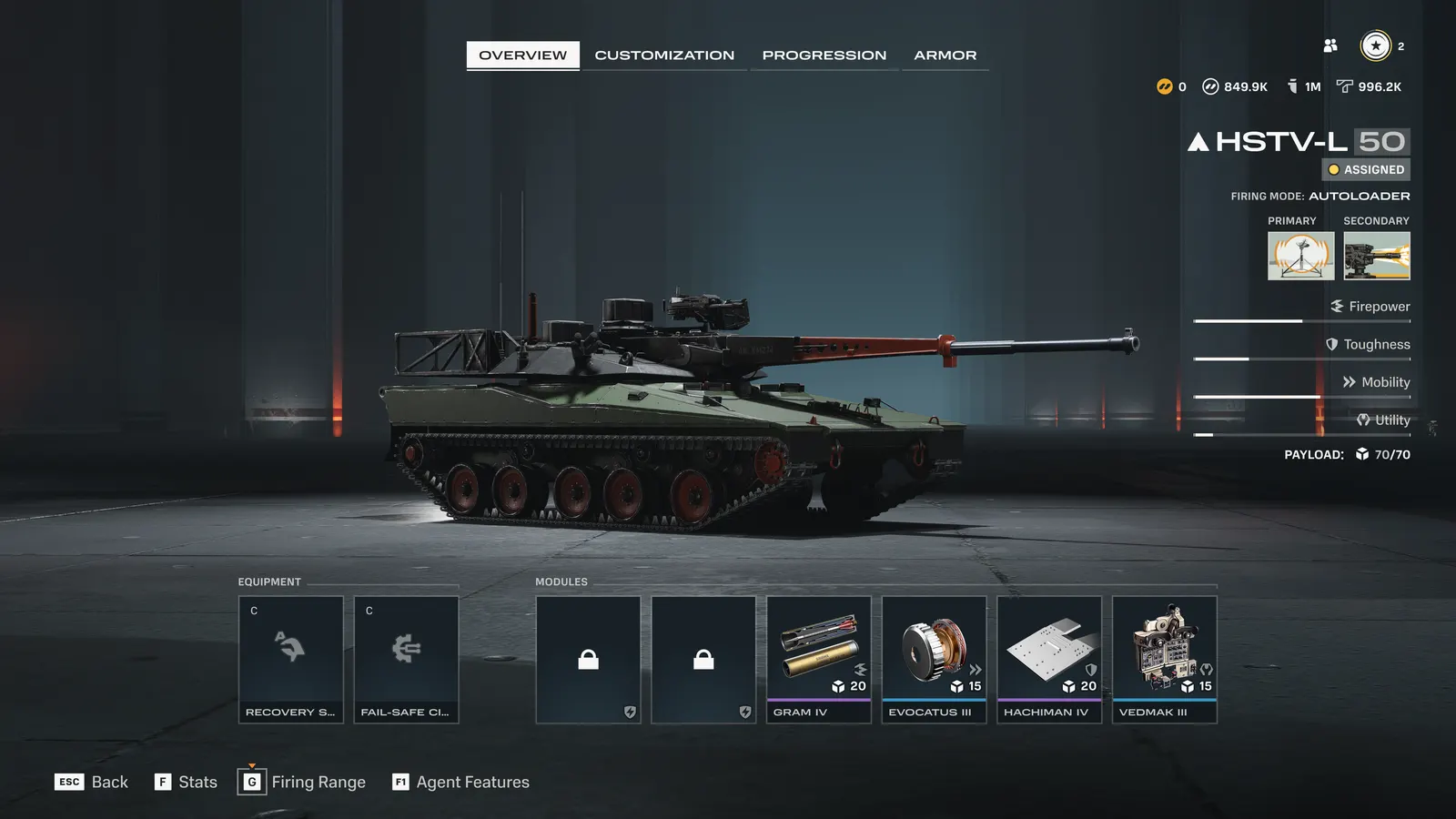
The HSTV-L module browser, showing equipped modules and the vehicle's Firepower, Toughness, Mobility and Utility ratings.
Five quality tiers
Every module in the new library comes in five quality tiers, shown as a roman numeral suffix on the name, like Indrik III. Higher tiers cost more to install, but the named effect never changes between them. What grows is the strength of the general stats around it.
Indrik, a Firepower module, shows how this works. At tier I (Common), it already carries its full effect: Critical Alacrity, which grants Alacrity (a boost to your Ability Cooldown charge rate) for 3 seconds after a critical hit. At tier I that's the whole module, just the effect, with no general stats attached yet.
At tier III (Rare), Critical Alacrity works identically. Around it, Indrik III adds Shell critical damage +19.7% and Damage cone +1.35° on the plus side, alongside Gun loading time +3.1% and Shell damage −6.5% as trade-offs. Higher tiers stack more stat weight in both directions and cost more to install. The named effect stays exactly the same.
Tier breakdown
| Tier | Quality | Rarity color | Payload cost | Install cost |
|---|---|---|---|---|
| I | Common | Gray | 5 | 160 |
| II | Uncommon | Green | 10 | 320 |
| III | Rare | Blue | 15 | 640 |
| IV | Epic | Purple | 20 | 1,280 |
| V | Legendary | Gold | 30 | 2,560 |
Indrik across tiers
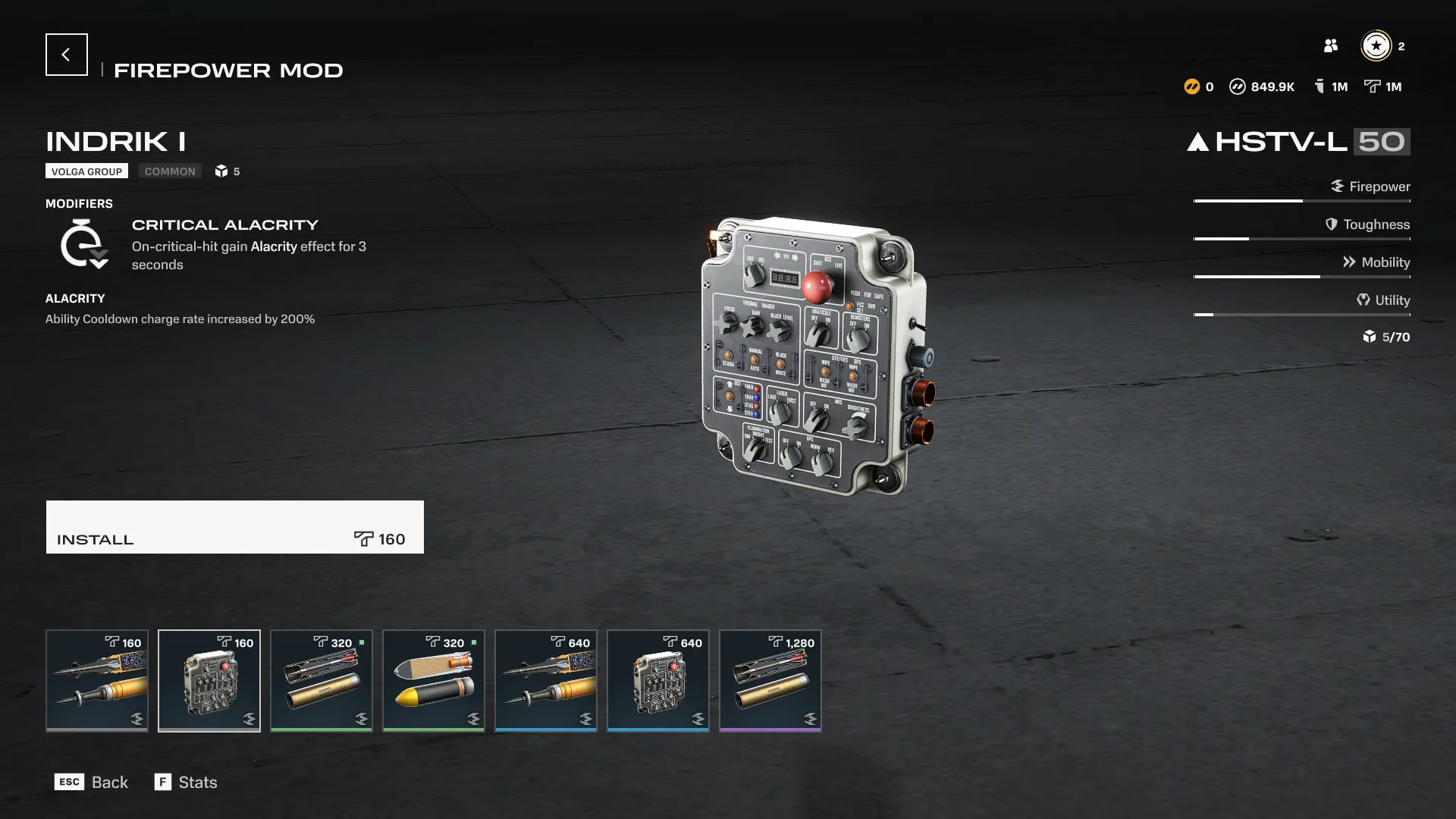
Indrik I (Common): effect only, no general stats.
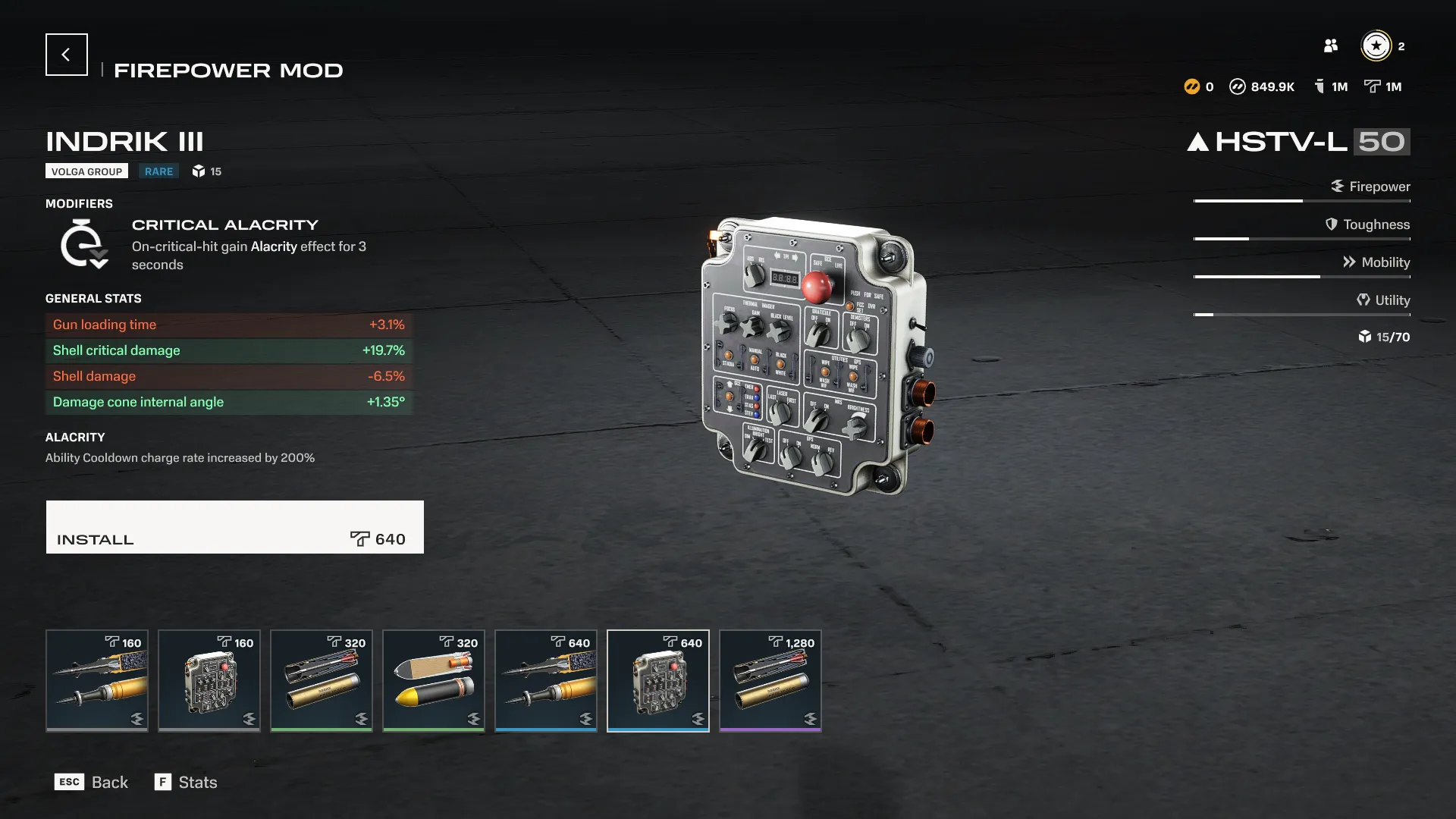
Indrik III (Rare): same effect, added general stats.
Same effect for any vehicle
Alacrity is a good example of how shared effects work. The buff itself is always the same: it increases your Ability Cooldown charge rate by 200%. What changes is how you trigger it. Critical Alacrity grants Alacrity for 3 seconds after a critical hit. Vigilant Alacrity grants the same buff for 6 seconds when one of your deployables is destroyed. Different triggers, one underlying Alacrity effect.
A named effect also behaves the same way no matter which vehicle carries the module. Indrik, a Volga Group module, carries Critical Alacrity whether it's equipped on HSTV-L or on AMX-10 RC. Gamayun, another Volga Group module, carries Vigilant Alacrity. Learn what Alacrity does once, and you'll recognize it on any module that lists it.
There are dozens of module options per vehicle across the new library, and a shared effect means the same thing on every one of them.
Critical Alacrity and Vigilant Alacrity
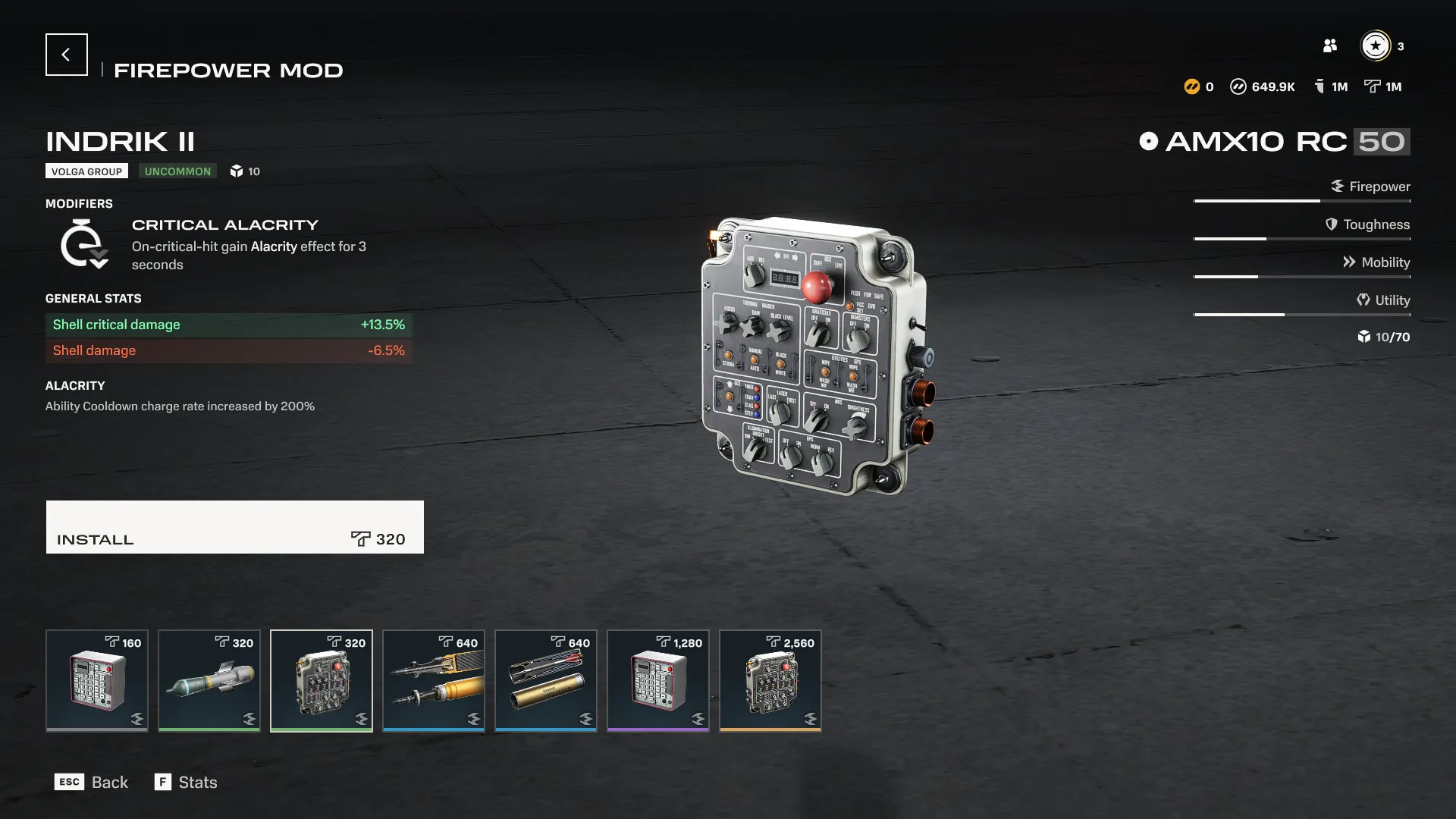
Indrik II on AMX-10 RC: same Critical Alacrity effect as on HSTV-L.
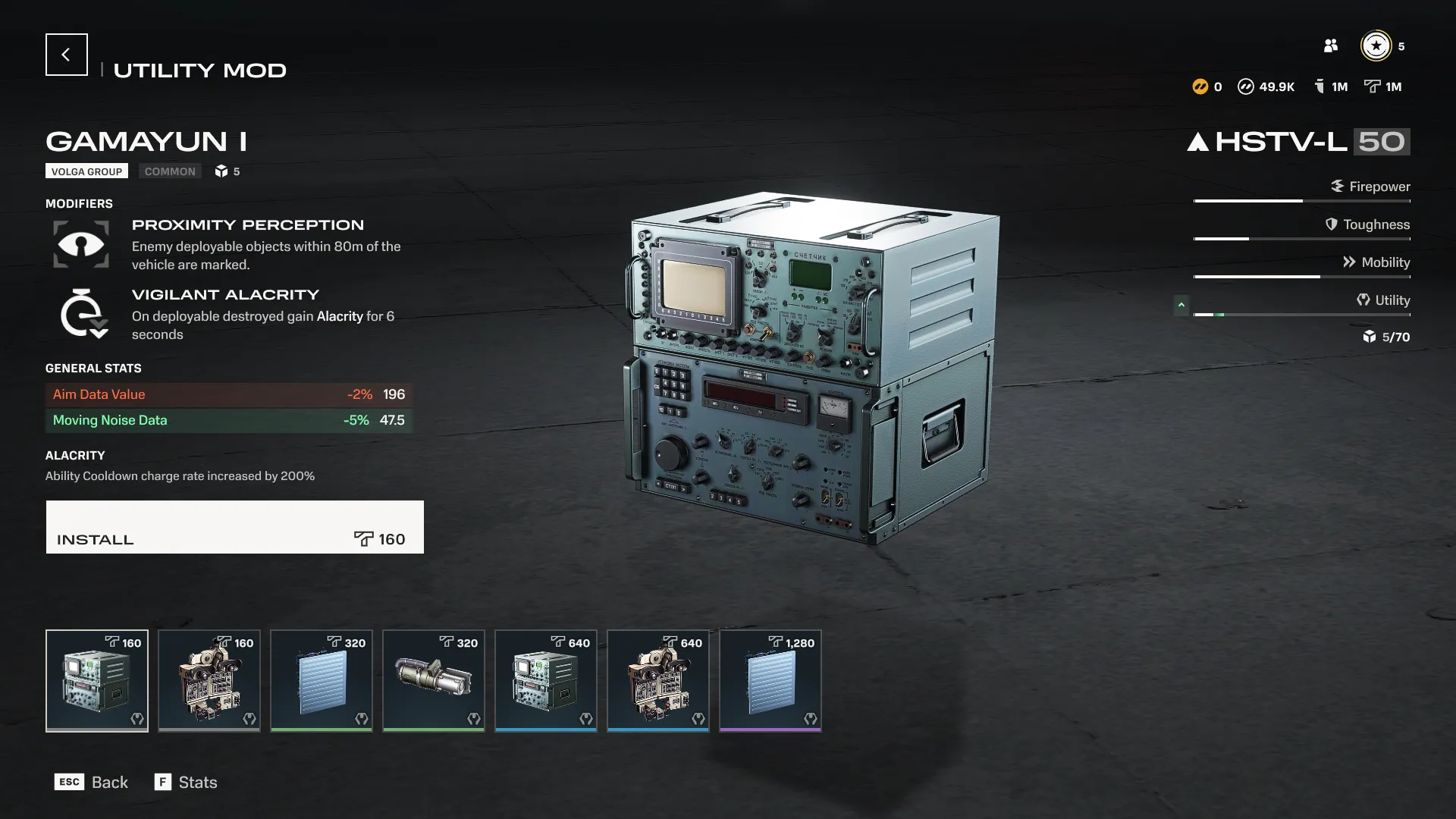
Gamayun I: Vigilant Alacrity, on deployable destroyed.
Seven manufacturer houses
Every module in the library belongs to one of seven manufacturer houses. Each house has its own naming theme and gameplay focus, so the name gives you an idea of what a module does before you open its card.
Rubicon Industries spans more than one module type in this test. Evocatus, a Mobility module, carries Continuously Variable Transmission at tier I: it brings your max reverse speed up to match your max forward speed. Decurion, a Toughness module from the same house, carries Invigorated Safeguard: while you're out of combat, it triggers Safeguard (extra health that builds up over time and does not decay) for up to 15% of your maximum hit points.
The test is also exploring a house-wide bonus for running several modules from the same house together, layered on top of what each module already does on its own. That part isn't built yet, so for now treat house identity as a guide to a module's focus.
House directory
| House | Naming theme | Gameplay focus |
|---|---|---|
| Cheyenne Corp | Native American tribes | Explosive damage, close-range application, ability and explosion damage mitigation |
| Kawagarbo Industries | Chinese mythological beasts and regional deities | Status-effect generation, resourcing from incoming damage, ability cooldown effects |
| Kita Industries | Japanese major and minor deities | Poke-damage trading, strong sprint speed, drift handling |
| Rhine Corp | Germanic legendary creatures and folklore | Attrition-damage trading, damage scaling, status manipulation |
| Rubicon Industries | Roman army unit designations | Damage pressure, range control, cohesion buffs, recoverable health |
| Severn Systems | English and Gaelic folklore | Armor mitigation, ramming damage and force, forced enemy displacement |
| Volga Group | Slavic folklore | Raw damage over penetration, armor stacking, ability resourcing |
Rubicon Industries across module types
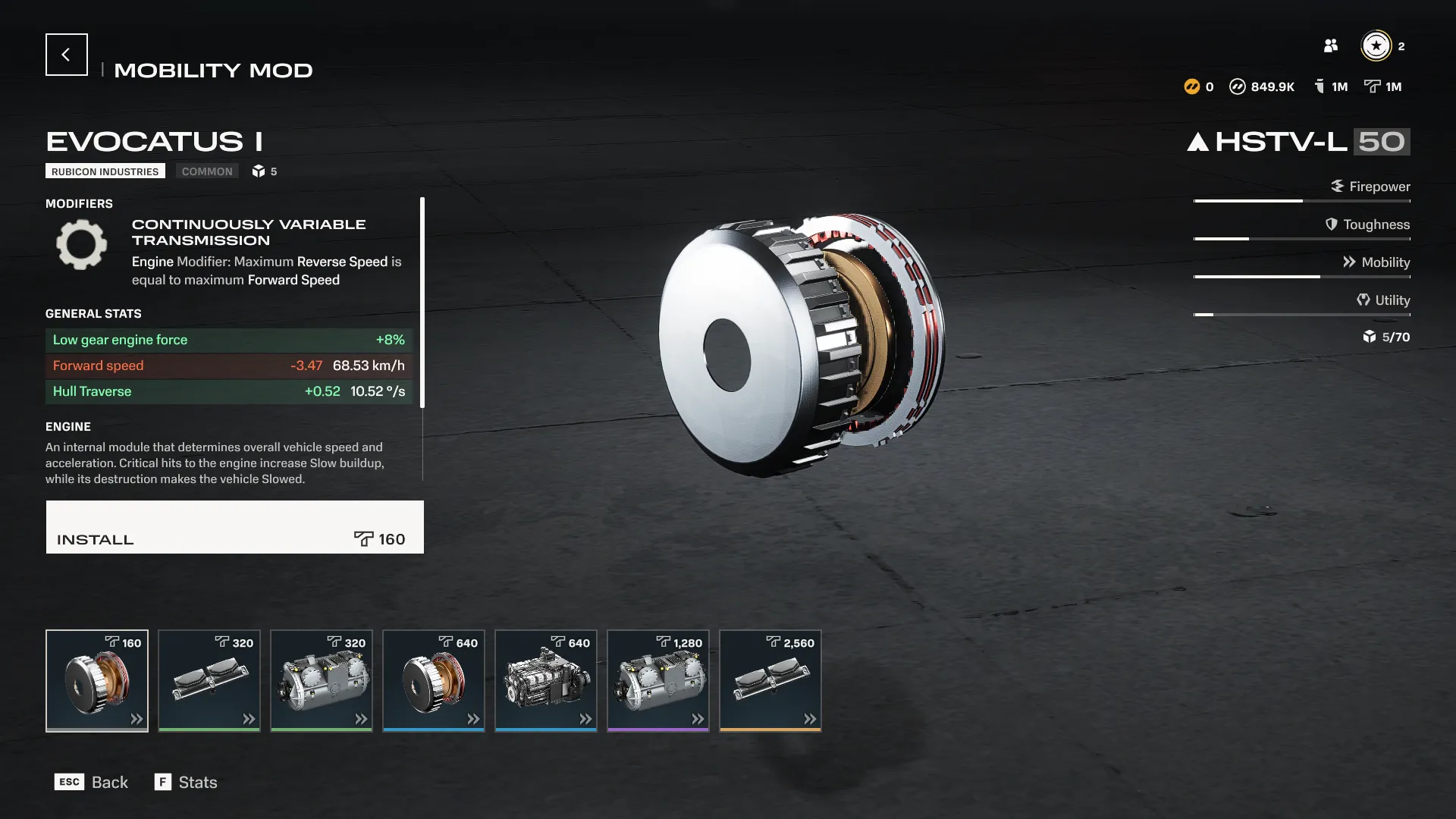
Evocatus I: Continuously Variable Transmission.
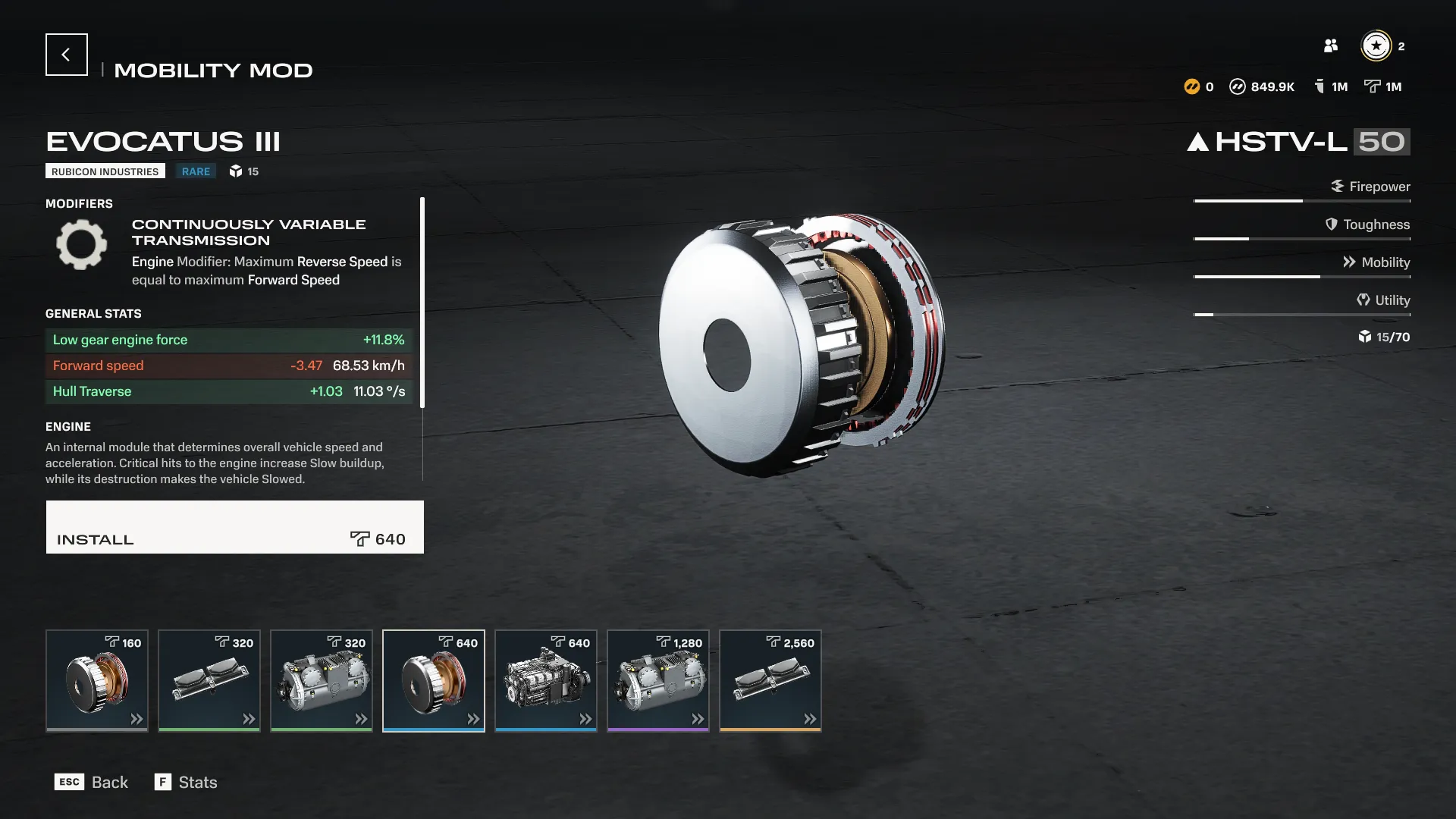
Evocatus III: same effect, more stat weight.
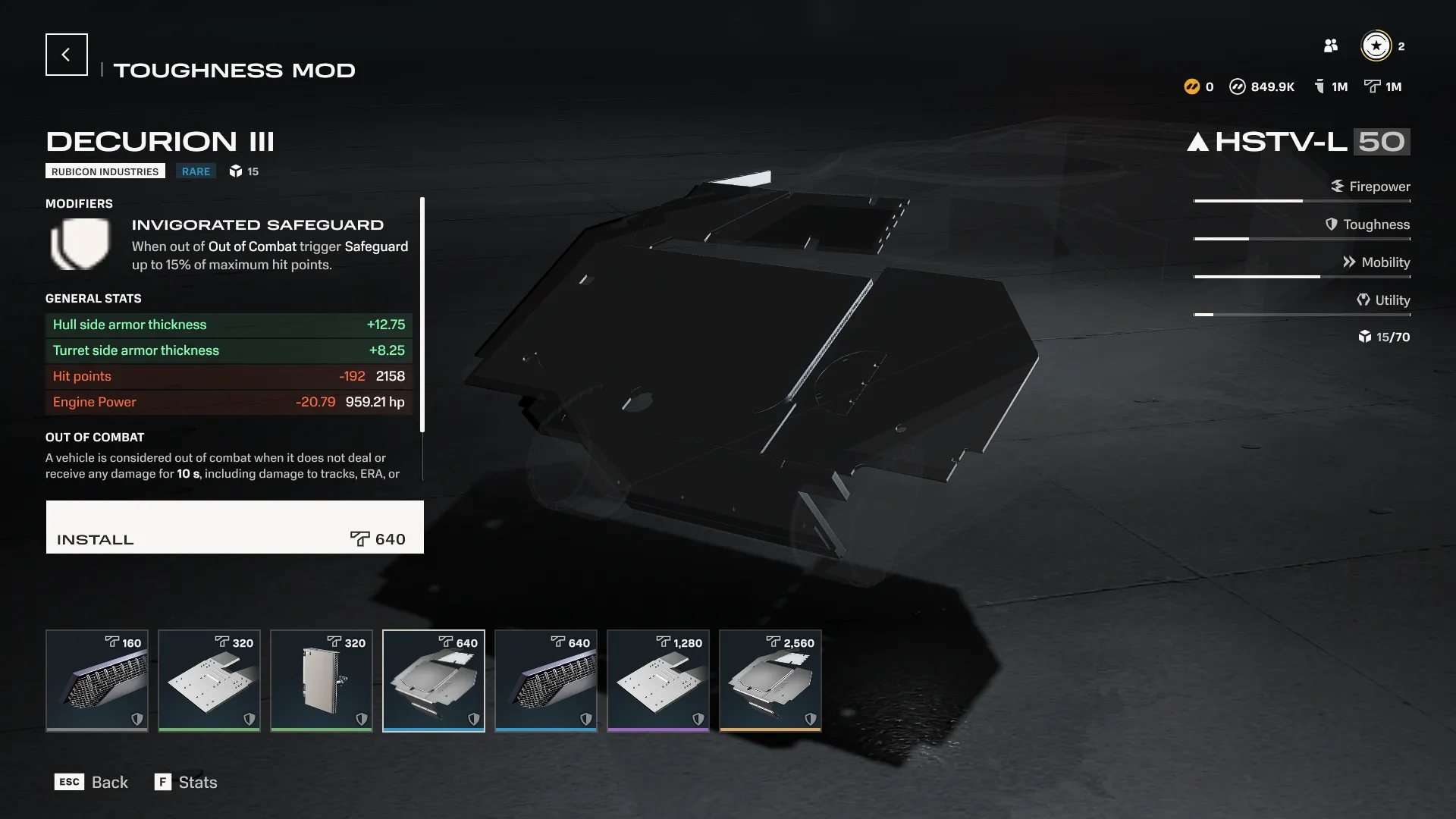
Decurion III: Invigorated Safeguard.
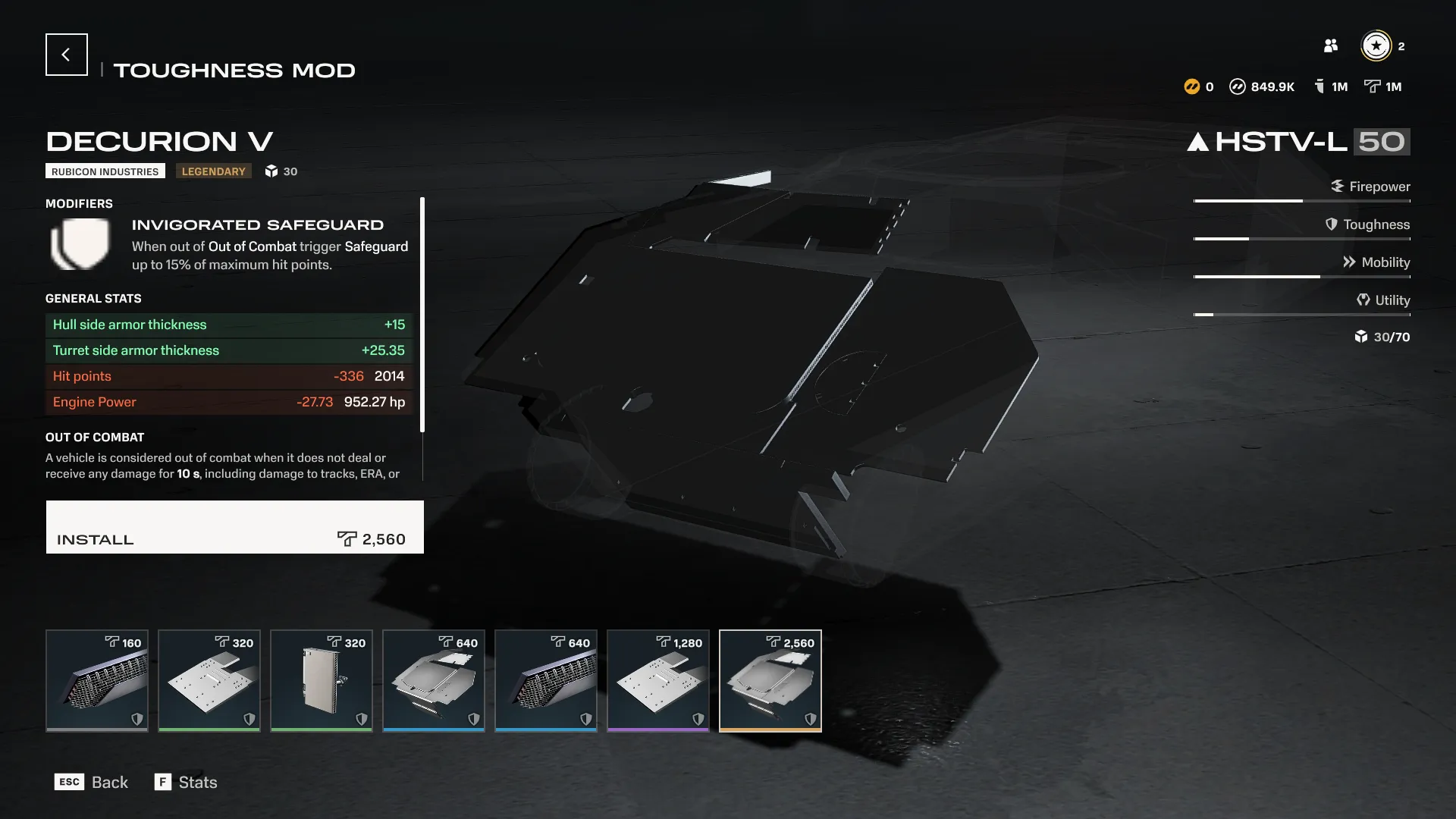
Decurion V: legendary tier, payload 30, install 2,560.
Tell us what you think
Whether or not you're in LSP #39, we want to hear what you think about this rework. Read through the tiers, the effects, and the houses above, then tell us what stands out, what's confusing, and what you'd change.
Head to the feedback forum on the HEAT Discord to share your thoughts. New to the Discord? You can join with the link below.
Active player? Check your inbox, you might have an LSP #39 invite.
Share your feedback
Join the HEAT Discord
Reminder: This is an experimental test. Everything shown is not finished and may be changed, delayed, or canceled.