Dear Fighter Pilots, Partners and Friends,
Heatblur's DCS: F-14B(U) Upgrade is here, and it brings the Tomcat into the 2000s with a modernized HUD, JDAM capability, more advanced navigation, and more. Along with the release of the DCS: F-14 Ultimate Edition, this is the most content-rich Tomcat package yet. Read on for the full story.
Highlights of this week's DCS 2.9.28.26283 update includes Ground-Controlled Intercept for the DCS: MiG-29A Fulcrum, new DTC partitions for the DCS: F/A-18C, a major SEAD overhaul for the DCS: JF-17, and flight model and stability fixes for the DCS: MB-339A/PAN. Read on for the full rundown.
Rounding out this week's DCS 2.9.28.26283 update includes new DTC additions for the DCS: F-16C and DCS: MiG-29A, further DCS: F/A-18C sensor and weapons fixes, RWR handoff and ATP improvements for the DCS: F-16C Viper, a batch of fixes across Magnitude 3's DCS: F4U-1D, DCS: MiG-21bis, and DCS: Christen Eagle II, and significant terrain and airfield improvements to the DCS: Afghanistan and DCS: Kola maps.
Thank you for your passion and support.
Yours sincerely,
Eagle Dynamics
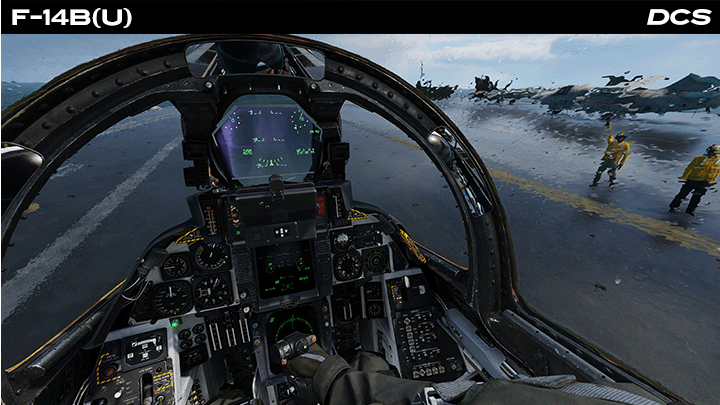
DCS: F-14B(U) Now Available!
By Heatblur Simulations
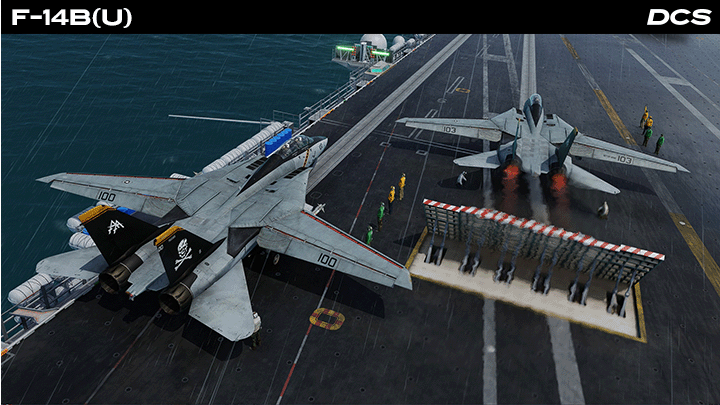
Heatblur has brought the Tomcat into a new era with the release of the DCS: F-14B(U) Upgrade. This late-service evolution of the F-14B brings the Tomcat into the 2000s with the addition of a new VDIG-R, a modernized HUD, PTID, JDAM capability, EGI navigation, CDNU, DFCS, FTI, and ALE-47 countermeasures, new art, missions, and campaigns. It requires ownership of the DCS: F-14A/B Tomcat.
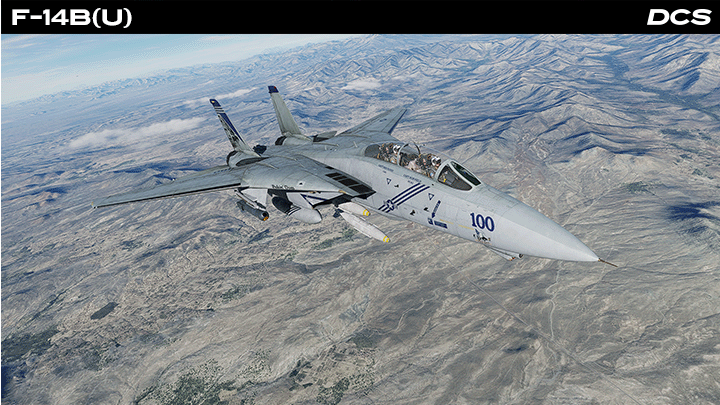
The DCS: F-14 Ultimate Edition offers the full Tomcat evolution in one package: The early and export F-14A, the late F-14A, the F-14B, and now the modernized F-14B Upgrade. It's the most content-rich Tomcat offering, spanning JESTER AI or human RIO gameplay, Forrestal-class carrier operations, the AIM-54 Phoenix, LANTIRN, TARPS reconnaissance, AI A-6 support, and five full campaigns.
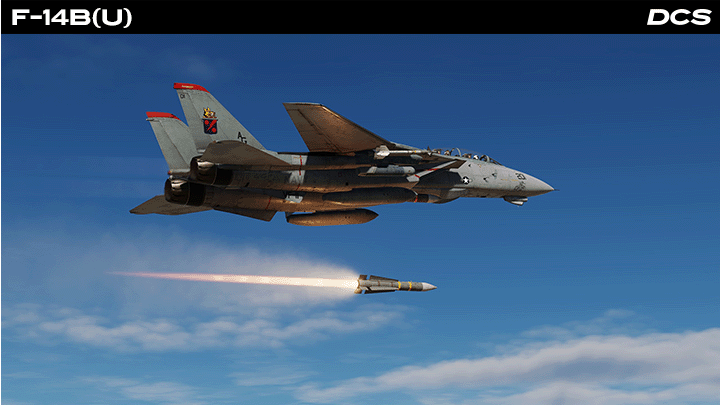
From its role as Cold War fleet defender to the modern precision-strike platform it became, the Tomcat's whole journey is now here for you to enjoy. This is for anyone that doesn't just want to fly one flavor of the Tomcat but wants to live its entire storied history.
DCS 2.9.28.26283 Available Now!
Update Highlights
This week's update includes some huge changes to several DCS modules. Check out the changelog here and see the highlights below!
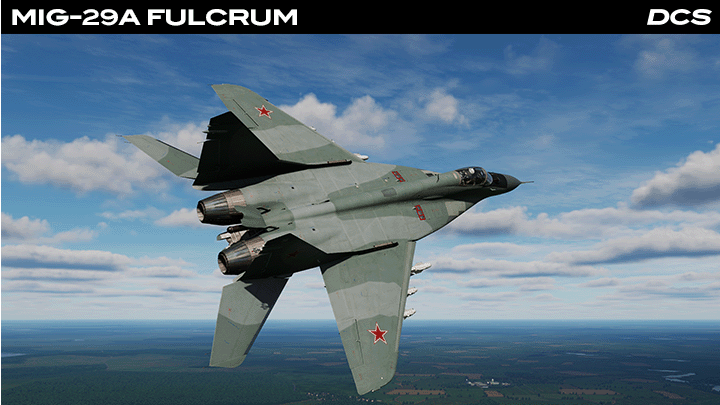
DCS: MiG-29A Fulcrum — Ground-Controlled Intercept Is Here
A new chapter in Cold War-era interceptor tactics has arrived for the DCS: MiG-29A Fulcrum. Ground-Controlled Intercept, known in Russian service as KRU, links the Fulcrum to ground radar assets that can vector pilots onto distant targets with precision, even before their own radar goes active.
In practice, a GCI Station (KRU) unit placed in the mission editor pulls target data from any compatible surveillance radar within 250 km, automatically prioritizing the best three sources. From there it can guide up to 24 interceptors on a single channel, feeding each pilot a steering cue, target speed, altitude, and attack aspect on the HUD. Because the Fulcrum's own radar stays silent until GCI calls for it, an intercept can be flown almost entirely without tipping off the target, with automatic illumination initiating at 60 km head-on or 40 km tail-on.
For mission designers, GCI is activated through the "Activate GCI" waypoint command where you'll set the working channel and engagement range. Full instruction will be available in the manual and an in-game training mission in the thread linked below. As it stands today, GCI guidance is available to the player-controlled aircraft only; AI-controlled aircraft aren't yet part of this system. In the next phase, the system will be enhanced to allow the player’s slot to transmit guidance commands directly to the aircraft, expanding control capabilities.
Full details, including channel setup and HUD symbology, are covered in the MiG-29A GCI forum post — well worth a read before your next Redfor sortie.
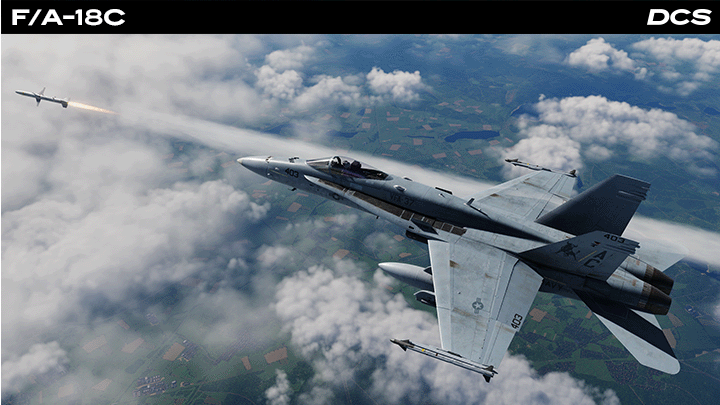
DCS: F/A-18C — New DTC Partitions: GPS Waypoint Database & HARM Settings
This week's DCS update added two new Data Transfer Cartridge (DTC) partitions for the DCS: F/A-18C, giving you more control over mission planning and HARM employment before you ever step to the jet.
GPS Waypoint Database
The new GPS Waypoint partition lets you pre-load up to 200 additional waypoints that are stored separately from the Mission Computer's native 0-59 waypoint database. These GPS waypoints can't be used directly by the Mission Computer (MC), but they're built to be imported when you need them: From the HSI>DATA>GPS sub-level display, you can transfer any GPS waypoint into a chosen MC waypoint slot with the XFER button (PB 5), selecting the destination slot with the up/down arrows (PB 12/13) and paging through your GPS waypoints, five-character names and all, with the arrow and paging buttons. It's a natural fit for pilots who want a full library of named references, like every airfield on a map, ready to drop into the mission computer on demand.
AGM-88 HARM Settings
The same update introduced the HARM settings partition, letting you configure default HARM display behavior ahead of time and reassign radar types across Target-of-Opportunity (TOO) threat classes. The ALL, FRD, and HOS threat classes remain fixed, since those cockpit options already select every threat class, all friendly emitters, or all hostile emitters as a group rather than a single reassignable class.
Both partitions upload from the cockpit the same way as other DTC data, through the MUMI display using the GPS WYPT (PB 20) and HARM (PB 2) pushbuttons.
Full details on both partitions are available in the forum post, including the reference screenshots for the waypoint transfer workflow.
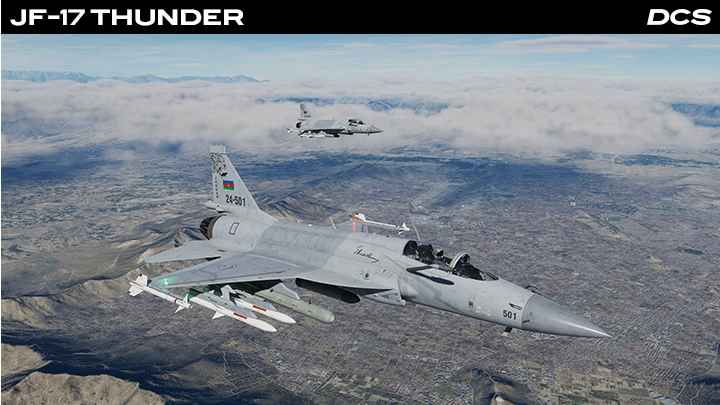
DCS: JF-17 by Deka Ironwork Simulations — SEAD Overhaul & LD-10 Update
The DCS: JF-17 received a major SEAD overhaul this week, headlined by a rebuilt LD-10 targeting workflow alongside a fix for an SD-10 guidance issue. The SMS now offers four distinct employment modes: ACT, which suppresses pre-planned radar targets using EW target types and area coordinates set via the mission editor, DTC, or manual entry; PAS, which lets the pilot select a target type directly off the RWR display before acquisition; RAND, for automatic acquisition of the most threatening signal in view; and SP, unchanged from its previous behavior. Supporting the new modes are an updated HUD/HSD envelope, a new TDC cursor on the MFCD HSD page, and a kneeboard page listing selected EW target types, along with an EW signal comparison toggle that trades search speed for target certainty. Pilots can no longer launch without a signal acquisition unless overriding with HOTAS T2.
The update also opens up customization with a revised radio/RWR/airspace file structure, and it adds support for community EW database mods, adds an MFCD transparency slider, updates several HOTAS bindings, adds the F-14BU to the RWR database, and includes a new community-made skin for the Azerbaijan Fighter Jaguars Squadron by Aqil Huseynov.
DCS: MB-339A/PAN by IndiaFoxtEcho Visual Simulation — Flight Director, Weapons, and Stability Fixes
The DCS: MB-339A/PAN received a substantial update this week with the bulk of the work focused on Flight Director accuracy and instrument fidelity. VOR/TACAN and ILS intercept logic have been reworked so that the FD only generates steering commands within valid capture limits, glide slope capture is now correctly tied to a 0.5-degree threshold, and pressure-to-altitude calibration has been corrected to reflect realistic ISA conditions. On the weapons side, the DEFA pods no longer fire unexpectedly after the bomb fuze switch is used, and the aircraft's Sidewinder and Magic missiles now have functional IR seeker behavior, complete with distinct audio tones for detection, lock, and uncaged states. The update also resolves several stability issues that include random crashes, multiplayer spawn crashes, and a bug that turned the aircraft into a drone after ejection. This is in addition to fixes to roll trim sensitivity and VOIP radio display. The user manual has also been updated with new air-to-air missile capability information.
See the changelog for these and much, much more!
DCS 2.9.28.26283 Update
Beyond the above highlights, there were many more fixes, changes, and additions. Check out some more of them below, and make sure to visit the changelog to see a complete list of all changes released this week.
Data Transfer Cartridge
In addition to the new DCS: F/A-18C partitions covered above, the DTC continues to expand across several other modules this week. The DCS: F-16C gains a new MPD partition with a VRP/VIP tab that lets you configure Visual Reference Point and Visual Initial Point settings directly on the VRP and VIP DED pages. For the DCS: MiG-29A, a fix resolves an issue where preset radio Program 2 failed to load.
Beyond individual modules, the DTC interface itself has been improved across the board: Mission Editor map drawings now appear on the DTC map (a common player request) the same way they do in the F10 map view, the briefing window correctly closes when the DTC is opened from briefing, and keyboard input no longer gets disabled after creating a DTC.
DCS: F/A-18C
This update also includes a number of fixes across the DCS: F/A-18C's sensor and weapons systems. On the SA page, trackfile headings no longer shift with the pilot's own aircraft heading, STEP now correctly displays trackfile information even when not SOI, and a conflict between STEP and TUC for HMD datalink has been resolved. MSI-related issues have also been addressed, including STT RAID locks breaking when quit without MSI support, SURV-sourced trackfiles in an MSI memory condition not flashing the full HAFU, and missing TXDSG DONOR and MEMBER designation lines. Sticky cursor behavior in SCAN RAID has been fixed, raw hit bricks are no longer incorrectly space stabilized, and the Vc indicator no longer erroneously uses target airspeed instead of own-ship. A bug causing unboxing the LINK4 option in the SA page's SENSOR submenu to disable LPTs has also been corrected, along with a Zuni/Hydra rocket single rack misfire.
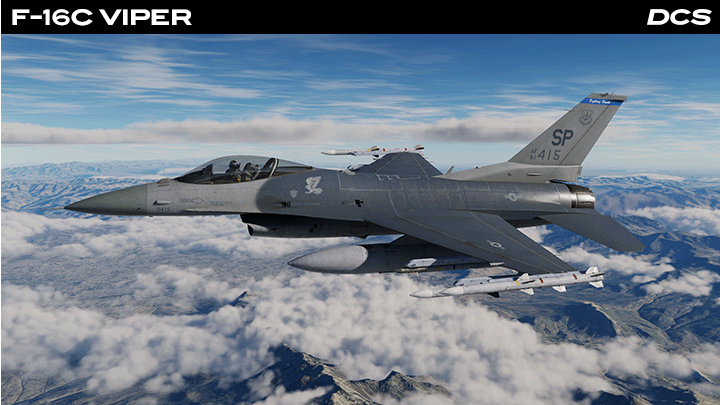
DCS: F-16C Viper
This week's DCS: F-16C update adds the RWR Handoff feature that allows threat handoff between radar warning receiver contacts, currently without PRF audio tones. Advanced Targeting Pod (ATP) imagery has also been improved when using zoom, along with several related fixes: ATP manual zoom no longer resets to 1.0X when the TGP MFD format isn't displayed, and the ATP's weight value has been corrected. On the DED side, pressing M-SEL on the MKPT page no longer inadvertently commands Cursor Zero, and the next markpoint is now stored correctly relative to the currently displayed MKPT number rather than the wrong one. The FCR now retains its azimuth setting across master mode changes, and a rapid jitter in the A-G STRF reticle between ground and boresight has been resolved.
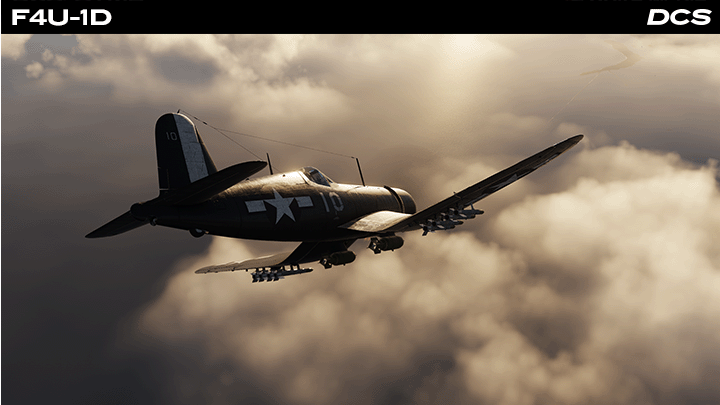
Magnitude 3 LLC — Fixes Across the F4U-1D, MiG-21bis, and Christen Eagle II
The DCS: F4U-1D update saw a series of flight model and system refinements: Instrument vibration has been reduced for both the pitot system and engine-related sources, and the amount of shake has been reduced. Tail wheel swing behavior has been adjusted, centering when unloaded, and holding its last position when no force is acting on it. It will lock only once it nears center if locked outside that position. Side friction on the main tires has been corrected, cowl and oil radiator slat opening has been increased on hot and air starts, collision shell names have been fixed, arrestor hook angle has been adjusted, and an incorrect argument has been removed from several bort numbers. NOTE: The current CTD with a cold start F4U is known and being diagnosed by Magnitude 3 LLC, we apologize for any inconvenience this has caused.
The DCS: MiG-21bis received several bug fixes, including radar range bars that extended beyond the screen edge, radar detecting "late activated" units before their activation, and a canopy ejection sequence issue where three ejection presses triggered canopy jettison on the first press. SAU autopilot logging that was overwriting the DCS log has also been removed. One known issue remains open: Radar return echoes from clouds are not yet possible, as this depends on DCS's volumetric clouds API that is still a work in progress.
Finally, the DCS: Christen Eagle II gets a fix for propeller pitch oscillation occurring with the engine stopped.
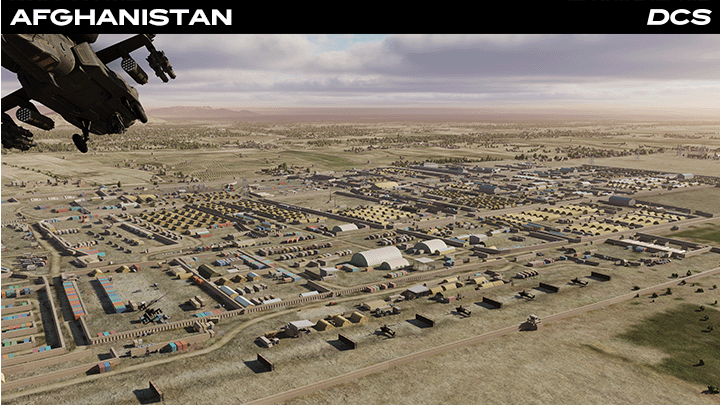
DCS: Afghanistan
The DCS: Afghanistan map received a major update this week that adds three new Forward Operating Bases (Masum Ghar, Pasab, and Howz-e-Madad), the unique Fort Gardez, Zaranj airfield, and new landmarks across Kabul including Biland Schloss and a flag monument at Wazir Akbar Khan.
Airfields across the map have also seen substantial work. Khost, Tarinkot, Shindand, and Jalalabad all gain new parking slots to fit aircraft like the DCS: CH-47 and DCS: C-130, while Herat, Bagram, Kandahar, Camp Bastion, and Ghazni Heliport received improved taxiways for better AI movement. Shindand in particular gets a full scene and ramp overhaul, and Bamyan's runway slopes and surrounding ground surface have both been improved. Beyond individual airfields, terrain around Operation Medusa, COP Deysie, and FOB Thunder has been refined, civil traffic has been increased across the whole map, and object damage and fire behavior have been adjusted for more realistic distribution.
On the fix side, missing road sections, broken meshes along roads and rivers, misplaced powerlines, and incorrect object placement near Jalalabad have all been addressed, along with corrected town and city naming, a Kandahar TACAN placement fix, and cleanup of objects and trees found on steep mountain slopes.
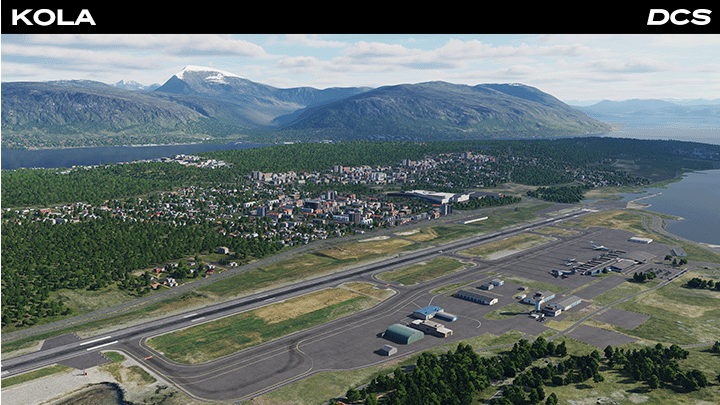
DCS: Kola by Orbx
This week's DCS: Kola update adds Tromso Airfield to the map along with a quality control pass on AI routing and parking accuracy across the region. Numerous airfields, including Severomorsk-3, Monchegorsk, Kirkenes, Tromso, Kallax, Luostari Pechenga, and Kilpyavr, have had oversized parking slots resized to better fit the aircraft actually using them, while taxiway errors have been corrected at Monchegorsk, Andoya, Banak, Hemavan, and Noden Helo Base. AI routing logic has also been improved at several fields, including Evvenes, Bodo, Lakselv, and Kallax, and a fix for missing road sections that was causing major AI detours has been resolved map-wide. Aircraft operating from Vidsel no longer crash to trees, Kirkenes has had its tower lights adjusted and a fuel depot relocated, and winter textures around trees have been cleaned up in several areas.
Make sure to check out the changelog as there are many more fixes, additions and changes to some of your favorite modules!
Thank you again for your passion and support.
Yours sincerely, Eagle Dynamics
THIS WEEK’S PRIORITY TASKING Are you notching like a pro? Check out this video by moldy, download his practice mission and master this most important skill! Watch it here. |