Hello, mercenaries!
In just two weeks, on July 31, Quasimorph will leave Early Access and launch in 1.0.
When we announced the 1.0 release, we saw a lot of questions about the balance of the release version. That makes sense: balancing a game that is supposed to be merciless to the player is not an easy task, and we have been wrestling with it for the last three years.
A little context
At first, our approach was fundamentally totalitarian: we made one difficulty level, and it… turned out to be too difficult for a large number of players. As a result, many of them were simply unhappy.
For a while, we tried to dance around the problem with tutorials that would teach players how to play Quasimorph, QoL updates, comeback mechanics, and even a few crutches that made the beginning of the game easier. Eventually, we decided to change our approach and added difficulty levels, along with Workshop support for those who wanted the option to simply modify the game.
The next step was modular difficulty. At some point, we realized that even fairly hardcore players might dislike one very specific thing, so it became clear that the right move for different audiences was to simply give you the freedom to customize the difficulty for yourself.
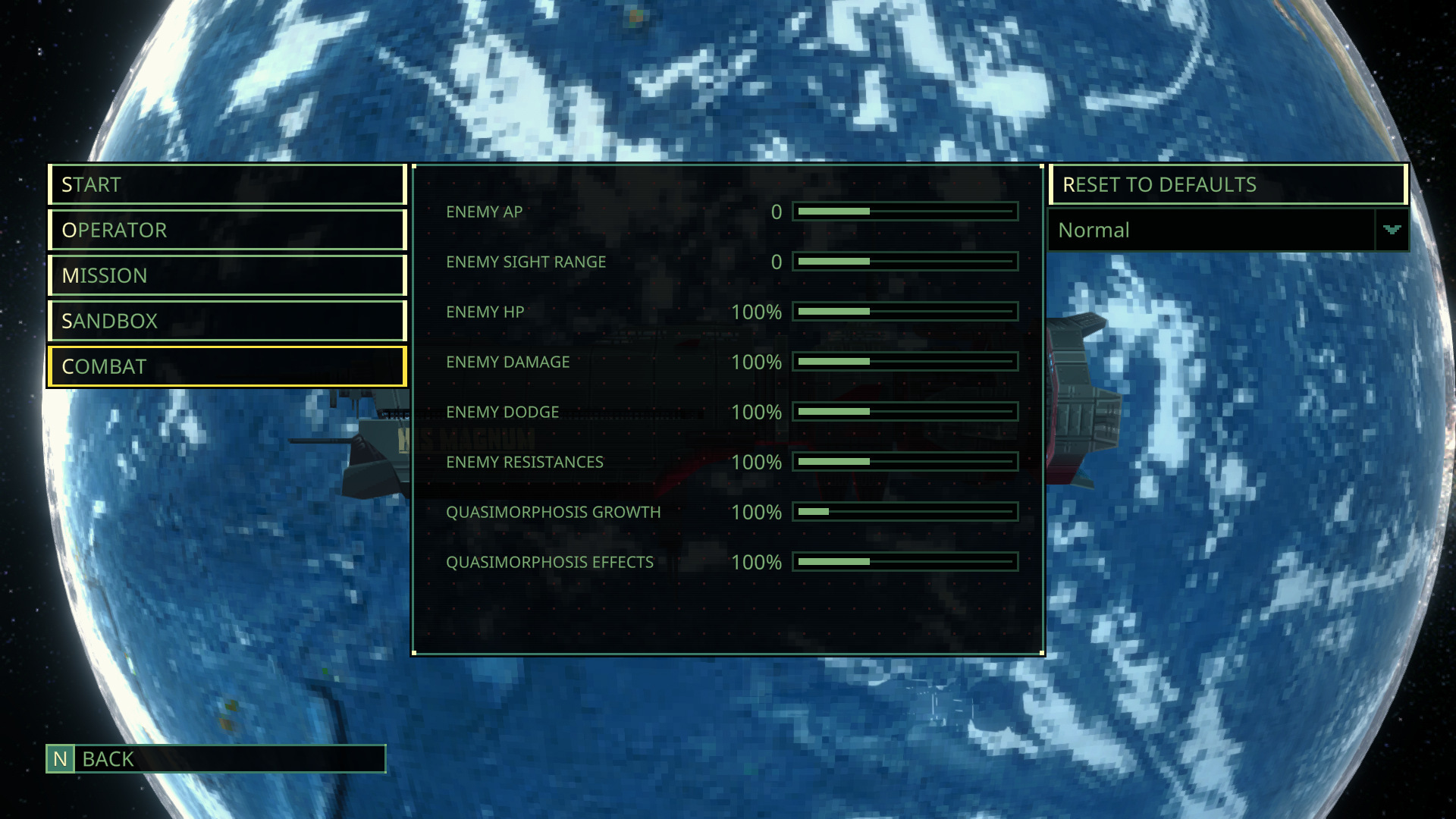
An important step in this direction was what we called “Operation Rob the Modders.” Dear modding community, we hope you are not offended by that wording! Thank you so much for pointing us toward QoL improvements and difficulty modifiers that players really wanted. This had a major impact on the game: many changes and options appeared after we noticed the popularity of certain mods.
Over the course of Early Access, we and our community have come a long way in improving the game. Quasimorph remains a difficult game where you can customize your experience to fit your preferences — that is one of our principles.
Still, by the time we approached the 1.0 release, there were a few more problems that needed to be solved. Today, we want to tell you about the improvements, increases in difficulty, simplifications, and balance changes we have made for 1.0.
Those of you who have already played the beta will be familiar with much of what we are going to discuss below, but we felt it would be right to summarize these changes before the game’s release.
Balance in 1.0
For version 1.0, we went through a huge part of Quasimorph’s systems: weapons, armor, crafting, medicine, missions, sound, allies, recipes, rewards, and difficulty progression. This is a fairly large balance overhaul for a game with hundreds of items, dozens of threat types, and many ways to die because of a bad decision, one extra step, or overconfidence.
What this means for 1.0
The main goal of balance in 1.0 is to make Quasimorph more stable, readable, and fair to the player without removing the pressure.
The first contracts should provide a clearer entry point. Late-game missions should apply pressure through enemy composition, technologies, factions, and the consequences of your decisions.
Weapons should have their own niche and a clear threat level.
Medicine should make you figure out what exactly is broken, pierced, torn off, or infected.
Missions should better match their stated difficulty.
Crafting and item acquisition should correspond to their technical level.
The scale of the work
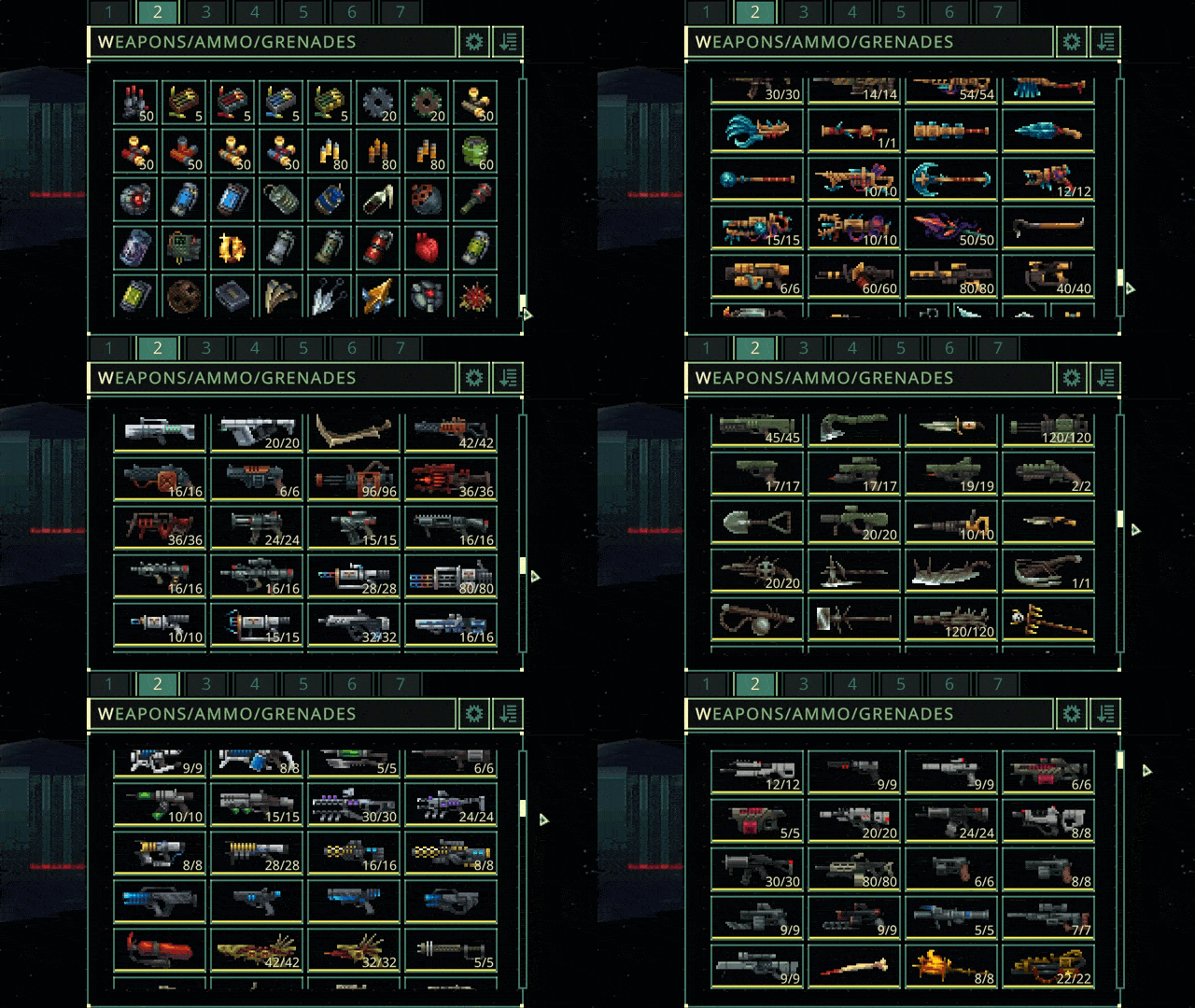
We tried to add something new in every Early Access update. Now, after 3 years of development, Quasimorph 1.0 will include:
206 ranged weapons, 39 melee weapons, 35 ammo types, and 16 grenades
389 equipment items: helmets, armor, pants, and boots
45 craftable armor sets
47 augments and 96 implants
148 consumables
142 pacts
528 Magnum recipes
17 clones and 14 classes
13 damage types
33 planets and satellites, 163 stations, and 36 random events
38 story missions, 2 tutorial missions, 2 additional missions, and 9 endings
Weapons
We updated the stats of every weapon: damage, accuracy, critical damage, weight, durability, prices, and damage falloff over distance. The goal is simple: every weapon should have a role.
Not everything has to be equally convenient, and not everything has to forgive mistakes, but every tool should have its own place and niche in combat.
Flamethrowers and sprayers became stronger within their attack area.
Light weapons became lighter.
Damage falloff was revised across different weapon classes: in some places it became softer, in others harsher.
Ultrasonic weapons received the most significant stat changes.
Melee and thrown weapons are now affected by more parameters, including critical chance and critical damage.
The weapon throw range bonus now also applies to grenades.
Medicine
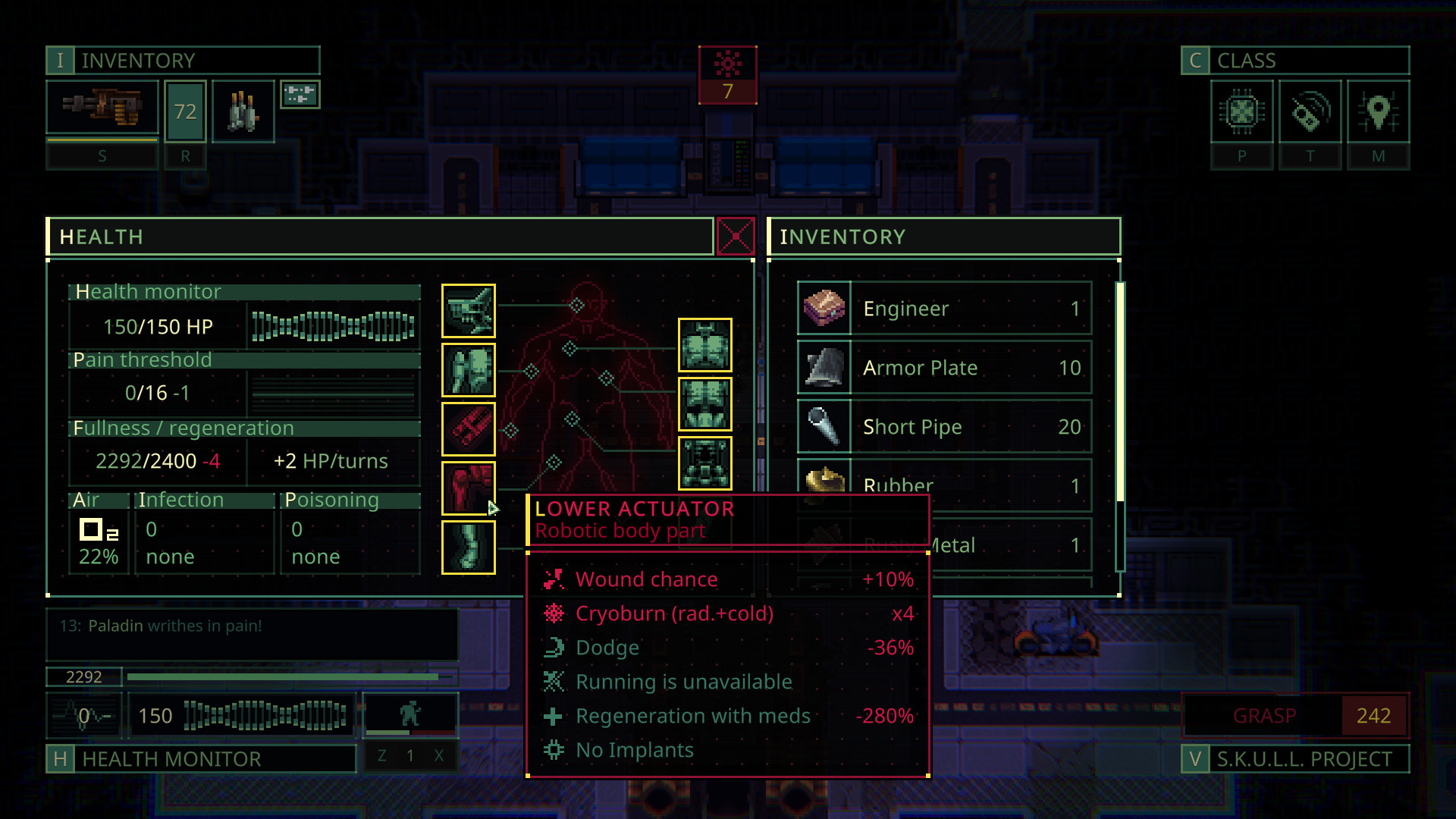
Healing and medicine received a major overhaul:
We updated the effects of addictions, statuses, and wounds.
Composite damage types now have their own effects.
Wounds now differ more strongly between human, quasimorphic, and cybernetic body parts.
Robots no longer take damage every turn from wounds, but the penalties from damage have become more serious.
Wound dressings stabilize your condition more effectively.
Medkits became slightly weaker.
Pills last longer.
In 1.0, medicine should more often make you look at the actual problem instead of frantically pressing the nearest healing item and hoping that a body wrapped in a floor rag will somehow negotiate with the bleeding.
Missions
We reworked mission stats and progression.
The difference between missions with different skull counts is now more noticeable.
The number of floors is now fixed in relation to the number of skulls, and room count progression has become more pronounced.
Faction power has less influence on missions with a low skull count, so low-level contracts should be more stable and easier to read.
Late-game missions, on the other hand, more often deploy advanced squads and require proper gear and a plan.
“Descent” missions have also been changed: there are fewer enemies, quasimorphs in bramfatura no longer head straight for the clone immediately, and the technical level of floors now grows non-linearly.
Economy and crafting
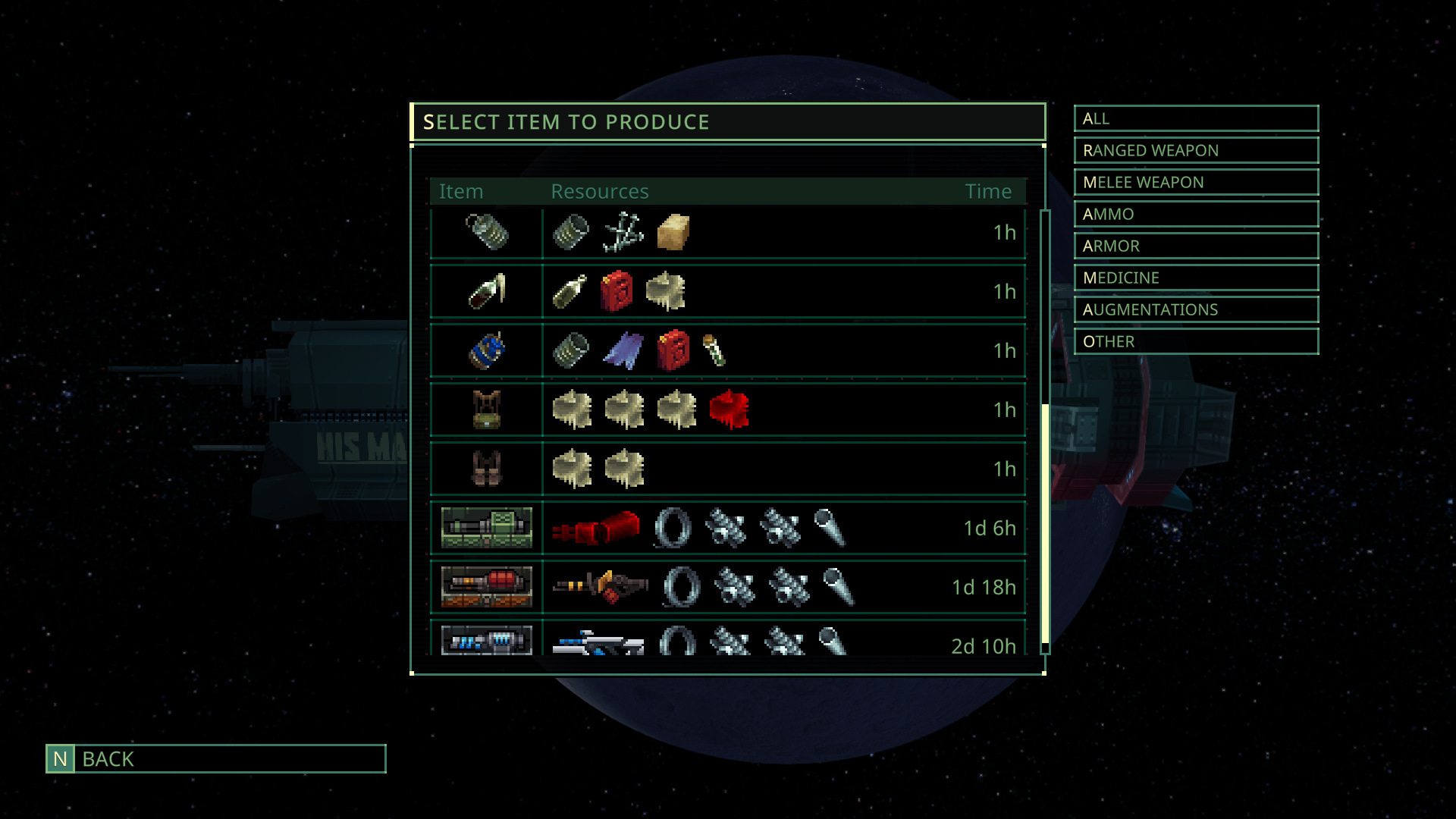
We updated item lists in chips, upgrade prices, crafting recipes, item disassembly, and rare weapon acquisition.
Progression should be more stable: powerful items should feel like loot, the result of preparation, or a risky decision, rather than a hole in the system. For example, crafting, disassembly, and amputation recipes for minigun and laser turrets can now yield the Judge ABV and PV-277, and the chance of obtaining them through amputation has been increased.
You can say goodbye to the easily obtained Prism. (RIP)
The chance of obtaining each item through disassembly has been reduced from 50% to 33%.
Makeshift grenades have been added to the starting recipes.
The item pool in “Robbery” missions has been limited so that the reward feels tastier and more valuable barter items drop.
The component cost of upgrading weapons and armor has been heavily revised, especially in regards of chips. Upgrade level limits and upgrade costs have been reduced, with stat changes adjusted accordingly based on their usefulness.
Clone upgrade prices have been updated so that more chips will be required, but they will be needed later, while fewer other items will be spent.
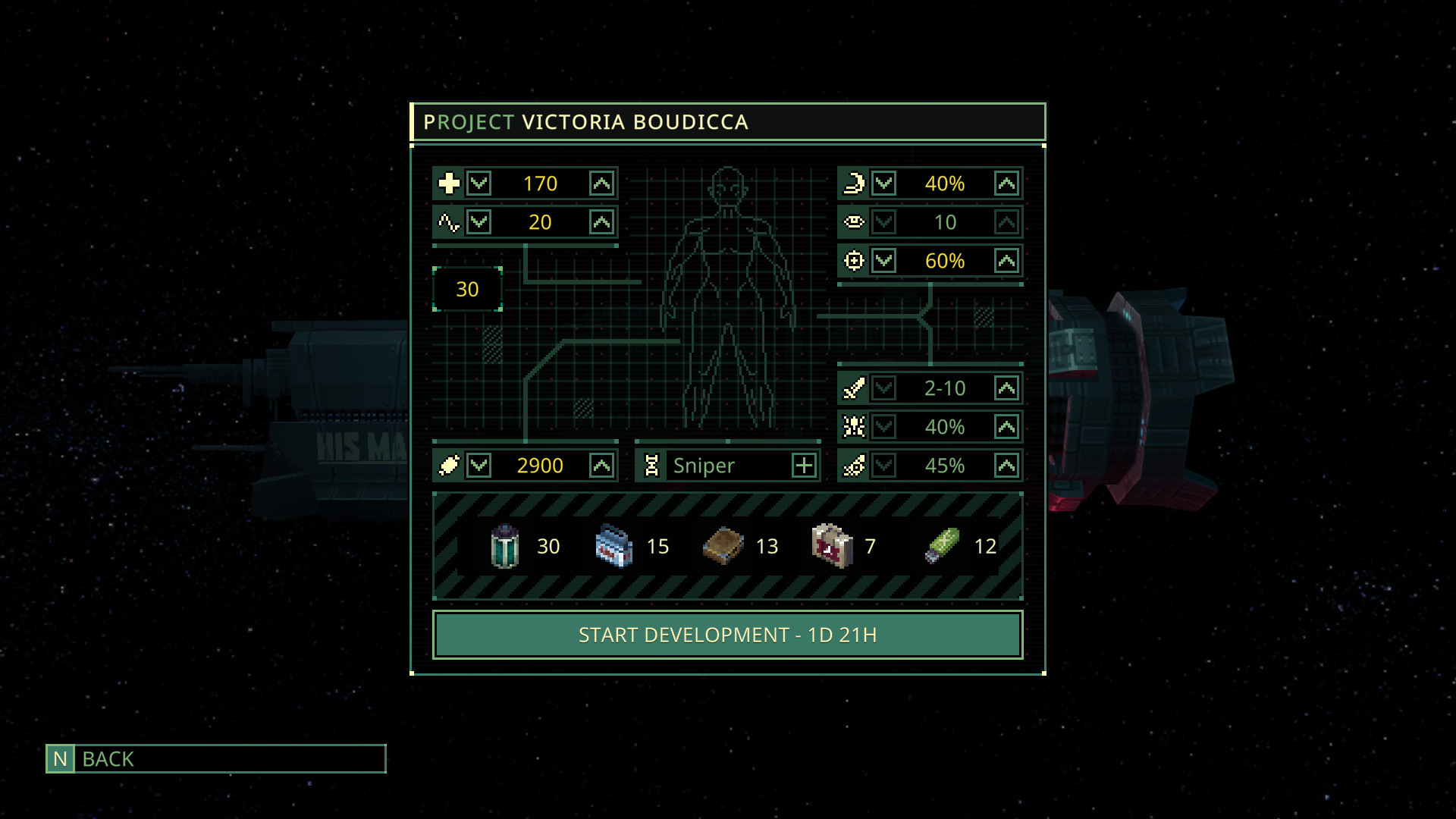
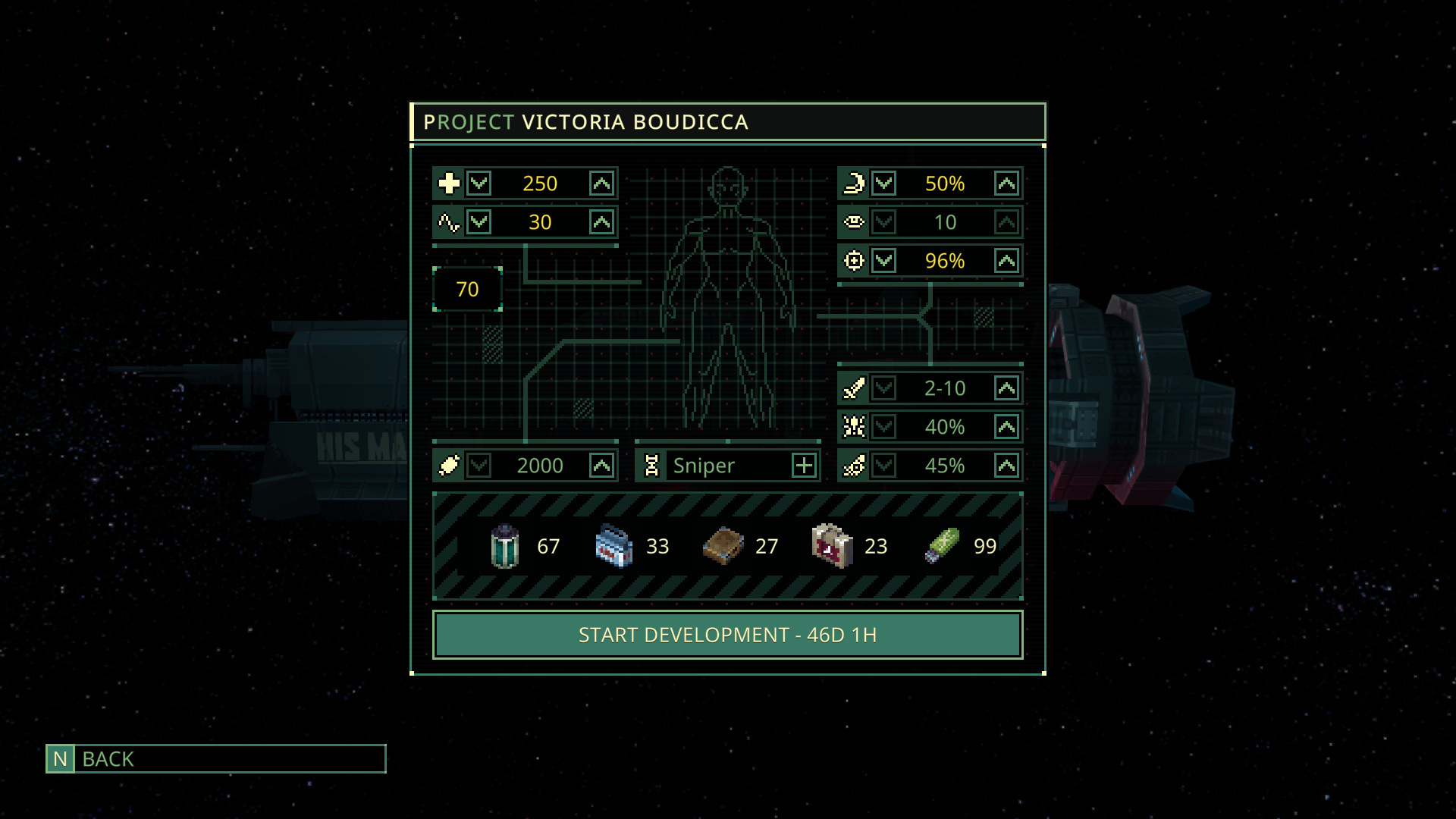
Sound, allies, and enemy behavior
We updated sound propagation and ally behavior:
By default, sounds are now produced not only by gunshots, but also by opening doors and enemy deaths.
The “Suppressor” trait specifically removes the sound of the shot for NPCs.
Bullet impact sounds have become weaker, so attracting enemy attention with regular gunfire will be harder.
Explosive rounds still do an excellent job of explaining to the station that you are here.
Controllable allies can now move between floors together with the player.
The escort squad from a proxy corporation can also move to the next floor with you, but only after the current floor has been fully cleared.
Proxy now gives you one support squad, but it once again consists of faction's elites.
Game Speed
We updated time acceleration in space. The available modes are now x1, x25, x100, and x250.
See you very soon!
We hope the direction of our work toward 1.0 is now clearer.
Our goal is for every death, every extraction, every lost backpack, and every successful contract to feel deserved.
Balance in 1.0 affects almost every level of Quasimorph: from weapon weight to mission structure, from wounds on cybernetic limbs to the economy of rare items.
The full patch notes will be available when the game is released.
We hope you will enjoy it.
See you very soon, mercenaries.