Hello everyone!
We wanted to give you some historical background on the events depicted in Gallipoli, so we asked historian Chris Kempshall to help us explore the real-world context behind the campaign. In this first blog, we’ll be looking at the strategic thinking and circumstances that led the British and their allies to attempt the Dardanelles operation, and how those decisions ultimately shaped the Gallipoli landings of 1915.
------------------------------------------------------------------------
At the end of 1914, combat on the Western Front of the First World War had begun to enter a deadlock. The emergence of well-defended trenches and fortifications that stretched from the Belgian coast down through France to the Swiss border made attempts to break through costly and dangerous.
This was a significant problem for the Entente allies. It was their lands now being occupied by a German army that seemed happy to dig in and keep what it had gained. Defeating them would either require a solution to trench warfare or something imaginative that could remove the need to attack on the Western Front.
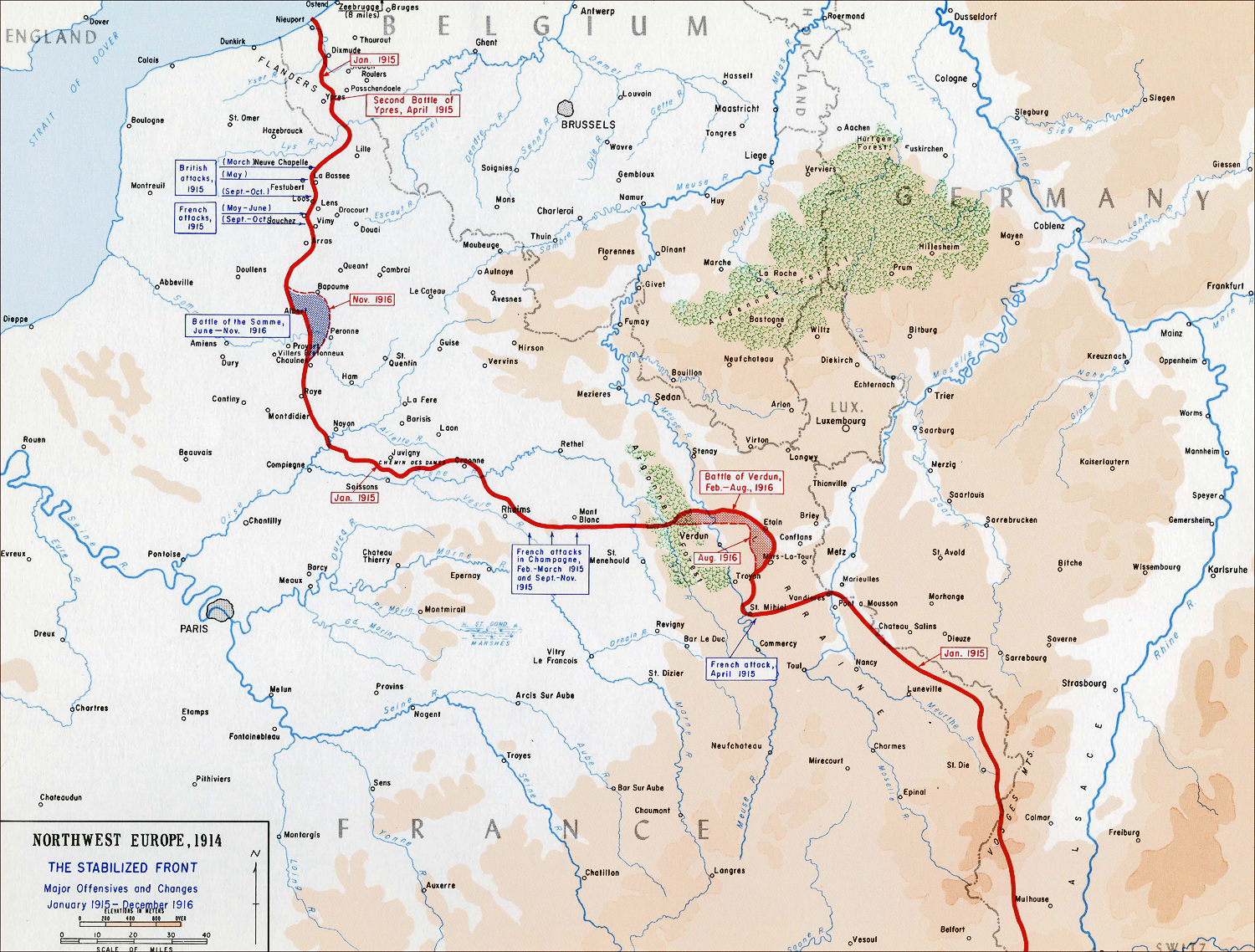 Map of the stabilised front Jan 1915 - Dec 1916, Emerson Kent
On the Eastern Front the hoped for Russian steamroller had failed to materialize. Huge losses during the Battle of Tannenberg had weakened the Russian military and were worsened by an inability to properly supply their soldiers in the field. If a solution could be found to the deadlock on the Western Front and the supply issues of the Eastern Front then the Entente may yet be able to emerge victorious. Such a solution might just lead straight through the Ottoman Empire which had joined the Central Powers of Germany and Austria-Hungary. This is the historical and strategic background to the Entente’s experience in the Gallipoli campaign.
Historical Context
Before getting to the events of 1915, there are some important historical details that we’ll need to cover relating to the alliance of Britain, France, and Russia first.
In many ways it was quite an odd alliance. Revolutionary France and Czarist Russia had very little in common with each other except the threat posed by Germany. Britain and Russia had been long-term rivals, due to concerns about Russia gaining access through territorial expansion to India.
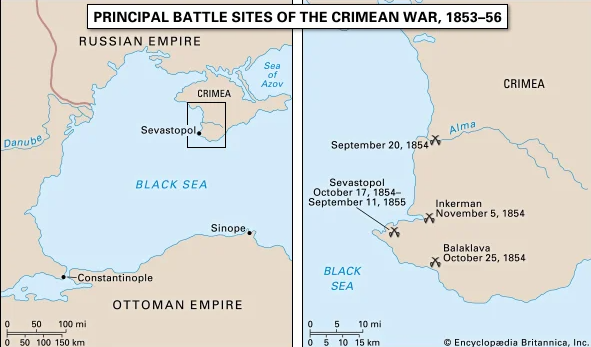
Battle sites during the Crimean War (1853-1856), Britannica
In fact during the 1850s, Britain and France had allied with each other to help the Ottoman Empire fight against Russia to prevent them from capturing the Crimean peninsula. Through various quirks of geography, Russia had no access to a ‘warm water port’. Capturing Crimea would have strengthened the Russian position in the Black Sea and undermined the Ottoman Empire. If that nation were to collapse then the possibility existed that the Russians may be able to find a way to access the Mediterranean Sea. In the 19th century this was viewed as absolutely unacceptable by Britain and France. Russia was bottled up and reliant on sea routes either over the top of Scandinavia (which was only really feasible in summer), through the Baltic Sea (having to pass above Germany), or from Siberia on the far side of Asia. All of these outcomes could be controlled or influenced in ways by the other Great Powers of Europe. But at the outbreak of the First World War, Britain and France suddenly became very invested in finding solutions to Russia’s supply problems. Russia did not have the industrial power to supply its own forces with the arms and ammunition they would need to successfully fight the Central Powers. The British and the French could provide these weapons - but how would they get them to Russia? Now access to a warm water port would be of great advantage to Russia and the alliance as a whole.
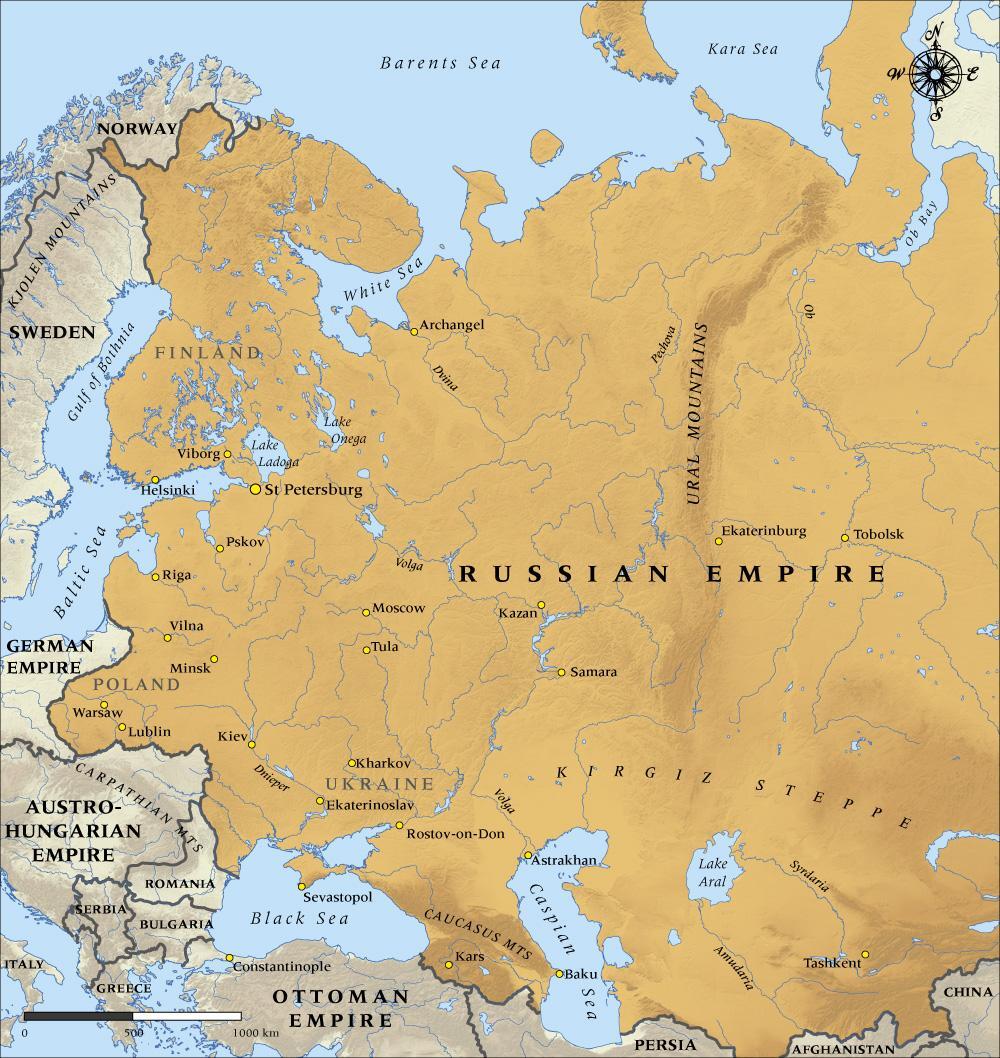 Map of the Russian Empire in 1914, New Zealand History
There was one potential option, and it was the same one that had interested Russia during the Crimean War. The Ottoman capital of Constantinople lay at the joining point of Europe and Asia. Shipping could pass through it between the Black Sea to the east and the Sea of Marmara to the west. Beyond the Sea of Marmara, on the other side of the Dardanelles Straits, lay the Aegean Sea and the Mediterranean.
The British in particular were already taking a great interest in the possible strategic advantages that could be unlocked by capturing the capital of the Ottoman Empire. Some of their considerations were fairly sound. For example, an attack on the Ottomans would enable the Royal Navy to make a potentially decisive impact on the war. With fighting on the Western Front entirely land-based so far, the British navy had no opportunity to influence events.
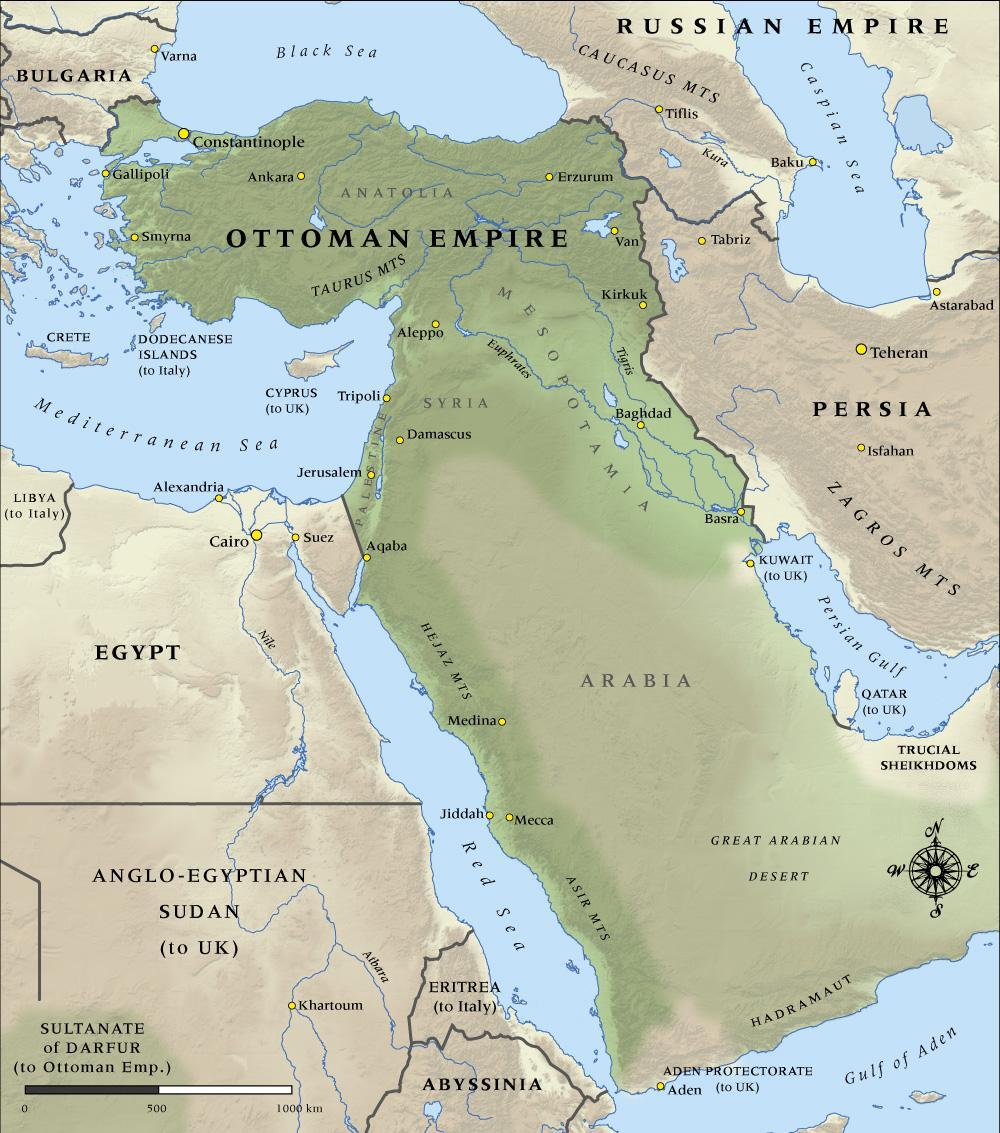 Map of the Ottoman Empire in 1914, New Zealand History
Also if Constantinople was captured a new front could be opened against the Central Powers in the Balkans. Germany and Austria-Hungary would be forced to try and divert forces away from their existing positions, and that would help the Western Front a lot. It might also allow British, French, and Russian forces to fight shoulder to shoulder and spread the burden around. However, the British also held a big misunderstanding about the nature of the alliance between the Central Powers. They believed that Germany was not capable of waging war without the support of Austria-Hungary and the Ottomans. That if one, or both, of these allies were to be knocked out of the war then Germany would collapse. The reality was that Germany was propping up both of its allies and supplying them with the supplies needed to fight. This misunderstanding led some within the Entente Alliance to believe that capturing Constantinople could be an immediately war-winning move.
The Dardanelles Straits
For any Entente naval vessels to move east from the Aegean and the Mediterranean Seas and threaten Constantinople, they would have to pass through the Dardanelles Straits. These were a narrow sea route between Europe and Asia that was never more than 4 miles wide at best, and less than a mile at its tightest. The Ottomans had long recognized the strategic importance of these Straits in defending the route to their capital. Fortresses and artillery positions existed on both the European and Asian sides and the mouth of the Straits was guarded by castles at Sedd-el-Bahr and Kum Kale. The Ottomans also placed mines at narrow points of the Straits which could easily sink even the largest enemy ships.
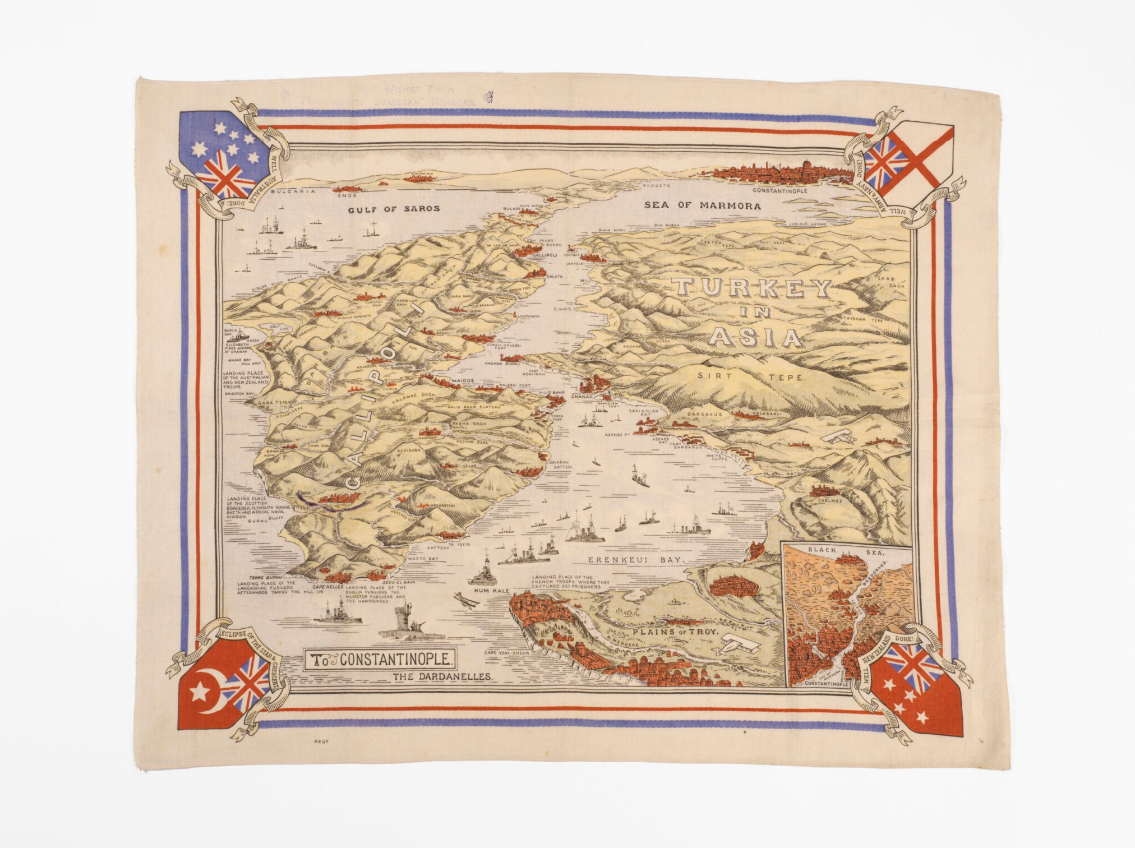 Map, pictorial of Gallipoli campaign, IWM
To capture Constantinople, the joint British and French fleets would have to force the Straits, run the gauntlet of guns and mines, and push on into the Sea of Marmara. So determined were the Entente forces to attempt this operation, Britain and France also promised control of the Dardanelles to Russia if Constantinople were to be taken. Which is an astonishing change from their determination in the 1850s to keep Russia out of the Mediterranean. The British and French made several attempts to attack the Dardanelles but the most determined came on 18th March 1915 and was disastrous. The Ottoman artillery forts that lined the Dardanelles were often placed so that they could hit any attacking ships below but those ships could not easily return fire. Additionally the Ottomans had laid substantial numbers of mines just below the surface of the water. The combination of these defenses took a heavy toll on the Entente fleet with three ships sunk and a number of others damaged.
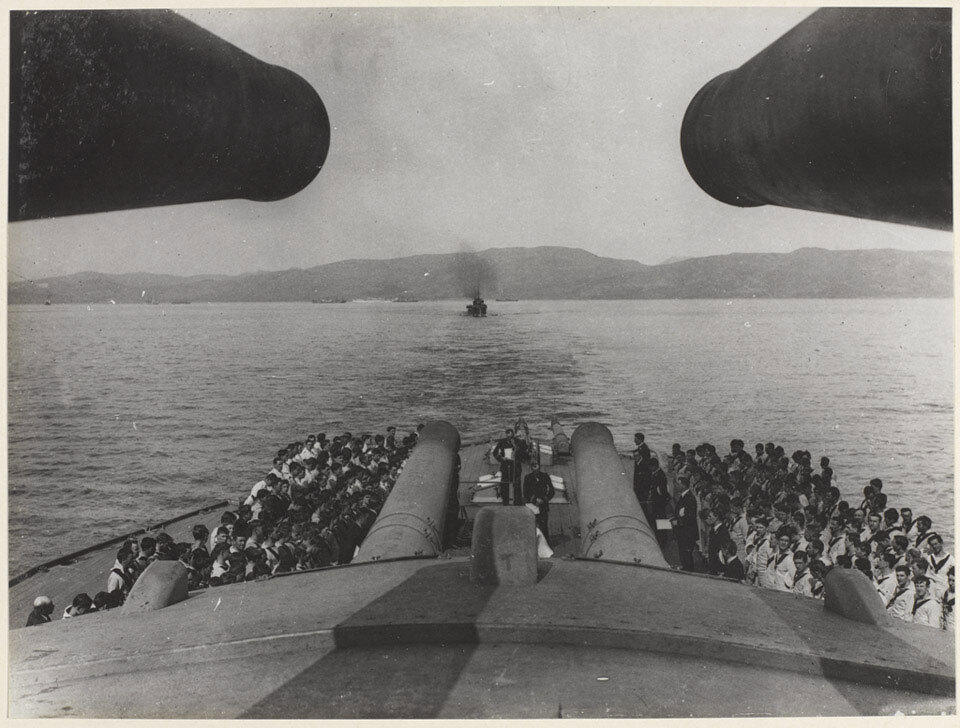 Church service on HMS 'Queen Elizabeth', 1915, National Army Museum
The British and French decided to withdraw back the way they had come. There is still ongoing historical debate about whether this fleet could have pushed forwards and through the defenses but their commanding officers believed it to be impossible. If the Dardanelles were to be forced then the artillery forts that defended them would need to be captured or destroyed. The only way to do this was to land ground forces and attack the forts from behind. These landings would become the Gallipoli campaign.
Gallipoli
The landings at the Gallipoli peninsula were not the only use of land forces against the Ottoman Empire. The Mesopotamian campaign had been ongoing since November 1914, but for the Entente these landings represented what they believed to be their best chance to win the war against the Ottomans. For the Ottoman Empire it represented the most dangerous situation of the entire conflict.
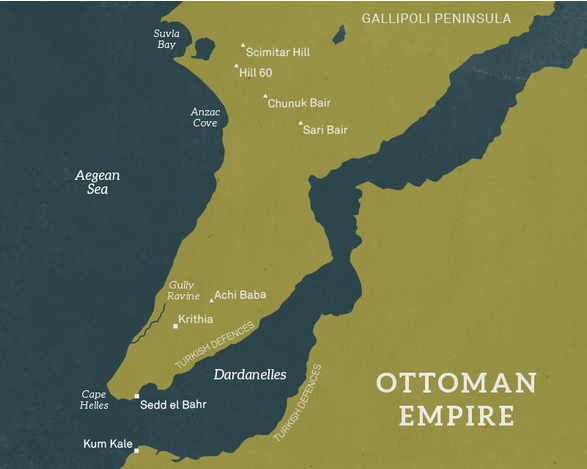
Map of the Gallipoli peninsula, 1915, National Army Museum
In order to undertake the landings both Britain and France drew upon the armed forces of their empires. Alongside significant numbers of Scottish, Irish, and English soldiers the British also drew upon Australians, New Zealanders and Indians. Gallipoli has become synonymous with the Australians and New Zealanders in particular - these were the men of the Australian and New Zealand Army Corps, or ANZACs. The French Corps Expéditionnaire d'Orient consisted of a mix of soldiers with some from Senegal and Algeria. By using imperial and colonial soldiers both Britain and France would not have to weaken their own forces on the Western Front to launch the Gallipoli landings. The actual landings themselves were divided across multiple beaches that were selected either because of strategic significance - such as V Beach beneath the fortress at Sedd-el-Bahr - or because of potential suitability as a landing spot. The British forces would make the actual attack at the Gallipoli peninsula on the European side of the Straits, whilst the French would launch a diversionary landing at Kum Kale on the Asian side. The hoped for plan was that soldiers landing in the early hours of the morning would overwhelm any Ottoman defenders in the area - and some of the British commanders held a fairly low opinion of the abilities of their opponents - and then begin to march inland capturing key strategic high points on various hills and ridges and, from there, begin operations to capture the artillery forts of the Dardanelles from behind. The landings would take place on 25th April 1915 and would feature soldiers arriving on the beaches in row boats and, at V Beach, something much more inventive. The British converted the collier ship SS River Clyde into a Trojan Horse. The ship was intended to beach itself just offshore and then disgorge British soldiers down ramps directly onto the beach.
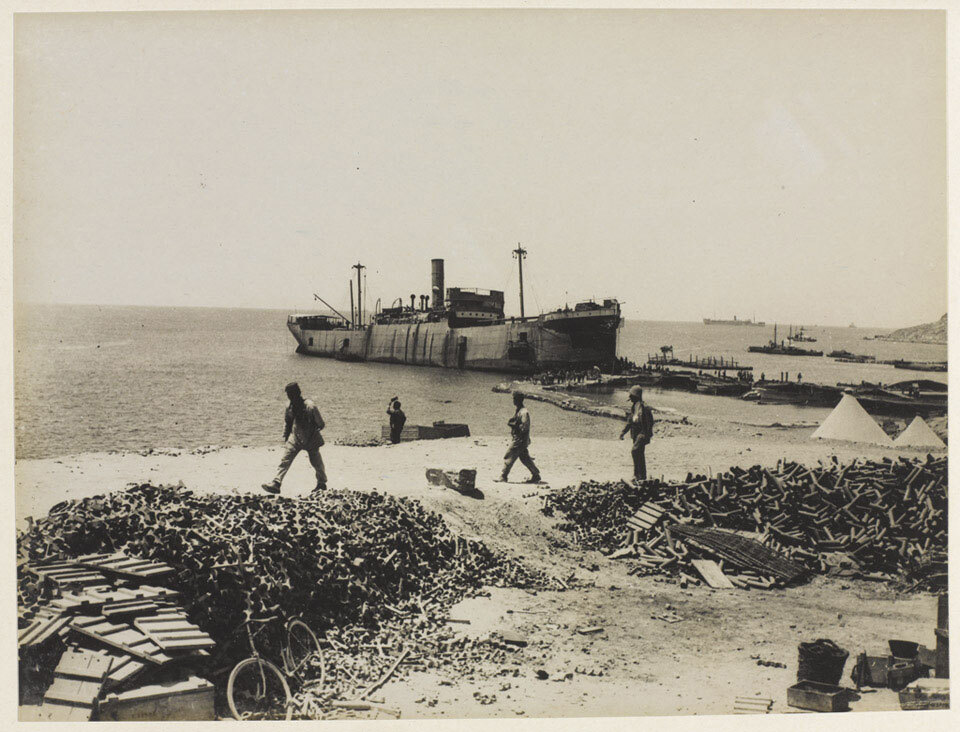 The converted steamer 'River Clyde', anchored at V-Beach, Gallipoli, Spring 1915, National Army Museum
But this attempt, along with those on the other beaches, swiftly ran into problems. Firstly the Ottoman resistance was much stiffer than had been expected. Partially through fear of being overrun but also in likely recognition of how dangerous the situation was, the Ottoman forces in the area - led by Mustafa Kemal - put up an incredibly strong fight and launched repeated counterattacks to recapture positions that had been lost. Many groups of British and ANZAC soldiers struggled to even get out of their boats and off the beach under heavy fire. Pushing inland soon brought them into ongoing hand to hand combat with Ottoman soldiers. The attackers soon learned that the terrain was much harder to navigate than had been expected. The Gallipoli peninsula is a maze of gullies and sharp ridges. At places like Anzac Cove the land rose up steeply straight from the beach and soldiers would sometimes have to climb on their hands and knees whilst under fire. Soldiers got lost. Battalions and regiments got spread out and couldn’t remain in contact with each other. Trying to resupply forces that had vanished into the landscape proved incredibly difficult. By the end of the first day the situation was so grave that some commanders tried to convince General Sir Ian Hamilton - the commander of the Mediterranean Expedition Force - to evacuate the beaches entirely to avoid their soldiers being pushed back into the sea. But Hamilton resolved to hang on. Whilst the worst case outcome was avoided, the landings had failed in their prime objective. The various attempts to move inland had universally failed. Many soldiers didn’t get much further than the beaches themselves.
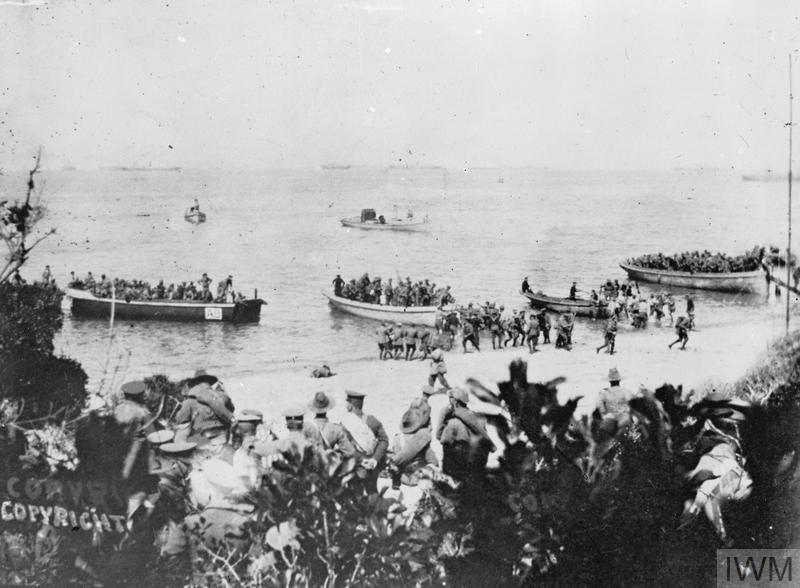
Australian forces in Gallipoli, 1915, IWM (Q 112876)
What followed was a grinding and attritional campaign fought in harsh conditions. The heat and the landscape were very different to what was being faced on the Western Front. Many ‘trenches’ at Gallipoli were little more than ditches scraped into the dirt or the rocks.
During the days the temperatures could rise very high and drop dramatically at night whilst flies were also a constant problem. The Entente also struggled to provide enough supplies, ammunition, and drinking water to their forces on the beaches and reinforcements and hospital ships that travelled from Malta and Egypt were vulnerable to mines and torpedo attacks by German U-boats who were attempting to disrupt the operation against their ally. Soldiers had to develop inventive solutions to the situation they faced. Trench catapults and jam tin grenades were created to make up for the shortfall in weapons and the need to fight a more vertical war than was being experienced in Western Europe. Whilst there were offensives across 1915 to try and push the Ottomans off the high ground that they occupied, none were successful. The largest of these came in August 1915 with the landings at Suvla Bay and the attempt by New Zealand forces to seize Chunuk Bair - a large ridge in the area - whilst the Australians ran the gauntlet of Ottoman machine guns at a narrow strip of land called the Nek. These attempts also failed at the cost of significant casualties.
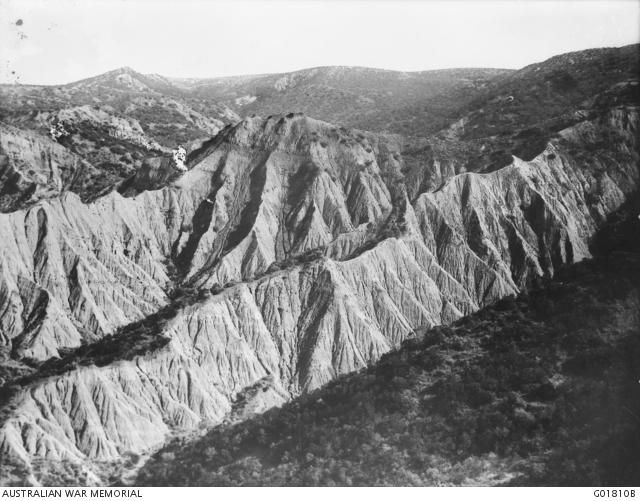
Rhododendron Spur with Chunuk Bair on right, Australian War Memorial
But for the New Zealanders who engaged in brutal hand-to-hand combat at the top of Chunuk Bair they were very briefly able to gain a view of something that no other soldiers in the area had done so far. On the other side of Chunuk Bair, down through the valleys and scrubland beyond, was a strip of silvery water. The Dardanelles Straits. The whole point of the operation. They could see it. But they could not reach it. Having been relieved on the 9th August by British soldiers, the top of Chunuk Bair was lost in an Ottoman counterattack on the 10th. Never again would the Entente forces on the peninsula get so close to their objectives.
Evacuation and Aftermath
By the end of 1915 it became clear that whatever hoped for outcome of the Gallipoli campaign was never going to transpire. Rumors of heavy artillery pieces arriving from Germany concerned the British and French who feared they could be used to drive their soldiers back into the sea.
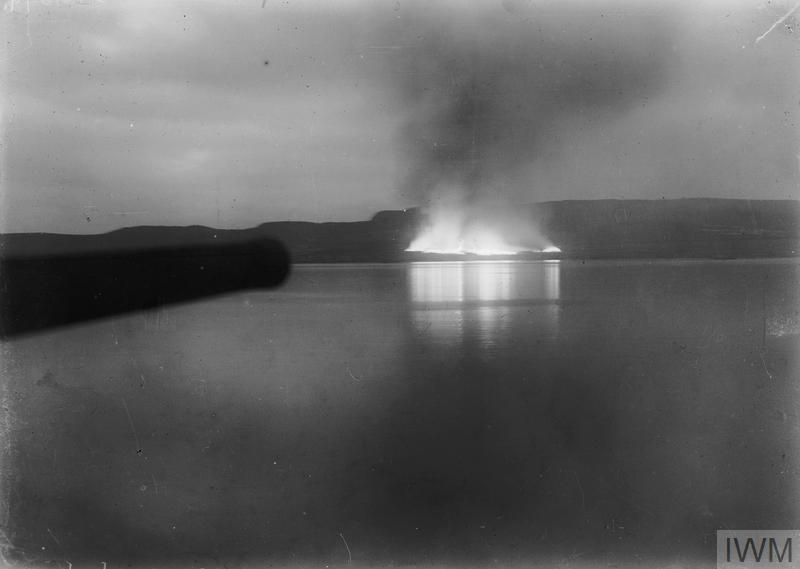
The Gallipoli campaign, April 1915-January 1916, IWM (Q 13679)
In the dead of night on 8th January 1916 the Entente forces at Gallipoli secretly evacuated the peninsula and escaped. It was the only part of the entire campaign that went exactly to plan and the Ottomans were not aware it was happening until the evacuation was completed. The Entente forces at Gallipoli had sustained over 220,000 casualties (which includes wounded, missing, and dead) out of 500,000 men deployed. The consequences of failure were severe. There would be no resupplying of Russia through the Black Sea. Already greatly weakened they would have to struggle on alone. In 1917 Russia would collapse into civil war. The success of the Ottoman defense had been a huge morale boost for them and they had survived the most serious threat to their capital of the entire war. Additionally, having seen the failure of the Entente attacks, Bulgaria had joined the Central Powers in October 1915. It now blocked any route into the soft underbelly of Austria-Hungary and Germany through the Balkans. Not only had the attempt to force the Dardanelles Straits and capture the peninsula failed, they had collectively made the strategic picture for the Entente significantly worse.
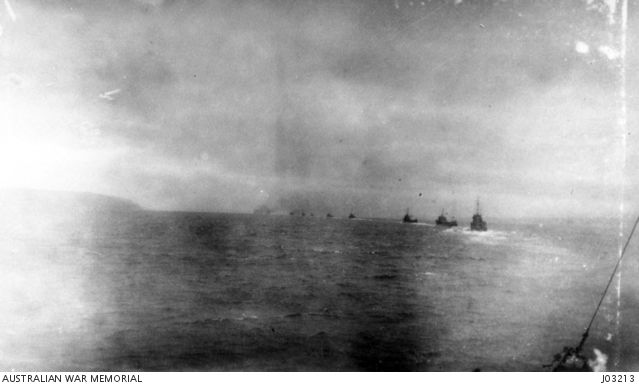
British fleet entering the Dardanelles 12th November 1918, Australian War Memorial
However, despite the disastrous nature of the campaign, the Entente would eventually emerge from the war victorious. The huge strain of fighting on multiple fronts would eventually cause the Ottoman Empire to collapse and seek a separate armistice in October 1918. After the war, when the allied powers moved in to occupy Constantinople they did so by finally sailing their navy through the Dardanelles Straits. For Australia and New Zealand the Gallipoli campaign has taken on a hugely important role. Gallipoli was the moment that both nations really took their first steps out onto the world stage and fought as recognizable states. In the years after the war many Australians and New Zealanders came to consider that the modern versions of their countries were ‘born’ on the beaches of Gallipoli.